
Key countertop details should always be checked and looked through to ensure that home owners are getting items of good value and condition. There are many aspects that should be taken into consideration when it comes to countertop details. Below are some of the key aspects to note.
Key Countertop Details 1: Surface Condition
Since it influences performance and look, the surface condition is among the top things to verify on a countertop. Begin by inspecting the surface very meticulously for cracks, chips, and scratches, particularly along the edges and corners where damage is most apt to occur.
More than simply cosmetic, these defects could indicate shoddy installation or more basic structural issues. Feel all over for any lopsidedness or sharp spots that aren’t right away evident by running your hand across the whole surface. Especially on porous surfaces such unsealed marble or granite, stains or discolouration also act as warning signals. These marks not only spoil the beauty of the countertop; they also show that it has not been sealant.
Make sure the finish is uniform; a top-quality countertop will have a even glow free of dull or patchy regions. Poor polishing methods or lousy sealing might cause finishes not to be uniform. High-traffic regions including those around the sink or stove, where first wear and tear so often reveal itself, should be carefully observed. Furthermore keep an eye for any evidence of water damage, like delamination or bubbling in laminate countertops, which might indicate more extensive moisture penetration. Incremental problems like these can lead to expensive repairs if not fixed.
At bottom, checking the surface condition is more than visual inspection — it’s about guaranteeing the material is still functioning as planned and keeps the general quality and value of the kitchen. If you have a sharp eye now, you could save yourself costly migraines down the road.
Key Countertop Details 2: Seams And Joints
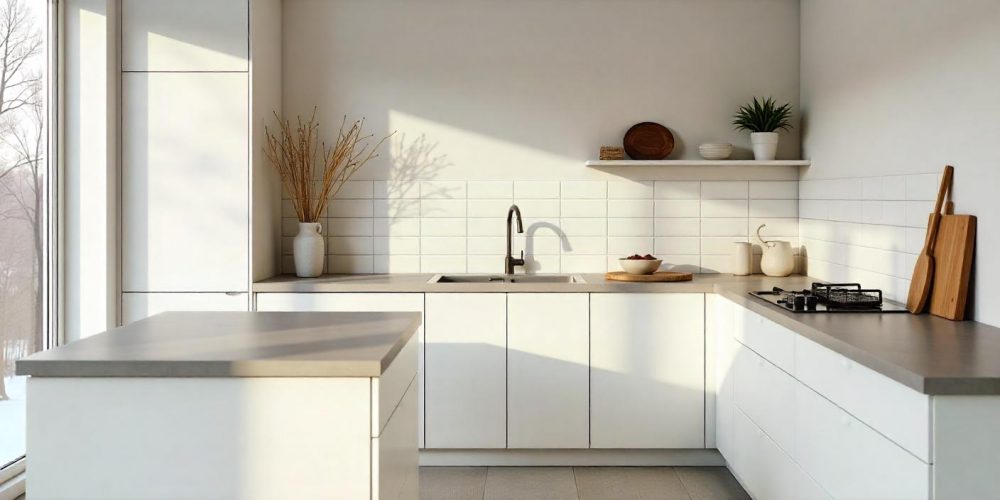
Seams and joints are among the most important yet sometimes neglected aspects of countertop examination. These are the connection points where two slabs or sections meet, and their condition is a direct indicator of the quality of the installation.
Beginning with a close observation of the visibility of the seams on properly installed countertops, they should be nearly invisible, Clear seams or large gaps compromise the look as well as over time might trap bacteria, pollen, and moisture. Run your fingers across the joint to verify the alignment; you should feel no height variances or rough transitions. Not just beauty but also long-term durability can be damaged by bad alignment. Particularly with natural stone such granite or quartz, pay close notice to how well the patterns match at the seam.
@ampquartzcabinets Kitchen Cabinet Titanium Edge Series by AmpQuartz! 🥰 #AmpQuartz #dreamkitchen #kitchencabinet #cabinetmaker #JohorBahru #housecabinet #kitchendesign #aluminiumdesign #aluminiumcabinet #homedesign #fyp#fypage
A decent fabricator will have aligned patterns so the transition is as smooth as feasible. Also, examine the adhesive used; there should be no residue, surplus glue, or evidence of separation. Around the sink or cooktop cutouts, good sealing of the joints is needed to keep water out. Underneath the surface, swelling, warping, or mould growth can result from improperly sealed contacts.
Check the joint where the two surfaces meet to be certain it is evenly caulked and fastened for countertops with backsplashes. In brief, keeping a close eye on seams and joints during your countertop examination can save you expensive repairs and guarantee a more durable, better-appearing surface.
Key Countertop Details 3: Functionality And Layout
Great attention should be given to usefulness and design when evaluating a kitchen countertop. Particularly in high-traffic regions like between the fridge, cooker, and sink—the traditional “kitchen work triangle”—a well-planned countertop should facilitate coherent workflow. Make sure the countertop next to cooking regions has enough space for food preparation.
Appliances should seem logical and effective with respect to the countertops surfaces. Make sure there is adequate landing area on each side of the sink and stove for safe storage of things while washing or cooking. Furthermore, evaluate if the height and depth of the countertop are suitable for daily use; ergonomics can have a big impact on the general feel of a kitchen. Think about where electrical sockets are located; close outlets help to facilitate small use of devices.
Furthermore look at how the countertop interacts with the lighting. Task lighting should clearly shine work areas without generating strong shadows or glaring reflections. Seal the backsplash carefully where it meets the countertop so that moisture does not enter; another critical point is its integration. Check for enough overhang for eating spaces or bar seating and guarantee that all extended parts are well supported for safety.
The general design should reduce mess and optimise efficiency by creating a well-organised and easy-to-follow cooking space. While you evaluate the countertop, ask yourself: does it support how a kitchen should flow? If not, it could suggest the need of layout modifications or even full fledged renovations to more effectively serve the room’s planned purpose.
Key Countertop Details 4: Support And Stability
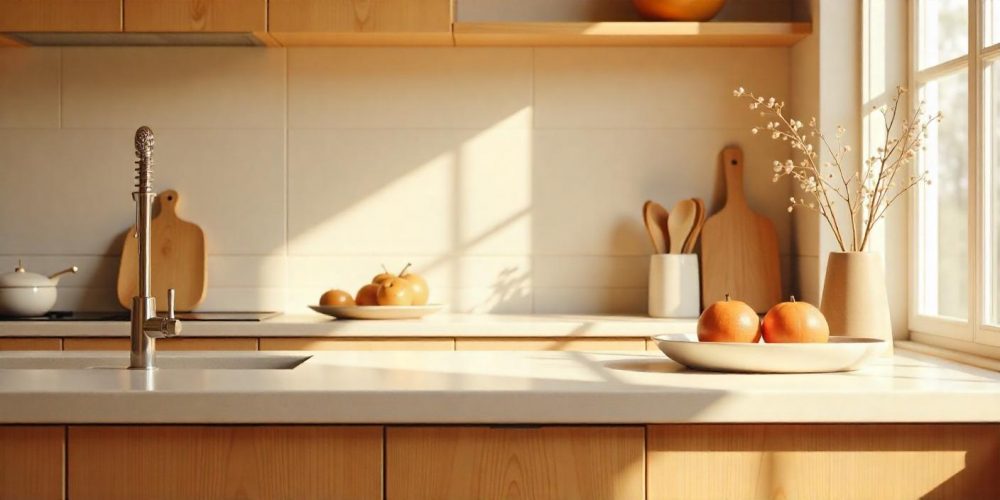
Support and stability is a key but sometimes unnoticed aspect of countertop inspection. No matter how lovely a surface seems, if it is not correctly supported it might cause long-term destruction or even safety issues.
Start first with looking for level, solid installation, there ought to be no flimsiness or flexing when light pressed. A stable countertop ought to be securely anchored with no evidence of warping or movement, therefore extending the cabinetry under it. Particularly in spaces including breakfast bars or islands, give particular notice to overhangs. To avoid sagging or breaks over time, these longer sections need enough support including hidden brackets, legs, or corbels.
@ampquartzcabinets Nak banyak dapat FREE jom datang ke AmpQuartz! 🤩🥳 📞 𝐂𝐨𝐧𝐭𝐚𝐜𝐭 𝐔𝐬 📲 +6017 732 0149 (Jasmine) 📍𝐎𝐮𝐫 𝐒𝐡𝐨𝐰𝐫𝐨𝐨𝐦: 82, Jalan Gaya 1, Taman Gaya, Ulu Tiram, 81800 Johor Bahru #AmpQuartz #fyp #fypage #kitchencabinet #housecabinet #JohorBahru #cabinetmaker
Furthermore, especially if it is heavy stone like granite or quartz, check the cabinet base to guarantee it is structurally sound and able to support the countertop material’s weight. Another thing to look at are under mount sinks; these ought to be supported from underneath since the surplus weight of a filled sink can stress a not suported area. Particularly in houses that undergo changes in temperature or humidity, even the tiniest lack of support can produce warping, warping, or cracking in their own right. Improper installation will also result in poor alignment, uneven seams, or tension fractures.
In the end, guaranteeing a countertop is correctly braced not only maintains its aesthetic appeal but also safeguards your long-term investment. Always enquire about the materials and methods of the installation, and where feasible, seek an expert opinion to verify structural integrity before finalising a choice.
Key Countertop Details 5: Water Resistance And Sealing
Water resistance and proper sealing are essential elements of kitchen countertops that should never be overlooked. These elements affect the hygiene and cleanliness of the countertop and its lifespan. Sealing is absolutely required to avoid penetration of moisture in porous material of natural stone surfaces such as marble and granite.
A quick test to see if this is one is to put a few drops of water on the surface — if the water colours the area or is drawn in rapidly, the seal might be damaged or inadequate. Put particular focus on regions around the sink, as water exposure is most common there. In these areas, bad sealing over time can cause staining, swelling, or even mo Look along the edges or seams for any evidence of water damage — discolouration, warping, or mildew.
Sealing is not usually necessary in less porous quartz and solid surface countertops, but you ought tour for fractures or poorly bonded seams that may trap moisture all the same. Even though they are low cost, water damage along seams and edges is particularly easy for laminate countertops, so check for bubbling or delamination.
Furthermore check the caulking between the countertop and backsplash or sink; cracked or mouldy caulk needs replacement. A countertop duly sealed not only preserves its appearance but also guarantees a hygienic surface free of bacterial growth. In essence, your countertop’s functional and visual appeal depends significantly on water resistance and sealing – do not overlook this during your examination.