
Small kitchen secret lies in achieving ideal balance between storage, appliances, and open area. Your kitchen seems tidy, effective, and effortlessly practical when every part helps the next. Keeping visual and spatial harmony enables even the smallest kitchen to function as though it were a professional one.
Small Kitchen Secret 1: Balanced Layout = Better Flow
A well-balanced design kicks off a good little kitchen. Restricted area calls for clever inching, and balance assures flawless, interruption-free movement of every activity: preparation, cooking, and cleanup. The secret is in harmonising these elements such that no one sector is dominant or feels insignificant.
For instance, positioning the stove, sink, and fridge in a little but readily accessible “work triangle lowers unnecessary steps and increases movement efficiency. This precise balance assures natural and easy work flow by ensuring that one side of the kitchen won’t get overcrowded while the other goes underutilised.
Counter space should be equally distributed as well; too much close to the sink and not enough near the stove could disrupt cooking rhythm. Keeping frequently used objects accessible helps to preserve smooth operation; hence storage location is equally important. Visual harmony also aids; uniform cabinet depth, equal spacing, and appliance alignment all promote a sense of order and calm.
A well-balanced design might make even the smallest kitchens seem twice as useful by cutting clutter, maximising access, and improving comfort. Not just about symmetry, balance is mostly about creating a cohesive setting where simplicity and efficiency meet. A well-flowing kitchen turns even the tiniest space into a model of astute, harmonious design by allowing you to cook, clean, and move freely.
Small Kitchen Secret 2: Balancing Aesthetics and Practicality
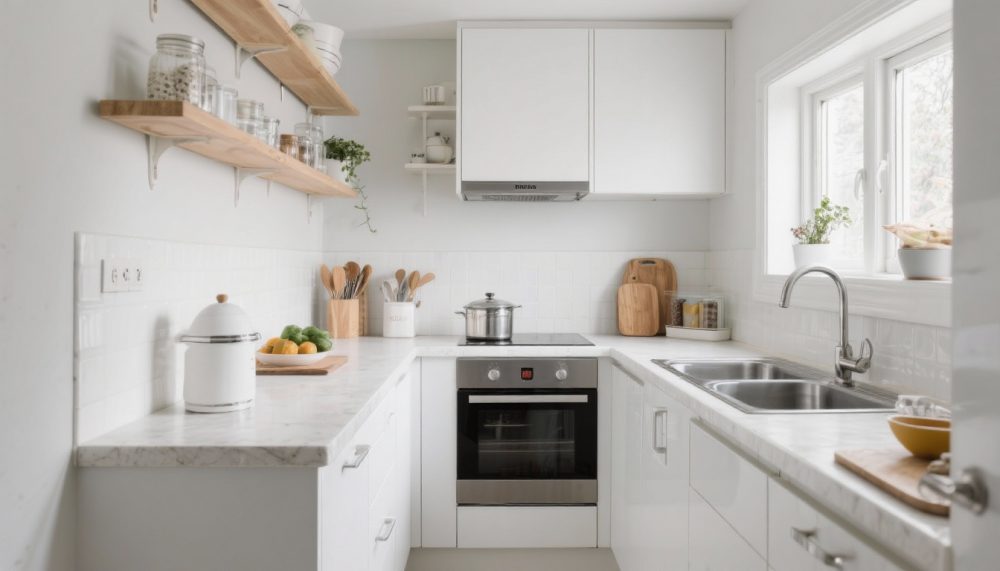 The greatest design tip for opening the highest efficiency in a small kitchen is finding equilibrium between looks and utility. Though it’s natural to concentrate just on appearance or utility, true harmony comes in seamlessly fusing both.
Every design choice from cabinetry and counters to lighting and layout ought to serve both beauty and easy functioning. Sleek, handleless cabinets, for example, not only improve a modern style but also lower clutter and enable easier movement in small quarters. Similarly, selecting reflective surfaces like quartz countertops or glossy backsplashes helps to graphically stretch the room and provides simple maintenance.
@ampquartzcabinets 5G Aluminum European hanya RM12,999 je? Cepat PM kami untuk dapatkan harga promo ni! 🤩🥳 #AmpQuartz #KitchenCabinet #5GAluminium #endyearpromo #fyp
Practical storage options like pull-out drawers and corner carousels guarantee every square foot is used without compromising aesthetic appeal. Even colour is quite important; lighter hues brighten the area while contrasting touches provide depth and individuality. Also important to be both practical and atmospheric — bright task lighting for food preparation goes well with soft ambient lighting for eating.
A little kitchen turns from a confined workplace into a well balanced, airy, unified, and motivating atmosphere by careful balancing of aesthetics and functionality. The aim is to curate, not to negotiate: choosing materials, finishes, and arrangements that provide both elegance and daily simplicity. Balance finally produces not only a visually appealing kitchen but also one that functions flawlessly behind the scenes, turning every hour spent there a delight.
Small Kitchen Secret 3: Even Distribution of Visual Weight
Getting equal visual weight is one of the most overlooked secrets to creating a little but efficient kitchen. Every design element from illumination to cabinetry affects the apparent openness or claustrophobic character of a small kitchen.
When one side of the kitchen seems heavier, maybe because of heavy cabinets or a collection of big appliances — the visual can be disturbed. Arrange balance to make the whole area appear more small. To counterbalance against this, designers employ visual weight. For instance, if one wall has tall cabinets, the other side might have open shelves or a softer colour scheme to balance the aesthetic.
In moderation, too, mixing metals, wood, and glass spreads concentration equally and prevents any one component from dominating. Under-cabinet LEDs, pendant lights, or recessed fixtures’ strategic positioning assures the kitchen appears coherent and well balanced; lighting also is very important. Subtle enhancements in visual balance can be made even by little decisions like matching the backsplash’s tone to the countertop or symmetrical cabinet handle configuration.
Carefully managing visual weight enhances not just the sense of room but also practicality — everything looks reachable and harmonic. Fundamentally, a well-balanced kitchen looks fantastic and enables you to cook, clean, and move around with relative ease in a serene and purposefully planned space.
Small Kitchen Secret 4: Balance Between Open and Closed Storage
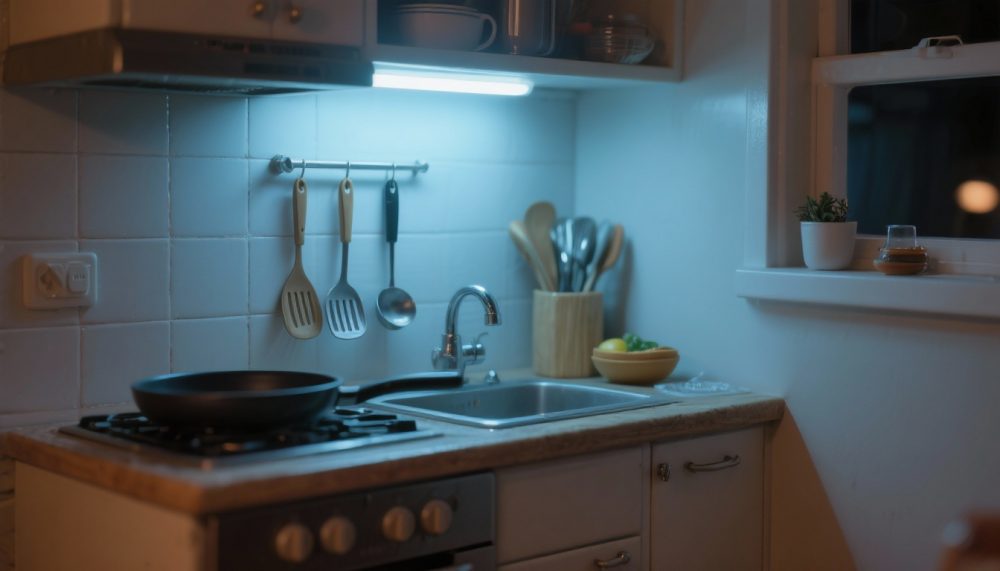 Obtaining the correct open and closed storage ratio is among the most disregarded methods to maximise efficiency in a tiny kitchen. One’s capacity to retain the region both lovely and practical depends on this balance.
By breaking up rigid cabinet lines, open shelving makes a small kitchen feel more spacious and open, and it allows for quick access to often used goods or ornamental objects. However, leaning too heavily on open shelves can rapidly lead to visual chaos, particularly when every item is visible. Closed cabinets, by contrast, offer a neat, minimalist aesthetic perfectly suited to hide cookware, pantry staples, and tiny appliances that would otherwise congest the kitchen.
@ampquartzcabinets Tolong korang tanya please 😭 #AmpQuartz #hargakabinet #kitchencabinet #fyp
For instance, the trick is to skilfully combine the two types: closed cabinets for more storage needs and open shelves within easy reach near food preparation surfaces. Homeowners can experience the ease of access without compromising order thanks to this equilibrium. Additionally, merging open and closed storage gives the kitchen visual cadence and makes it appear intentionally designed rather than tight.
Selecting what is displayed and what is concealed makes little kitchens appear tidier and larger. Open storage improves lightness and character; enclosed storage conceals necessities and keeps the design cohesive ultimately; balance is about that: form meets function. Operating with the accuracy of a far bigger space but seeming friendly, together they build a lovely, practical kitchen.
Small Kitchen Secret 5: Appliance Proportion
Finding equilibrium in a little kitchen usually starts with selecting the appropriate appliance sizes. Large appliances can soon dominate confined space, making the room seem congested and interfering with the inherent flow of work.
Instead, proportionate appliances that are customised to fit the kitchen’s dimensions provide a sense of harmony while keeping utility. For example, a counter-depth refrigerator provides the same cooling capacity without protruding into pathways; a slimline dishwasher offers usefulness without overrunning prized cabinet area. Smaller induction cooktops or combined microwave-ovens also simplify food areas, therefore providing you the performance of full-sized devices in a fraction of the space.
Apart from size, the location of equipment is critical in striking balance. Heavier visual elements like the oven or fridge opposite lighter ones help to keep balance. Such open shelves or countertops stops one side from seeming heavy. By keeping all within easy reach, this careful balance not only increases visual flow but also increases efficiency.
The aim is to make sure every item adds to a flawless rhythm between form and function rather than fights for attention or space. Essentially, balance in appliance proportion turns a little kitchen from being cramped to being cohesive, where every square inch is purposefully designed to function better, not harder.