
Kitchen countertop edge choice is definitely an important aspect in your home kitchen. Rounded or beveled edges are easier to wipe down and resist chipping; thus they help to avoid grime accumulation in pointed corners. Complex profiles, meanwhile, elegant as they are, can catch trash and need more attention to stay perfect.
Kitchen Countertop Edge Choice 1: Ease Of Cleaning
Regarding keeping a pristine kitchen, the edge profile of the countertop greatly affects how simple it is to maintain cleanliness. For easy cleaning, the most practical shapes are straight, eased, or beveled profiles. Their elegant curves keep crumbs, dust, and spills from being caught, letting you clean surfaces quickly with little effort.
Conversely, elaborate or complicated edges such ogee, bullnose, or waterfalls types can trap grease, food particles, and filth in their grooves. Although they are beautiful, they can collect dirt. To maintain cleanliness, these hidden regions sometimes need additional scouring or specialised equipment. The simplicity of cleaning also applies to how liquids act: rounded or slightly beveled edges inspire spills to flow freely off the surface instead than settle.
Preventing unsightly stains and buildup over time, into sharp corners. Choosing a low-maintenance edge style for consumers who cook often can save precious time in daily maintenance while preserving the flawless look of their countertop. Moreover less prone to fading or damage from regular cleaning friction are smooth-edged countertops, therefore extending their finish.
Ultimately, selecting the best countertop edge is about designing a kitchen as practical as it is lovely rather than just visual appeal. A smart long-term investment for any contemporary kitchen, a properly selected edge can simplify your cleaning schedule, improve hygiene, and lengthen the life of your countertop.
Kitchen Countertop Edge Choice 2: Material Longevity
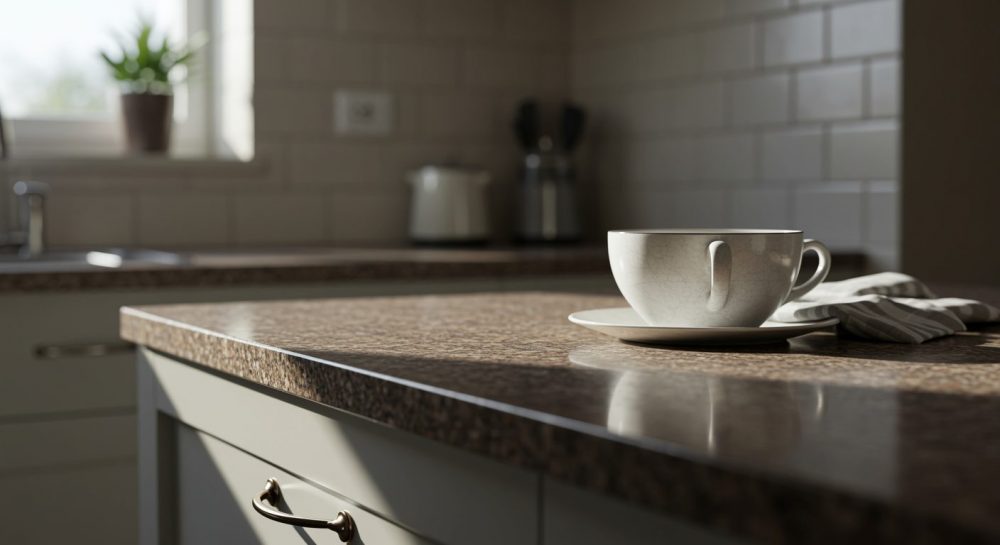 The lifespan of the material depends considerably on the choice of countertop edge, therefore it is quite crucial in kitchen design. The edge’s form and polish will directly affect how well a countertop resists everyday use.
Simple profiles like eased or beveled edges usually help to preserve the structural integrity of the countertop as they lower stress sites at which chips or cracks could appear. On the other hand, complex edges such ogee, Dupont, or waterfall profiles usually call for deeper cuts into the material, therefore weakening some parts and making them more prone to harm with time, especially in materials such natural stone or quartz composites. The edge style also impacts how resistant the countertop is to abrasions and impacts.
@ampquartzcabinets Korang yang mana pulak? 🤩 #AmpQuartz #kitchencabinet #cabinetmaker #johorbahru #fyp
Rounded edges like half-bullnose or quarter-round are more forgiving against accidental knocks from heavy cookware extend the lifespan of the counter and help to avoid unattractive chips. Durability is also influenced by the edge’s final form; smoother, polished edges are less prone to catch moisture or dirt that could corrode sealants and dull the surface.
Furthermore, the right edge selection lowers the need of frequent maintenance, therefore maintaining the beauty and strength of the countertop for years. Homeowners can improve the durability of their kitchen surfaces, ensuring that design and utility go hand in hand by deliberately choosing an edge that strikes balance in hand after years of daily use.
Kitchen Countertop Edge Choice 3: Water Resistance
Regarding kitchen countertop design, the edge profile has a shockingly significant influence on water resistance — directly impacting both cleanliness and long-term durability. Certain edge designs are more effective at containing spills and stopping water from permeating onto the cabinets or flooring.
Rounded or bullnose edges, for instance, generate a soft curve that promotes liquid to return toward the countertop surface rather than drip down. Similarly perfect for a marine edge, which has a little elevated lip provides another degree of protection against spills of water and other kinds.
Sharp or flat edges, on the other hand, allow water to flow easily over the side, therefore raising the possibility of moisture damage to cabinet surfaces and seams over time, even though they look fashionable. Prolonged water exposure causes wooden cabinetry to swell, warp, or discolour, which calls for expensive repairs or replacement. Aside from moisture management, a water-resistant edge profile helps to make cleaning simpler by restricting spills to a small area, hence lowering the possibility of dirt accumulation at the bottom of the countertop.
Choosing an edge that values both form and utility enables homeowners to properly lengthen the life of their kitchen surfaces while keeping a cleaner and more sanitary surroundings. Choosing a countertop edge with water resistance ultimately makes a practical design choice that protects your investment and streamlines daily upkeep in addition to being about appearance.
Kitchen Countertop Edge Choice 4: Maintenance Demands
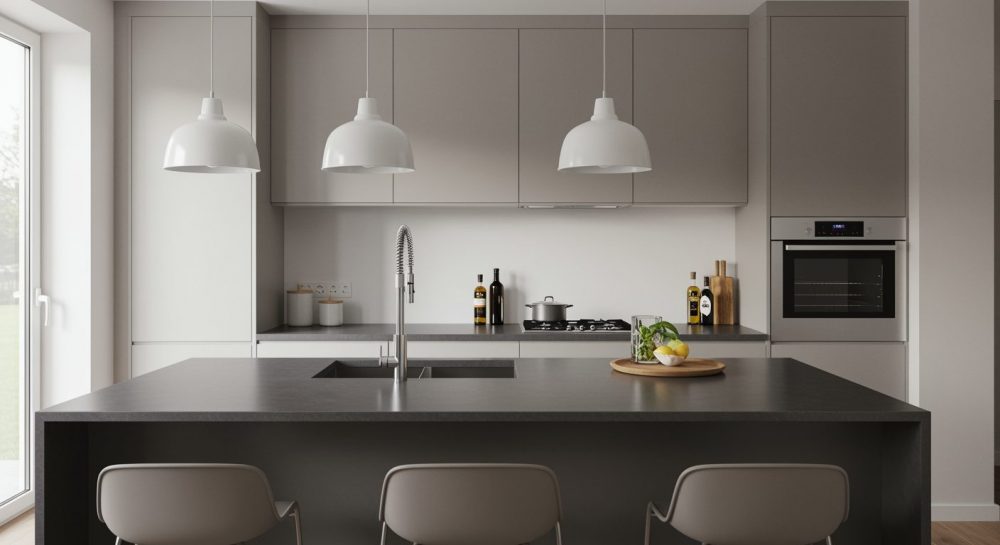 Regarding kitchen maintenance, your countertop’s edge profile has a remarkably major influence in the time and work you’ll spend. spend keeping it in good condition and clean. Maintenance demands vary significantly depending on the edge design: simple, streamlined profiles like straight, eased, or beveled edges are the easiest to care for because they have smooth surfaces that neither collect crumbs, oil, nor grime.
With little work, these edges let you fast wipe your counters, therefore keeping a polished and clean aspect. By contrast, elaborate or ornamental borders in ogee, waterfall, or bullnose shapes have curves and grooves that can gather dirt over time, particularly in high traffic cooking spaces. Often extra care or unique instruments are needed to reach tight locations while cleaning these delicate features.
@ampquartzcabinets New product in our showroom! 🤩 CabSparay package bermula dari RM9,999 je 🥳🥳 Pakej termasuk FREE ✅ Nano Stainsles Steel Sink Black ✅ Soft Close Hinges ✅ Upgrade 40mm Double Profile ✅ Stainless Steel Dish Rack ✅ Cutlery Tray ✅ Gas Tray ✅ Sauce Rack ✅ Quartz/Sintered Stone Cepat PM kami sekarang untuk dapatkan promo ni! 🤩‼️ #AmpQuartz#kitchencabinet#metallicdesign#cabspray#johorbahru
Furthermore affecting how the counter reacts to wear is the edge shape; sharp edges are more likely to chip and damage from everyday use, hence need more regular maintenance or repair. Rounded or softened profiles are not just safer but also more durable against impact, so lowering the requirement for pricey touch-ups. Moreover, rounded edges help to stop spills from going onto cabinets, hence protecting them from moisture damage and lowering long-term upkeep.
Thus selecting the correct edge is mostly about lifespan and utility rather than merely appearance. Choosing a low-maintenance design guarantees your counter remains clean for years and lowers the time you spend maintaining and cleaning in your kitchen.
Kitchen Countertop Edge Choice 5: Impact Resistance and Chip Prevention
The edge profile of your countertop effects impact much beyond merely cosmetic taste when it comes to kitchen design. resistance and chip prevention help to determine how long your kitchen lasts. Although sharp-edged profiles like square or straight edges provide a contemporary, minimalistic appearance, they are more brittle to chipping if struck by dishes or big pots.
Corner and edge take most of daily activity, thus even little knocks can cause noticeable damage over time. Rounded profiles meant to better absorb and disperse impact — half-bullnose, quarter-round, or eased edges lower the risk of chips and cracks, Along with prolonging the countertop’s life, these softer shapes make it safer for households as fewer sharp edges might lead to wounds.
The material selected also works in concert with the edge shape; hard surfaces like granite and quartz may still chip if the edge is thin or sharp or defined, while a slightly curved design reinforces the material’s structural strength. Rounded edges also stop little fractures from extending, which might be expensive to fix if not addressed.
Choosing a little curve or beveled edge gives both resilience and a sophisticated look for homeowners looking for a compromise between design and long-term performance. The right edge profile finally serves as a protective barrier against everyday wear, so guaranteeing your countertop stays smooth, strong, and gorgeous for years to come.