
Handleless cabinet design gives little kitchens a more spacious and contemporary feel by producing a clean, unstopped flow. It elevates visual simplicity and gives every surface a polished, streamlined aspect by getting rid of big equipment. This elegant design also enhances performance, hence streamlining movement and increasing general environment efficiency.
Handleless Cabinet Design 1: Clean, Uninterrupted Surfaces
Among the most amazing qualities of handleless cabinet design are its smooth, continuous surfaces, which quickly enhance the look of any kitchen and open small areas to be more breezy. Conventional cabinets with pulls or knobs can graphically clutter the lines of cabinetry and bring hardware to prominence over the overall design.
On the other hand, handleless cabinets provide a smooth, continuous surface that makes it easy for the eye to scan the room. This continuous gaze creates a sensation of order and spaciousness, which is especially useful in tiny kitchens where every inch of visual clarity counts. The ideal design also creates a modern, minimalist appearance, therefore fostering a tidy and organised atmosphere that little kitchens sometimes struggle to achieve.
Beyond looks, these surfaces have practical benefits: less dust or oil can accumulate without projecting handles, hence cleaning is faster and easier. Many handleless designs use recessed grooves or push-to-open mechanisms to preserve their elegant appearance while yet retaining functionality. Moreover, these constant surfaces might mirror light-reflective finishes including matte whites, soft neutrals, or faint glosses to help to magnify natural and man-made light, hence improving the sense of space.
All factors considered, smooth, unbroken surfaces in handleless cabinetry provide not just a stylish, contemporary aspect but also practical benefits that improve both the usefulness and visual openness of a small kitchen, therefore converting even the cosiest design into a bright, airy, welcome environment.
Handleless Cabinet Design 2: Visual Continuity
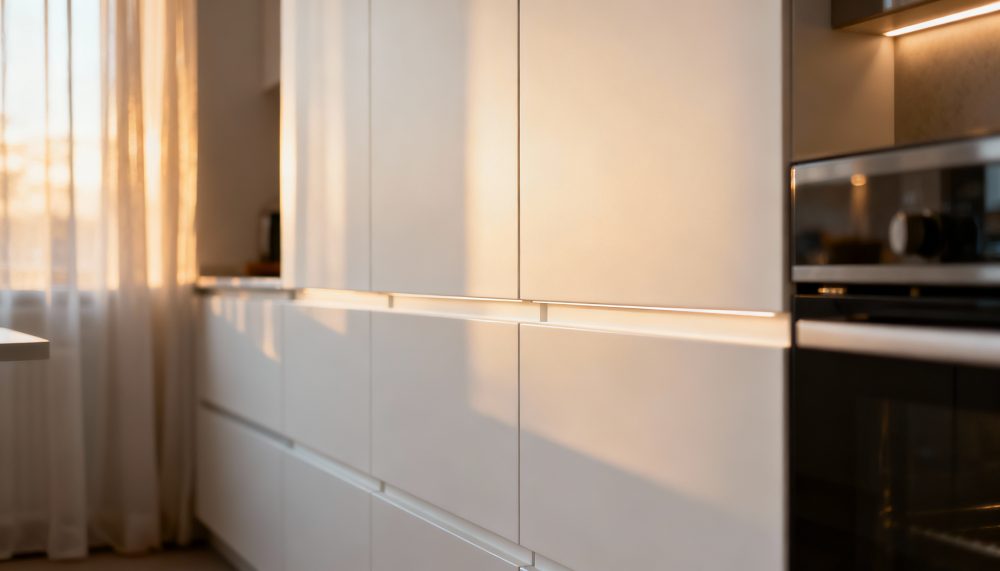 One of the most intriguing qualities is the capacity of handleless cabinet design to provide visual continuity — a design technique that makes small kitchens seem more roomy and even. Handleless cabinets let the eyes gently examine the space by eliminating projecting handles, knobs, and fixtures.
This clean look makes the kitchen appear more open and less divided by lowering visual clutter. Especially in tiny kitchens when every design feature vies for attention, visual continuity is quite successful; consistent cabinet fronts help to connect the area and create a sense of a bigger, more balanced one. Furthermore improving the flow feeling, handleless cabinets can be paired with built-in appliances, full-height units, or continuous countertops.
@ampquartzcabinets Dekat island pun boleh lerak hidden storage macamni tau! 😍 #AmpQuartz #island #hiddenstorage
Glossy finishes, reflective laminates, or basic wood grains help to amplify this impact as they let light to bounce across surfaces and soften the border between separate cabinets. Designers sometimes pair this with a subdued colour scheme or minor tone shifts to retain interest without disturbing the flawless appearance. Apart from appearance, visual consistency enhances utility: flat, smooth surfaces are simpler to clean and preserve, hence assisting in keeping the kitchen clean and clutter-free.
Handleless cabinet design uses visual continuity throughout as a fashionable option and as a functional response to modest space issues. The result is a contemporary, minimalist kitchen that appears bigger, more ordered, and visually quiet, thus illustrating how basic and well-organised techniques are very useful for improving spatial awareness.
Handleless Cabinet Design 3: Minimalist Aesthetic
Among their most intriguing qualities is the ability of handleless cabinet designs to create a minimalist appearance, which suits little kitchens especially well. Removing traditional knobs and pulls, handleless cabinets provide a clean, unbroken surface that immediately communicates order and simplicity.
This minimalist style enables the eye to traverse the room and provides the kitchen a larger, more airy impression than it actually is. It also helps to get rid of visual clutter. In addition to stressing quality above quantity, minimalism in design demands great attention to detail from counters to cabinets so as to create a coherent and intentional appearance.
Neutral colours, matte or glossy finishes, and fine textures emphasise the impression of size and help to avoid a crowded kitchen by reflecting light. Apart from looks, the minimalist approach promotes utility. Without projecting handles, motion inside the kitchen is more flowing, therefore reducing the chance of hitting equipment in small spaces. Along with design flexibility, minimal handleless cabinets allow continuous lines from floor to ceiling or smooth blending with equipment and countertops, therefore supporting the sensation of space.
Moreover, streamlining the design makes maintenance simpler since flat surfaces are easy to clean, therefore keeping the area tidy and highlighting its airy, open feel. The minimalist style of handleless cabinets gives both elegance and utility for those who want to get the most out of every square foot, proving that in terms of designing larger-feeling little kitchens less really is more.
Handleless Cabinet Design 4: Easy Maintenance
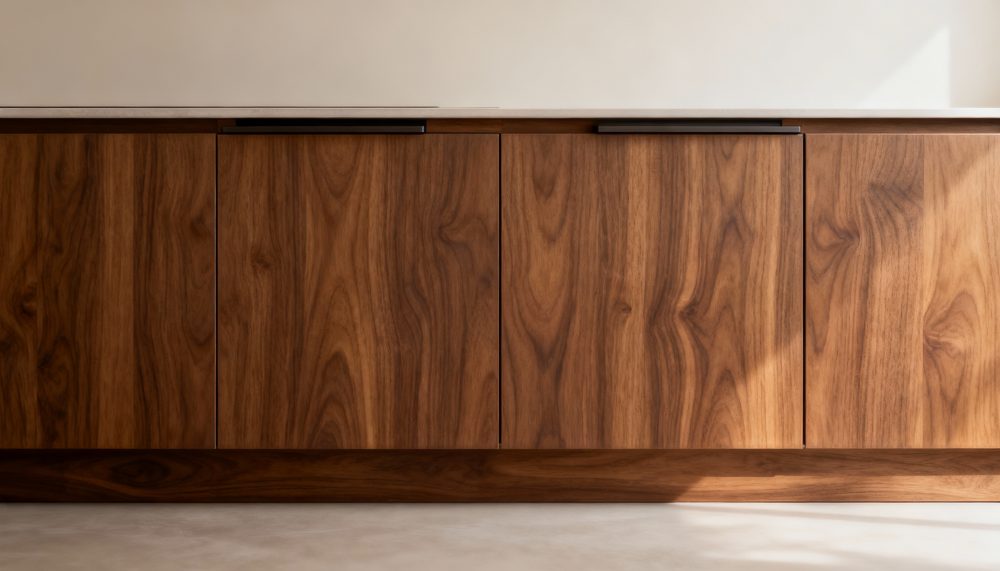 Among the most practical benefits of handleless cabinet design in small kitchens is the ease of maintenance it offers. More work is thus required to maintain the difficult-to-reach sections of traditional cabinets free of dust, oil, and grime using knobs, pulls, or handles.
Handleless cabinets on the other hand offer smooth, unbroken surfaces that may be easily cleaned using a wet cloth, therefore greatly reducing daily maintenance. Small kitchens where space is at a premium and mess or garbage can rapidly make the area look crowded and filthy especially benefit from this. Many contemporary handleless cabinets have push-to-open mechanisms or recessed grooves to get rid of projecting hardware, therefore reducing places where dust might accumulate even more.
@ampquartzcabinets Nak buat untuk full house cabinet macsmni boleh PM kami sekarang! 🤩🥳 #AmpQuartz #FullHousePackage #IskandarPuteri #CabinetMaker #fyp
Materials frequently used in handleless designs like matte laminates, high-gloss surfaces, or treated wood are also selected for their stain, smudge, and fingerprint resistance as well as their longevity, hence ensuring the kitchen keeps visually appealing with minimal effort. These cabinets enable visual openness by helping to clean; a clean, unbroken surface naturally enhances the sense of room, hence improving little kitchens than they are.
For customers looking for form and functionality, handleless cabinets offer a modern, elegant appearance with tangible benefits; this shows that a beautiful kitchen need not come at the cost of everyday upkeep. Simple upkeep helps the kitchen keep its pristine appearance every day by guaranteeing it stay a bright, welcome, and clean space.
Handleless Cabinet Design 5: Flexibility with Layouts
Given their excellent design adaptability, handle-less cabinet design is best suited for little kitchens where every inch counts. Designers can create unbroken, continuous surfaces all throughout the kitchen without conventional handles or knobs guiding the orientation or access to each cabinet.
This flexibility opens the door to original storage ideas like built-in appliances, floor-to-ceiling cabinetry, or continuous countertops precisely matching the cabinets. Moreover, lack of projection equipment enables islands, peninsulas, or tiny desks to be more readily incorporated without causing limited traffic flow or mobility problems.
Openness is promoted by this flexibility, therefore avoiding a crammed or enclosed appearance in tiny areas. Moreover, while keeping a consistent, contemporary appearance, handleless cabinets may be set to suit many designs from galley and L-shaped kitchens to single-wall settings. Thanks to the clear lines and regular surfaces that generate visual continuity, the eye is tricked into seeing the space as bigger and more well ordered than it truly is.
Homeowners can more enhance the clean, contemporary look of the kitchen by experimenting with several textures, colours, and finishes free of the distraction of knobs. In addition to maximising practicality, handleless cabinets’ design flexibility improves the general appearance of a space, therefore making small kitchens appear roomy, sophisticated, and efficient.