
Design a kitchen island that enhances your floor plan. Maintain the usefulness of the area by ensuring there is adequate space for movement, appliances, and seating. Your island turns into a natural extension of your kitchen’s style if you use the appropriate ratios and location.
Design A Kitchen Island 1: Define the Island’s Purpose
A very first step in designing a kitchen island that is both useful and complements your floor plan is deciding its purpose. Knowing the primary goal of a kitchen island will help to shape its dimensions, shape, and features even if it might be advantageous in several others.
For instance, if food preparation is your main objective, a big counter with robust, easy-to-clean materials is essential; integrated cutting boards or prep sinks may help with efficiency. On the other hand, adding a cooktop or oven calls for careful preparation for airflow, safety, and work flow if the island is intended to serve as a cooking centre to ensure it does not impede mobility between the refrigerator and sink.
On islands meant for eating or socialising, comfortable overhangs should be included; with legroom and movement taken into account to avoid traffic in crowded areas. Cabinets, drawers, or open shelving benefit storage-oriented islands since they might accommodate cookware, pantry goods, even tiny devices, thus helping to maintain the kitchen spotless and clear. Multi-functional islands are gaining traction by combining preparation, cooking, storage, and seating into one unit; however, to avoid overload or a disorganised appearance, balance of these uses requires skilful design.
Specifying the objective of the island guarantees, in the end, that every aspect — lighting, chairs, appliances, or storage matches your daily usage of the kitchen. Knowing precisely what you want your island to achieve lets you design a central feature that not only adds aesthetic value to your kitchen but also significantly increases its functionality and overall flow.
Design A Kitchen Island 2: Mind the Workflow
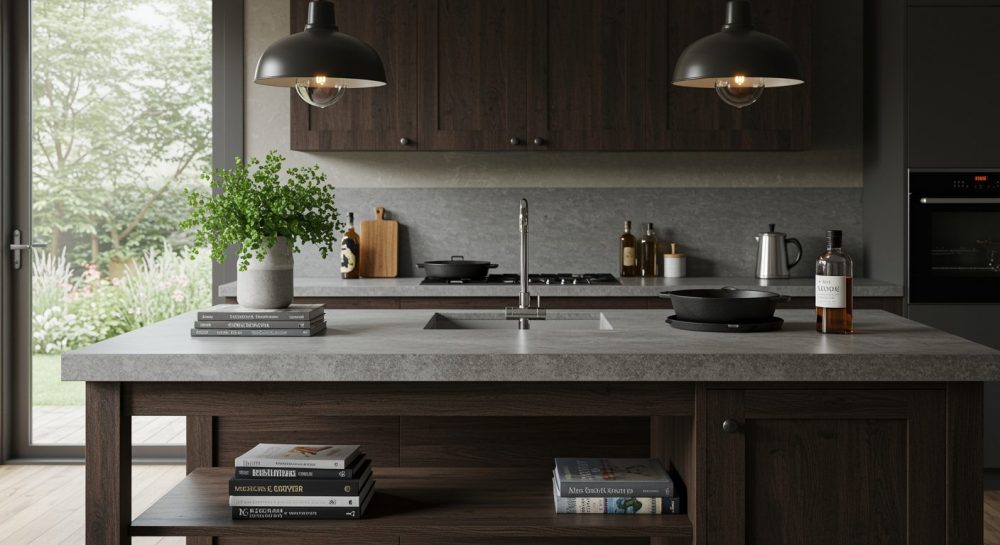 Maintaining an efficient workflow often dictated by the traditional kitchen triangle principle that is, the best spacing and arrangement between the refrigerator, stove, and sink is among the most crucial considerations while planning a kitchen island.
Rather than obstruct this movement, a well-designed island should let chefs to quickly move among cooking, preparation, and cleaning areas. Too near or too far from countertops or appliances will cause unneeded steps that disturbs the inherent flow of the kitchen; too near will cause clutter. Removing the need of erratic kitchen movement with cutting surfaces, preparation sinks, or more counter space for establishing ingredients, the island may be a helpful process link.
@ampquartzcabinets Boleh DM kalau nak pasang macamni jugak 🤩 #AmpQuartz #KitchenStorage #JohorBahru #fyp
Because the island is big enough for movement and good visibility, it lets many people work comfortably in kitchens exhibiting several chefs or daily events. A correctly sized island may help to add more food preparation space and storage in small kitchens without impeding traffic flow. Designers often suggest at least 36 to 48 inches of spacing surrounding the island to facilitate quick movement and simple cabinet and appliance access.
Homeowners can design a beautiful but very practical room by considering how the island interacts with the stove, sink, and refrigerator. Rather than only a location for food preparation, an island that celebrates workflow converts the kitchen into a nice, effective social gathering area.
Design A Kitchen Island 3: Integrate Seating Thoughtfully
Creating a kitchen island calls for exact seating arrangement to create a welcoming yet believable atmosphere. Design comfort, access, and traffic flow such that the island grows to be a natural meeting ground instead of a deterrent.
Starting with the primary purpose of the seating be it informal family meals, homework corner, or guest quarters — this will shape its size and design. Make certain the island features a suitable overhang around 12 to 15 inches to provide adults with enough legroom and comfortable seats. The height of the island depends on the kind of seating you plan to use — 42-inch counters’ bar-height stools or 36-inch tops’ regular counter-height stools.
Think about the gaps between chairs; at least 24 inches each person lessens congestion and increases mobility. Arrange the seating such as not to block the sink, stove, and refrigerator’s main kitchen work triangle in order to preserve a clean cooking and cleanup procedure. Lighting is another crucial factor; pendant lights over the seating area welcome guests and give fitting reading or eating light.
Lastly think about storage and multi functionalism: incorporating cabinets or drawers beneath the seating area will most efficiently employ space without compromising usefulness. Correct positioning of these components would improve the appearance as well as the utility of your kitchen since your kitchen island serves as a trouble-free meeting point for daily life, friends, and family.
Design A Kitchen Island 4: Choose Appropriate Materials
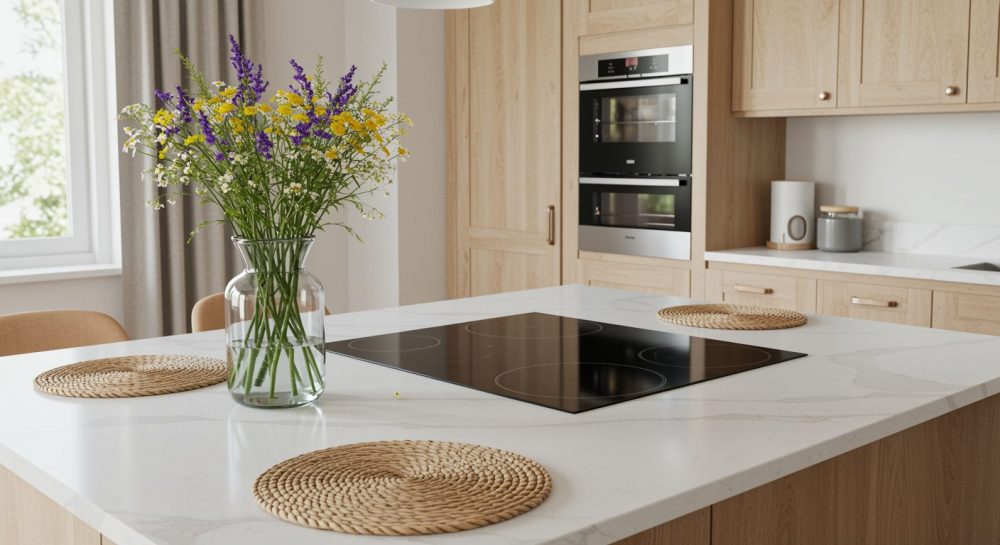 Choosing the appropriate materials is absolutely vital for constructing a kitchen island perfectly fitting visually and practically with its surroundings. Especially the material assistance of the counter sets the kitchen’s general mood in addition to establishing maintenance, lifespan, and utility.
Every of these favoured materials — quartz, granite, marble, and butcher block has particular benefits. Non-porous, very stain resistant, and very robust, quartz is ideal for demanding kitchens. Regular sealing is needed to extend the life of granite even if it has natural beauty and is heat resistant. Though it has an opulent, traditional look ideal for baker-friendly kitchens, marble marks and scratches quickly if not properly maintained.
@ampquartzcabinets Dekat island pun boleh lerak hidden storage macamni tau! 😍 #AmpQuartz #island #hiddenstorage
Though butcher block counters need constant oiling and care, their warm tactile surface lends themselves well to slicing and cooking. Other than countertops, many frequently used materials might help to improve the general appearance of your kitchen. Good plywood or solid wood provide strength and longevity; laminated or painted surfaces provide affordability and straightforward maintenance.
Consider how close cabinets, lighting, and floor interact with elements to create a homogeneous look that increases rather than loads the room. That is, in addition, coordinating your floor plan, wise material choices combines beauty, utility, and durability to guarantee your kitchen island will continue a strong, gorgeous focal point for years to come.
Design A Kitchen Island 5: Integrate Seating Thoughtfully
Proper preparation ensures seats are comfortable and practical without disrupting the flow of your house when they are incorporated into a kitchen island. One of the first factors to be examined, the overhang depth — typically 12 to 15 inches offers seated individuals enough legroom while keeping the countertop firm.
The island’s elevation is also important; bar-height stools fit with a 36-inch island; bar-height stools are best suited for an island around 42 inches. To prevent congestion and allow easy movement about the kitchen, chairs should be kept from frequently used areas as well as equipment doors. Thus, organisation is really important.
Multi-functional designs improve comfort and usability by, among other things, combining storage under seating or a combination of seating and worktop; so guaranteeing that the island meets several demands without appearing sloppy. Particularly pendant lights, lighting above the sitting area not only enhances decor but also distinctly distinguishes the eating space, therefore helping to create a cozy and inviting atmosphere for small get-togethers or informal dinners. The length of the island should also be related with the number of seats; hence, adequate room between stools typically 24 inches per person should be guaranteed to avoid cramped seating.
Surfaces should be sturdy and easily cleaned, especially in places with food and drinks, therefore careful material selection also improves the experience. Of course blending comfort and utility, a kitchen island has a dynamic meeting space for family activities, socialising, and light meals as well as use. Furthermore, it preserves a fluent and effective design.