
Minimalist kitchen movement emphasises simplicity and utility alongside urging homeowners to deliberately maintain tidy counters. It turns the kitchen into a calm, efficient area by giving essential tools and clever storage solutions top focus. Along with improving visual appeal, this clear counter philosophy encourages conscious cooking and easy maintenance.
Minimalist Kitchen Movement 1: Prioritising Essentialism
Essentialism, a philosophy promoting intention and purpose in every decision, lies at the centre of the minimalist kitchen movement. Focus on essentialism means carefully assessing every item that enters the kitchen, retaining only those that are genuinely practical or make pleasure, and letting go of superfluous debris.
This method turns countertops from storage areas into peaceful, orderly working surfaces, therefore enabling cooking and meal preparation to seem more flowing and concentrated. Essentialism goes beyond what is seen; it helps decisions on utensils, cookware, gadgets, and even pantry staples guarantee every item has a specific role and location.
Reducing extra helps homeowners create a kitchen that feels roomy, well organised, and visually quiet — one where every item has significance instead of decorative filler. This approach promotes deliberate buying behaviour, therefore causing people to reject impulsive purchases and instead concentrate on quality over volume. Essentialism could appear in practice as one multi-purpose appliance substituting for a number of superfluous tools or as a streamlined assortment of meals and tools satisfying daily needs without cluttering the space.
Less clutter on counters and shelves also helps to simplify upkeep and cleaning by lowering visual disorder and dust accumulation. Choosing essentialism in a minimalist kitchen finally reflects a lifestyle decision stressing clarity, efficiency, and purposeful living rather than just aesthetics. The kitchen turns into both a practical space and a haven of simplicity reflecting a dedication to deliberate design and deliberate daily routines by carefully organising it.
Minimalist Kitchen Movement 2: Streamlined Storage Solutions
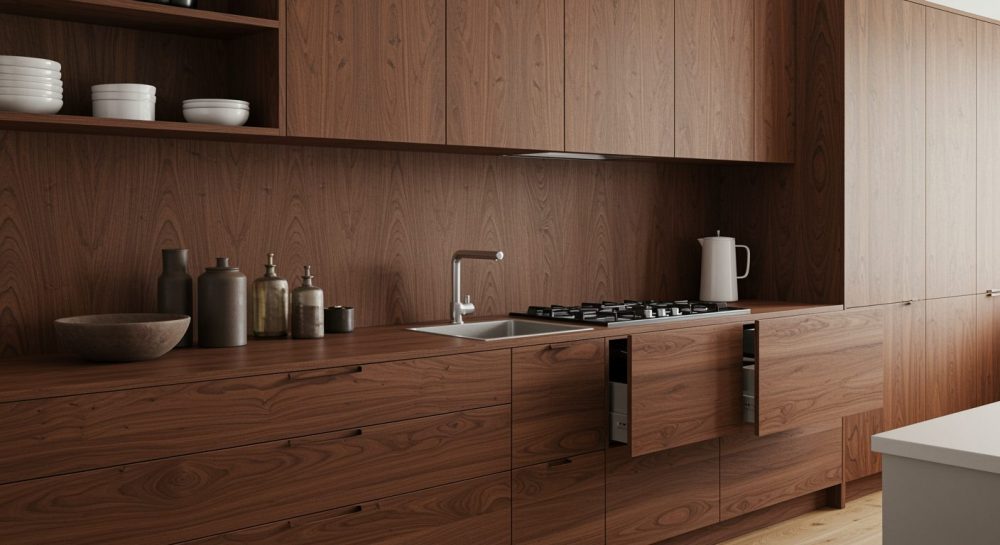 Using simple storage solutions is one of the most important components of both the clear counter philosophy and the minimalist kitchen approach. Most defines a peaceful and functional kitchen by the way items are stored instead of simply discarded.
First and foremost, minimalist kitchens give hiding and efficient storage top attention so countertops remain clutter-free hence producing the sense of spacious, airy, and simple to pass through. Modular cabinets, deep drawers, and pull-out shelves help to organise dishes, pans, and food pantry products so that they are easily accessible yet unnoticeable.
@ampquartzcabinets Our Aluminium Signature Series 🥳 DM kami sekarang untuk dapatkan Promo Merdeka! 🤩🎉 #AmpQuartz #KitchrnCabinet #Aluminium7G #storagecabinet #fyp
Tall cabinets and wall-mounted shelves enable often used items to be within easy reach, therefore minimising the need to leave tools or equipment on counters, therefore maximising every inch of space. Built-in niches for knives, cutting boards, and little appliances offer each object a unique home such that everything fits its position and nothing clashes with the minimalist visual line of the kitchen. Even open shelving is deliberately set to feature just necessary objects, with a focus on symmetry and consistency to keep the minimalist look.
By way of careful design, practical access, and accurate organisation, streamlined storage systems not only support the minimalist idea of perfect counters but also improve the general efficiency, usefulness, and serenity of the kitchen surroundings. Because the space restriction drives people to give quality over quantity, hence avoiding superfluous kitchen mess, simplified storage also promotes thoughtful consumption.
Minimalist Kitchen Movement 3: Simplified Countertop Design
One pillar of the minimalist kitchen movement is the idea of basic counter design, whereby openness and calm are promoted by keeping surfaces almost free. The countertop establishes the tone of the room in a small kitchen as a visual anchor rather than simply a practical working surface.
Confined counter goods to only cutting board, coffee maker, bowl of fresh fruit, the kitchen emits order and serenity. This method calls for intentional design and daily activities. Every appliance, cookware, or decorative item has to earn its place on the surface; so, balancing beauty and use. By reducing mess and using clever storage ideas including hidden cupboards, deep drawers, and pull-out organisers, often used items can be within reach without cluttering the counter top.
Furthermore, the selection of materials and finishes is quite important; smooth, robust surfaces like marble, quartz, or solid wood improve the simplicity impression while still addressing daily demands. Flush-mounted stovetops, built-in outlets, or integrated sinks help to give even minor features a slick and modern appearance.
A clean counter not only looks nice at last but also shows a way of living of consideration, focus, and effectiveness. Simple countertop design helps homeowners transform their kitchens into calm, functional areas that promote focus, creativity, and culinary pleasure.
Minimalist Kitchen Movement 4: Thoughtful Layout & Flow
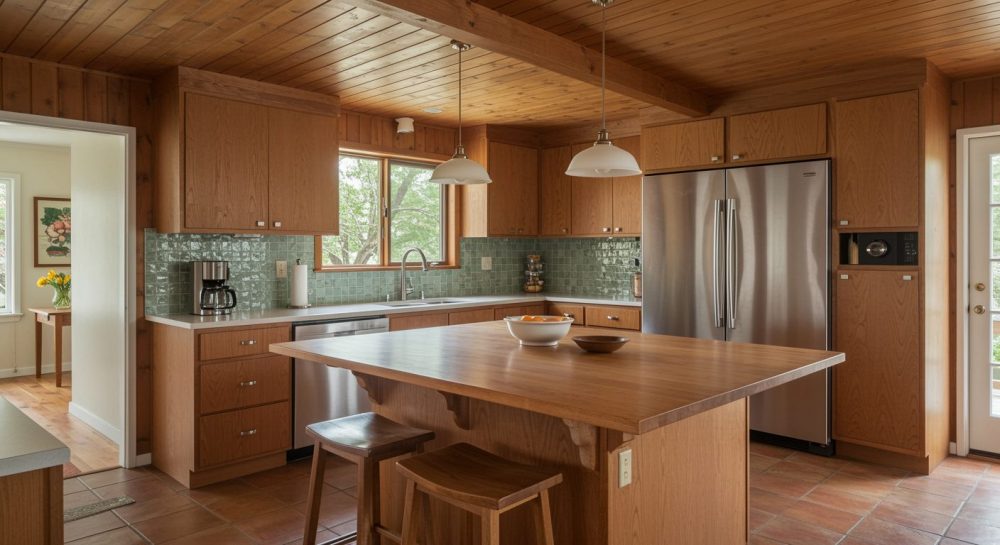 Achieving the distinct counter concept, in which function meets tranquil aesthetics, depends mostly on intentional design and flow in the minimalist kitchen movement. A well-planned arrangement assures that every kitchen component has a purpose location, hence reducing visual mess and unwanted movement.
Natural organisation of cooking, preparation, and washing zones guarantees smooth and cost-effective change from slicing vegetables to simmering a meal on the oven or washing dishes. This approach streamlines operations in addition to reducing the need to leave counters covered in random items, hence supporting the minimalist philosophy of purposeful living. Open spaces between these operational zones enable fast access and movement, therefore giving even in little areas the kitchen an airy, roomy appearance.
@ampquartzcabinets Why need an extra charge if you can take it fir FREE kan? 🤩 #AmpQuartz #pakejkabinet #free3ddrawing #cabinetmaker #fyp
Smart positioning of storage such pull-out cabinets, hidden cupboards, and vertical shelving helps the clean counter approach by keeping tools, equipment, and supplies near yet out of sight. Integrated devices help to improve this flow by creating perfect surfaces that support both practical application and visual harmony. Concerning lighting and sight lines, natural or well-placed artificial illumination also supports the eye along sharp, clear surfaces.
Every tiny detail from countertop elevation to frequently used items’ placement is deliberately chosen to boost simplicity, ergonomics, and efficiency. In the end, a minimalistic kitchen with a careful arrangement transforms cooking into a quiet, ordered activity, thereby demonstrating that mental clarity is directly influenced by spatial clarity, with a clean, open counter serves both as a functional work space and as a statement of thoughtful design.
Minimalist Kitchen Movement 5: Mindful Maintenance
The minimalist kitchen and basic counter philosophy’s space is changed by mindful maintenance from merely aesthetically beautiful to actually practical and stress-free foundation. Unlike kitchens filled with equipment, utensils, and decorative goods, a minimalist kitchen demands constant attention and deliberate upkeep.
Daily activities starting mindful maintenance are immediately replacing items to their appropriate storage after use and wiping down surfaces to avoid crumbs, stains, or watermarks. Apart from maintaining the sleek, clutter-free look, this habit helps to improve productivity and hygiene, therefore ensuring every item has its function and location. Equally vital is regular decluttering; knowing the usefulness of every tool, gadget, or container helps one to get rid of pointless clutter on counters and reduce their visibility.
Treating maintenance as a deliberate, almost meditative practice turns the kitchen into a haven of order and serenity, therefore fostering more conscious food preparation and consumption. Reminding homeowners to give quality over quantity in everyday activities and kitchen utensils helps to support the general minimalist approach of deliberate living. Essentially, conscious maintenance is about developing discipline, area respect, and consciousness rather than about perfection.
Regular maintenance helps the kitchen to reach its actual aim of a balanced environment where minimalism, beauty, and efficiency coexist by providing a clean, clear counter both visually and practically. With deliberate attention, the minimalist kitchen transforms from a design fad into a sustainable way of living promoting both usefulness and mental tranquility.