
Micro kitchen revolution is about making the most of every square inch without compromising style or function. Vertical shelving and pull-out drawers convert small spaces into productive work areas thanks to smart storage options. Careful planning guarantees that even the tiniest kitchens seem large, neat and a pleasure to cook in.
Micro Kitchen Revolution 1: Smart Space Planning
The basis of a micro kitchen revolution is smart space planning, which turns even the smallest areas into very effective and practical cooking hubs. Every inch counts in small kitchens, so thoughtful planning guarantees that workflow, storage, and movement are best suited.
Among the most crucial ideas are the work triangle, which methodically places the fridge, stove, and sink within near yet clear reach.This makes cooking less of a chore and eliminates pointless steps. Equally important is zoning, which divides comparable tasks — prep, cooking, and cleaning into set areas such that every activity has its own working space without interference. With tall cabinets and wall-mounted shelves capitalising on otherwise unused height, vertical space must be used as much as possible.
Narrow cabinets and pull-out racks allow spices, oils, and equipment to reach even the tiniest gaps. Careful appliance placement, say under-counter dishwashers or tiny ovens guarantees they are readily accessible while avoiding obstruction of movement. Another crucial element is traffic flow; door swings, walkways, and work areas must be clear to prevent cramped or uncomfortable conversations. Countertop space even can be carefully designed utilising drop-leaf or pull-out surfaces that grow only when needed.
Smart spatial planning is enhanced by lighting and visual clues such reflective surfaces and under-cabinet lights, which also expand the space. Through close attention to every functional and spatial connection, micro kitchens may seem big, well arranged, and very efficient — evidence that with the right approach, restricted area does not translate into limited ability.
Micro Kitchen Revolution 2: Clever Storage Systems
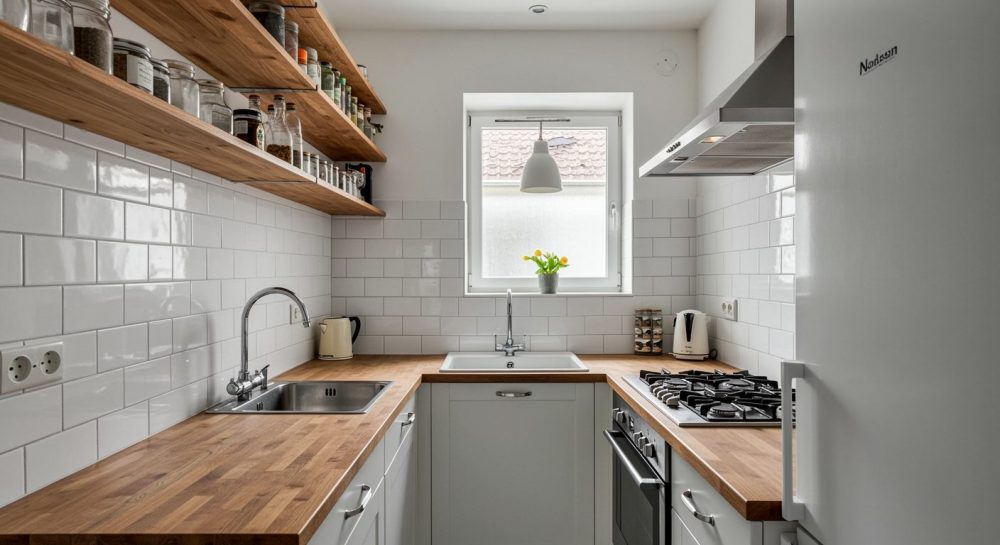 In a micro kitchen, the foundation of getting every inch without sacrificing design or utility is smart storage solutions. Tall cabinets, wall-mounted shelves, and hanging racks convert underused wall space into easily accessible storage for cookware, pantry necessities, and decorative goods — a game-changer in vertical storage.
Slim pull-out racks and small cabinets make use of spaces between bigger appliances to hold spices, baking sheets, or bottles that would otherwise litter counters. Customisable separation is made possible with modular organisers and drawer inserts, hence preserving utensils, cutlery, and small appliances properly sorted yet readily accessible. Open shelving, curated carefully, gives individuality while keeping often used objects inside arm’s reach while still preserving a feeling of openness.
@ampquartzcabinets Cepat PM kami! 🤩 #AmpQuartz #SolidPlywood #KitchenCabinet #fyp #fyppage
For little appliances, pull-out pantries or appliance garages hide blenders, coffee makers, or toasters, therefore clearing countertop area for preparation. Hooks, magnetic strips, and pegboards can be placed on walls or on cabinet doors to store pots, knives, and utensils effectively. Vertical real estate is used in ways that modern kitchens seldom investigate even in ceiling-mounted pot racks or over-the-sink shelves.
Smart storage in micro kitchens is about arranging natural zones where everything belongs, hence lowering visual clutter and streamlining processes, not merely about cramming more in. Integrating these systems judiciously will make even the smallest kitchen feel roomy, tidy, and completely functional, demonstrating that contemporary small living depends on smart storage rather than a luxury.
Micro Kitchen Revolution 3: Personalisation & Style
Every inch matters in a micro kitchen, but personalisation and style help to create an inviting and useful environment. Through deliberate design choices, colour schemes, and ornamentation, even the tiniest kitchen can capture character.
Light, coherent tones like soft whites, muted pastels, or warm neutrals may give a tiny space a sense of openness and size; selectively pops of colour through backsplashes, cabinet handles, or tiny appliances provide character without overpowering the area. Materials like wood, metal, and ceramic add depth and warmth to the kitchen, making it layered and dynamic even with small square footage. Textures also have a crucial influence here.
Open shelving gives one the chance to show selected goods like elegant mugs, glass jars, or a tiny herb garden, therefore combining utility with visual appeal. Little accents like art prints, magnets, or patterned carpets may add flair yet be useful. Personalised details go beyond just aesthetic unity: matching containers, labeled bins, or custom drawer inserts also streamline everyday cooking routines.
From elegant pendant lights to under-cabinet LED strips, lighting options call attention to important locations and raise the general mood. Personalisation in a micro kitchen is ultimately about designing a place that feels purposeful, tidy, and reflective of the user’s taste, therefore proving that even modest rooms can be lively, friendly, and unmistakably your own.
Micro Kitchen Revolution 4: Material Choices That Help
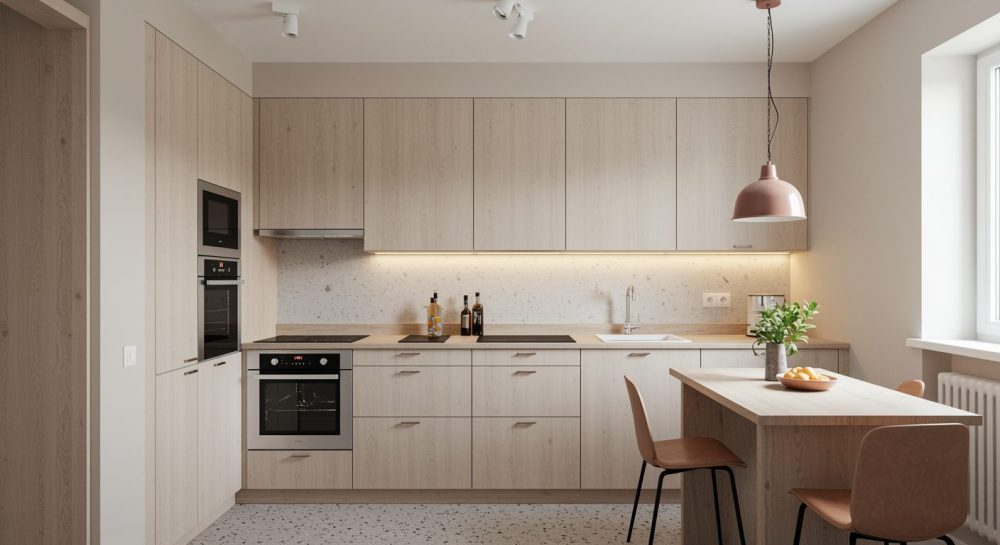 Material selections are critical when planning a micro kitchen since they greatly influence space perception and usefulness every inch counts. Choosing light-reflecting surfaces like glossy laminates, polished quartz, or glass backsplashes can visibly enlarge a small kitchen by reflecting both natural and artificial light around the space.
Durable materials are as crucial; tiny kitchens experience constant everyday usage, therefore choosing scratch- and stain-resistant counters, moisture-resistant cabinets, and sturdy flooring guarantees longevity without regular upkeep or repairs. Like countertops doubling as prep stations or cutting boards inserted into the surface, multi-functional materials improve efficiency by enabling work flexibility free of clutter.
@ampquartzcabinets 5G Aluminum European hanya RM12,999 je? Cepat PM kami untuk dapatkan harga promo ni! 🤩🥳 #AmpQuartz #KitchenCabinet #5GAluminium #endyearpromo #fyp
Using materials like stainless steel, wood accents, or stone to bring warmth and depth without flooding the area, textural contrast can also improve a small kitchen. Low-maintenance surfaces also lighten the weight of ongoing cleaning in restricted spaces; seamless quartz countertops or treated laminates stop seams or edges from trapping dirt.Even flooring helps with safety and utility: materials like vinyl planks or large-format tiles that are simple to clean, long-lasting, and slip-resistant add to both.
Choosing materials with these characteristics enables a micro kitchen to seem more spacious, functional, and fashionable, therefore showing that careful design transcends just arrangement to the very surfaces determining the area. Every material choice matters in little kitchens, so every inch is both attractive and useful.
Micro Kitchen Revolution 5: Ergonomics for Comfort
Ergonomics is the secret ingredient in a micro kitchen that turns a small, tense room into an effective and pleasant cooking environment. Appropriate ergonomics guarantees that every inch of the kitchen cooperates with rather than against the body, therefore minimising stress and enabling daily activities to seem effortless.
Counter heights are really important; matching them to the main cook’s height lets one chop, whisk, and wash dishes comfortably without stretching or straining, therefore preventing early tiredness. Equally crucial is the idea of “easy-reach zones,” where often used goods ranging from spices to cutlery are kept between knee and shoulder height to reduce pointless stretching or strange postures.
Accessing high cabinets safely and effectively in small kitchens frequently calls for innovative ideas including built-in step stools, pull-out shelves, or sliding racks. The arrangement should be a natural flow whereby preparation, cooking, and cleaning areas combine to create a perfect work triangle, therefore lowering the amount of footsteps and motions required to finish activities. More comfortable experience results from even minor changes like arranging grips for simple handling, utilising soft-close drawers, or putting task lights at ideal angles.
Essentially, ergonomics in a little kitchen is about fitting the room to human demands, striking a balance between utility and ease, and anticipating every movement to minimise tension. If well used, these ergonomic approaches not only make cooking safer and more effective but also transform the little kitchen into a very practical, welcoming, and remarkably pleasant area where every inch actually counts.