
Compact kitchens require specific thoughts and considerations in terms of planning the space. There are certain areas of concern home owners should think of should they have a compact home kitchen. Listed below are some key aspects to know.
Compact Kitchens 1: Overlooking Storage Needs
Overlooking storage requirements is among the most frequent and expensive errors one might make when planning a little kitchen. Every inch matters in a little kitchen, and lack of planned storage can quickly turn your kitchen into a dishevelled, irritating area.
Unlike bigger kitchens where you may purchase extra countertops or islands to store appliances and tools, little kitchens need clever, practical storage arrangements. Countertops become clogged with daily items without enough storage, therefore restricting space for food preparation and cooking. This disorder makes the kitchen seem cramped and chaotic in addition to lowering workspace. Many homeowners make the mistake of only installing conventional cabinets, therefore ignoring the possible of vertical and hidden storage.
Though they provide wonderful possibilities for more shelves, hooks, or cabinets freeing up floor and counter space, walls above appliances and counters are sometimes underused. Another often wasted place because of subpar design are corner cabinets; without dedicated pull-out shelves or lazy Susans, these areas turn into ghost regions. Deep or hard-to-reach cabinets also run the risk of causing forgotten or piled-up goods to be wasted.
Adding drawers with organisers, pull-out pantries, and custom cabinetry will help to maximise every inch and make necessities readily available. Ignoring storage requirements not only reduces kitchen usefulness but also raises anxiety throughout cleanup and cooking. For small kitchens, the motto should be every area is storage space; failure to embrace this mentality is a design failure you just cannot afford.
Compact Kitchens 2: Ignoring Counter Space Needs
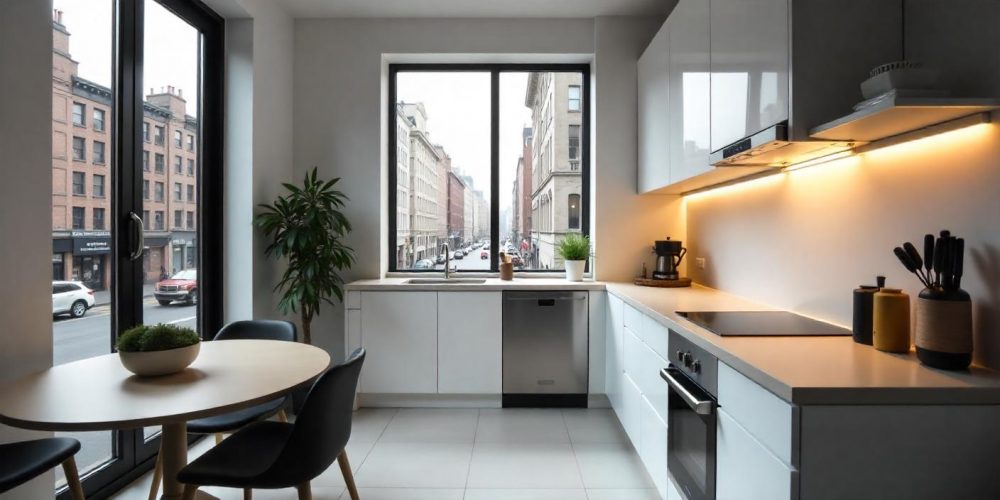
Ignoring the critical requirement for enough counter space is among the most expensive blunders in planning a little kitchen. In a tiny kitchen, every inch matters; the countertop is where most of the activity takes place—from chopping vegetables and combining ingredients to plating meals and even storing tiny appliances.
Cooking gets cramped, ineffective, and stressful without adequate clear counter space. Many small kitchen layouts make the mistake of foregoing countertop space in favour of more equipment, storage, or decorative features. Although it may be enticing to use every nook for appliances or cupboards, this strategy seriously restricts your working area and interrupts the natural task flow of kitchen. For instance, positioning the sink, oven, and refrigerator close together without any usable surface in between might severely restrict work flow, making it challenging to cook meals conveniently.
@ampquartzcabinets When the team’s trying to capture our latest RM100K+ aluminium kitchen masterpiece in Kempas, but I can’t resist stirring things up! 🤭 Trust me, you’d be playful too if your kitchen had 90% storage compartments—imagine all the snacks you could hide! 🍪 #AmpQuartz #DesignedByYou #BuiltByUs #KitchenGoals #JohorHomes
Furthermore, counters that are untidy or crowded discourage order and cleanliness, frequently resulting in a disorganised kitchen that seems even smaller. Clear, easily accessible countertop space next to vital work areas especially close to the stove and sink, where most food preparation takes place, helps one to avoid this fail. Over-the-sink work surfaces, pull-out cutting boards, or fold-down counters are among the multifunctional solutions designers often advise for extending your workspace without increasing footprint.
Countertops made of light-coloured, strong materials can visually expand the area and simplify maintenance. Ignoring counter space requirements in a small kitchen ultimately compromises both practicality and pleasure, hence it is a design failure you just cannot afford.
Compact Kitchens 3: Skipping A Functional Layout Plan
Among the worst design errors you can make when building a little kitchen is skipping a functional layout plan, which can severely impair convenience as well as usability. Every inch of space in a little kitchen is valuable, therefore an unexpected or badly planned layout results in unused spaces, uncomfortable mobility, and ineffective processes.
While larger kitchens allow you to test and fit additional appliances or storage containers, tiny kitchens demand a carefully considered design that maximises utility and minimises disorder. Without a working layout plan, you run appliances placed too close together or too far apart runs danger. This will make daily tasks like cooking, cleaning, and meal preparation extremely challenging. It affects, for example, the fundamental work triangle that promises kitchen efficiency if the fridge is hidden from the cooking area or the sink is located too far from the stove.
Moreover, skipping the design causes disregard of important design features such as vertical shelving, pull-out drawers, or corner storage solutions, all of which are essential for a small kitchen to maximise storing capacity without straining the room.Particularly if several people are in the kitchen at once, which will make it seem small and irritating, the lack of a well-thought-out plan can cause traffic bottlenecks. Moreover, you run the danger of producing a space that feels dark, uncomfortable, and unpractical if you dons’t map out the location of lighting, power outlets, and venting.
Finally, a small kitchen without a practical floor plan loses its possibility to be a very effective and enjoyable area; it transforms what should be a practical centre into a cramped, clumsy space that restricts your social events and cooking.
Compact Kitchens 4: Choosing Dark Or Heavy Finishes
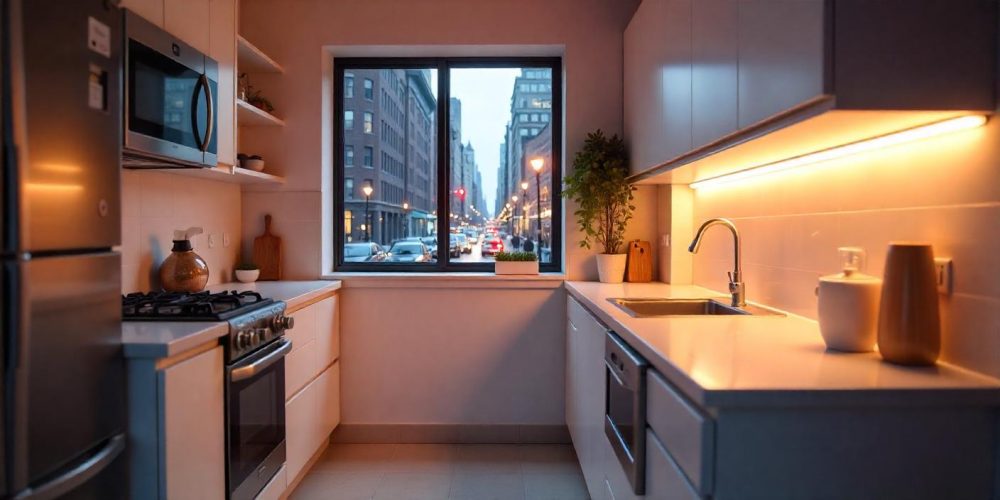
Choosing dark or weighty finishes is among the most typical and expensive design flaws in small kitchens. Dark tones like deep browns, blacks, or navy can give bigger rooms a sense of luxury and sophistication, but they can make small kitchens feel cramped, dark, even claustrophobic.
This visual density makes a room already small seem even more small and constricted by lowering the awareness of space. Strong finishes like hefty stone counters with vivid patterns, thick wood grain cabinets, or elaborate hardware can overwhelm a small kitchen’s fragile equilibrium. These decisions generate a visual clutter that battles with the small physical room and hence leaves less room for the eye to relax and the brain to feel at ease.
@ampquartzcabinets Siapa pulak lofa ni? 😅 #AmpQuartz #KitchenCabinet #luckydraw #pakejmurah #pakejsaturumah #fyp #fyppage #fyppppppppppppppppppppppp
Moreover, dark surfaces take in more light, which is bad in tiny kitchens where achieving a light, airy decor depends on maximising natural or artificial lighting. Light-coloured finishes such whites, gentle pastels, or light greys reflect light and help to visually expand the space. Simple hardware and sleek lines minimalist cabinets can improve this impression and create more room in the kitchen.
Choosing finishes that seem light and understated increases usefulness in addition to improving looks; it makes the kitchen more welcoming and practical. Avoiding dark or heavy finishes is vital to make a small kitchen appear more comfortable, brighter, and bigger; this design blunder you absolutely cannot afford to make.
Compact Kitchens 5: Choosing Oversized Appliances
Among the most common and expensive design mistakes in little kitchens is choosing big appliances that just won’t fit the limited area. While it may seem appealing to maximise utility by including a full-sized refrigerator, wide ovens, or large dishwashers, these heavy equipment often overwhelm the kitchen design and somewhat restrict motion.
In a tiny kitchen, large appliances occupy valuable counter and floor area, hence negotiating the kitchen easily or completing daily cooking chores effectively is difficult. Every inch of area counts. While big ovens might leave too little space for preparation surfaces, oversized refrigerators may hinder counter access or block cabinet doors. The outcome is a crowded, cluttered environment that seems more stressful and less practical.
Furthermore, bigger equipment can consume more electricity and be more difficult to maintain, therefore increasing long-run expenses. Better ways are to choose appliances made especially for little kitchens — compact, space-saving, or multi-functional ones. Built-in or under-counter appliances help to preserve clean lines and maximise available area by appropriate sizing appliances for the kitchens scale, you establish a harmonious flow that improves both comfort and efficiency.
Slim refrigerators, drawer dishwashers, combination microwave-oven units, and induction cooktops with smaller footprints fit better and frequently offer more versatility.