
Diagnosing a design fail starts when you notice your countertop overpowering your modest kitchen instead of improving the space. Dark finishes, enormous slabs, or poor material decisions might cause the area to seem cramped and closed in. To generate visual flow and maximise every inch, the correct countertop should balance proportions, colours, and practicality.
Diagnosing A Design Fail 1: Overwhelming the Space with the Wrong Material
Every design decision counts in a tiny kitchen, notably your countertop. Selecting the incorrect substance might fast overload the room and make it appear small or visually heavy. Dark, glossy granite or energetic, high-contrast marble designs might seem rich in a showroom, but in small settings they usually rule the space and give the room a smaller appearance.
Thick countertop slabs or strong edge profiles adding superfluous bulk are therefore also The aim of a modest kitchen should be to produce equilibrium and lightness such that the eye may traverse the room without difficulty. Quartz, Silestone, or light-toned laminates provide a sleek, modern look while reflecting light to enlarge the room.
Soft veining, delicate patterns, and matte finishes add texture and interest without overpowering the design. Matching your countertop with coordinating cabinetry and backsplash colours also preserves visual flow, therefore guaranteeing that the surface improves rather than challenges nearby items. Another typical error is overlooking the interplay between the countertop and lighting. While too matte surfaces can darken a room, reflective finishes can produce glare under strong task lights.
Choosing a finish matching your lighting plan guarantees a uniform and pleasant appearance. Ultimately, the best countertop in a small kitchen is one that feels integrated— visually light, low maintenance, and proportional to the size of the room. Selecting the appropriate material will make even the smallest kitchen seem open, light, and exquisitely balanced.
Diagnosing A Design Fail 2: Lack of Integrated Functionality
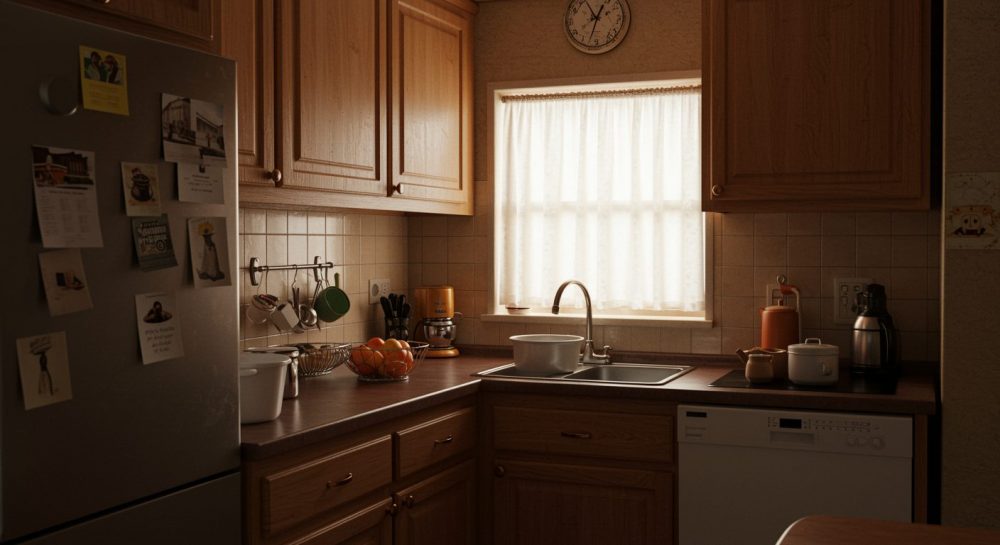 In a small kitchen, every inch of counter counts; if the surface isn’t multifunctional, it soon turns against efficiency. Without an integrated functional counter top, even the most contemporary kitchen can appear constricted and congested.
Many homeowners forget built-in solutions that can transform confined counter space into a multifarious workspace: recessed cutting boards, pop-up outlets, or slide-away prep areas. Daily culinary tasks such cutting vegetables, storing food, or running tiny appliances compete for the same limited area without these smart integrations, hence upsetting and visually chaotic. Similarly, not utilising the area beneath or next to the counter for secret storage such as pull-out garbage cans or beneath-counter drawers — wastes precious opportunities.
@ampquartzcabinets Apa yang korang akan dapat dalam pakej Solid Plywood RM8,999 ✅ Nano Stainless Steel Sink Black ✅ Pull Out Water Tap ✅ Sayce Rack ✅ Cutlery Tray ✅ Soft Closing Hinge ✅ Stainless Steel Dish Rack ✅ Gas Tray ✅ Upgrade to 40mm Double Profile ❌ No hidden cost ❌ No extra charges Cepat PM kami sekarang atau komen “SAYA NAK”! 🥳 #AmpQuartz #KitchenCabinet #SolidPlywood #pakejmurah #johorbahru
Good means to reclaim room and improve workflow are integrated sinks with over-sink cutting boards or fitted accessories. The objective in a little kitchen should be to make the countertop work more rather than just look appealing. Usually preferring form over function, a design usually reduces usability, hence compelling homeowners to handle duties in a dense surroundings.
Choosing a countertop system with close matches for modular accessories will significantly improve efficiency as well as appearance. A well-designed counter in a small kitchen should finally seem like a smooth extension of your cooking habit — streamlined, adaptable, and purpose-driven, thus enabling you to do more with less.
Diagnosing A Design Fail 3: Ignoring Maintenance and Durability
Concerning small kitchen design, failing maintenance and durability can quickly change your counter from a showpiece into a source of daily aggravation. In small quarters, every surface serves triple role as storage, dining table, and occasionally even preparation area.
Choosing materials that won’t keep up — porous marble, untreated wood, or cheap laminate, among others often leads to blemishes, scratches, and warping that impairs usefulness as well as appearance. There is not much room in a small kitchen to hide damage, so a badly performing surface rapidly becomes an eyesore. Because they need consistent sealing and cleaning, high-maintenance counters consume your energy and time.
For busy professionals or families, this regular maintenance could transform your kitchen into a task instead of a comfort. Durable, low-maintenance materials like quartz, Silestone, or solid surface composites offer a better choice. They survive heat, stains, and impact while keeping a glossy, polished look. Their non-porous nature also ensures superior cleanliness, which is especially important in tiny homes where cooking and cleaning mix. Giving longevity top priority does not mean sacrificing flair; modern engineered stones have sophisticated finishes that mimic marble or concrete without the bother.
Your countertop should withstand daily demands while enhancing the appearance of your kitchen, hence the ultimate is balance. Design strong since a countertop that looks good only when it’s new is not a design, points in little kitchens rather than afterthoughts. Success is a design failure just waiting to occur.
Diagnosing A Design Fail 4: Poor Colour Coordination
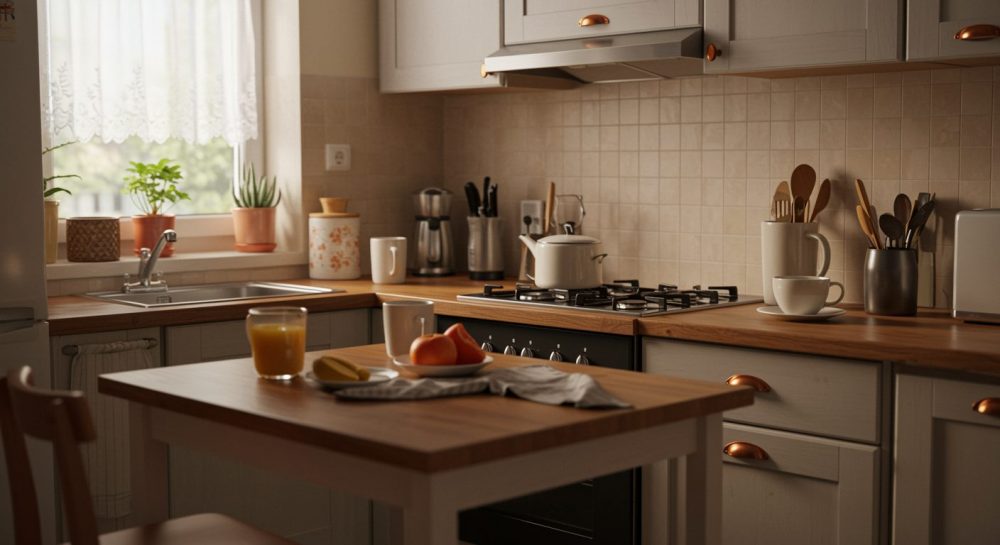 Colour harmony is about spatial awareness in a little kitchen rather than just aesthetics. Your countertops might seem uneasy and little than they are one minute as they conflict with the hues of your cabinets, backsplash, or flooring. Matching a cool grey counter with warm, honey-toned wooden cabinets, for example, creates visual contrast that interferes with flow.
Likewise, using too different colours may visually chop up the space and thus push every surface to contend for attention rather than to harmonically collaborate. On the other hand, a consistent colour scheme suggests openness and balance and enables the gaze to quickly explore the area. When matched with similarly toned cabinets, counters in softer colours such as pale grey, creamy white, or pale beige reflect more light and create an easy, airy appearance.
@ampquartzcabinets Korang yang mana pulak? 🤩 #AmpQuartz #kitchencabinet #cabinetmaker #johorbahru #fyp
Warm cabinets pair well with warm flecks on a countertop; colder undertones suit whites, blues, or greys; even subtle undertones matter. Homeowners seeking contrast should go for a balanced pairing that is, a soft white counter top against matte black or navy cabinetry so that the shift appears deliberate and anchored. Adding the same colour family in your backsplash or accessories will help to even further tie the overall look together.
Among the most frequent yet preventable design mistakes in small kitchens are poor colour coordination at last. Attention to undertones, equilibrium, and light Instead of a visual impediment, reflection may turn your countertop into a unifying decorative element improving capacity and usefulness.
Diagnosing A Design Fail 5: Ignoring Proportion and Scale
Many homeowners overlook this when picking countertops, but proportion and scale are absolutely essential to striking balance and visual harmony in a tiny kitchen. Too weighty, too long, or extends too far beyond cabinets, a countertop may swiftly make a little kitchen feel top-heavy and cramped.
While massive edges and strong overhangs might look luxurious, they occasionally obstruct the room’s flow in small areas and make cabinets seem squat. Likewise, combining enormous stone slabs with small base cabinets might disturb the kitchen’s visual flow, highlighting the discrepancy rather than the general concept. A thinner countertop form, however, roughly 20mm gives a more modern and clean appearance that improves spatial awareness.
Giving cabinet lines a sharper and stretched look therefore results in a lighter space. The choice of edge treatment also has an impact on the perception of scale; plain, straight edges appear lighter and more modern than elaborate bevels or bullnose surfaces. Designers occasionally advise aligning countertop dimensions and thickness to the general cabinet design and ceiling height in order to maintain a consistent look.
Good ratios help the countertop to seem to be a natural follow-up of the kitchen rather than an overpowering centrepiece. Paying close attention to proportion and Scale guarantees that your countertop supports not fights — the design of your tiny kitchen, hence producing a room that seems well-balanced, spacious, and perfectly planned.