
Small kitchen saboteurs frequently dwell in plain view such as cluttered countertops, huge furniture, and bad lighting selections create claustrophobic quarters. These typical design errors can transform daily cooking into a struggle by weakening both flow and functionality. Avoiding them reclaims valuable space and reestablishes equilibrium in your kitchen’s design.
Small Kitchen Saboteurs 1: Overcrowding the Space with Cabinets or Appliances
Overcrowding a small kitchen with too many cabinets or huge equipment is among the most frequent design faults. Although the goal is typically to maximise storage, the outcome frequently backfires: a kitchen seems small, visually heavy, and challenging to navigate.
Every inch in small designs has to be deliberately plotted. Full-height cabinets or heavy corner units without regard of flow can obstruct natural light and make the space seem boxed in. Selecting appliances made for bigger kitchens — double-door refrigerators or oversized ovens, for instance can similarly strain restricted floor space and compromise useful countertop surface.
The key is balance — mixing visual transparency with practical usefulness. Choose thin, built-in, or multi-purpose devices that fit well with cabinetry for a sleek appearance. Open shelving or glass-front cupboards on upper walls can help to preserve an airy feel while still providing storage. Using underused nooks without overcrowding the floor space, vertical storage or pull-out pantry systems provide yet another clever approach.
Recall that in tiny kitchens, negative space is as crucial as storage; it lets the eye to relax and movement to be seamless. By encouraging the desire to fill every hole and instead carefully selecting key components, you may create a kitchen that feels roomy, functional, and welcoming — evidence that when made purposefully, less may be more.
Small Kitchen Saboteurs 2: Forgetting Clear Counter Zones
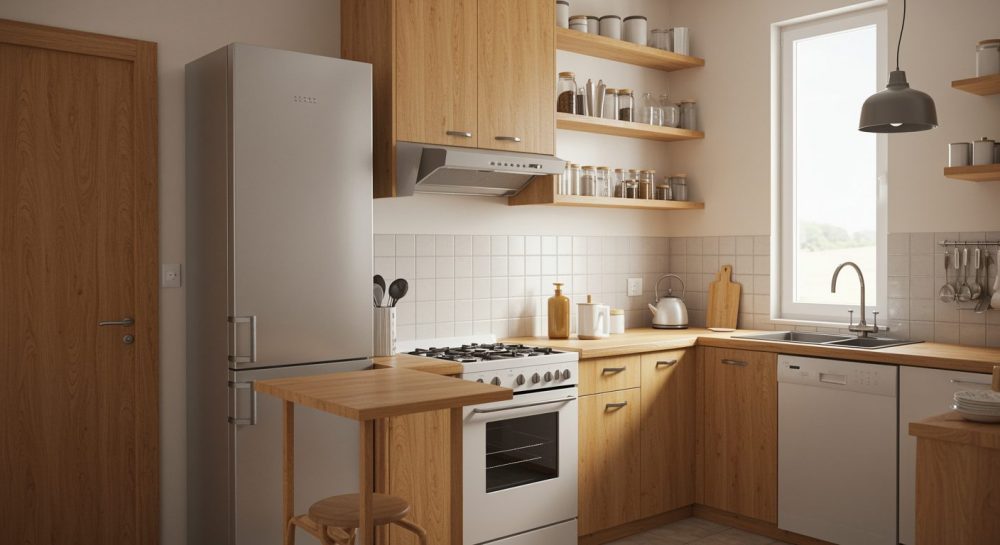 Lack of well defined counter zones is among the worst hindrances to little kitchen usefulness. In small designs, every inch counts; still, many homeowners fail to realise the need of creating separate areas for food preparation, cooking, and clean up.
The countertop interferes with workflow and turns even basic chores into annoyingly difficult ones when it catches small appliances, food items, or utensils. An untidy surface not only restricts available area but also causes visual chaos that shrinks the kitchen’s perceived size. The answer is purposeful zoning.
@ampquartzcabinets Save video ni! Cepat PM kami untuk dapatkan harga menarik bulan Oktober ni! 🤩🥳 #AmpQuartz #FullHousePackage #HomeRenovation #CabinetMaker #CabinetJB
Keep the prep area next to the sink for quick washing and chopping, while saving area near the stove for cooking necessities, for instance. When necessary, incorporating pull-out or foldable countertops will also expand working space; afterward, they will fold away nicely. Likewise, clever storage ideas like under-cabinet racks or appliance garages — free counters while preserving access to basics. These delicate differences improve both comfort and efficiency even in a tiny kitchen.
Clear areas enable a smooth workflow where every tool and ingredient has its purpose. The outcome is a room that seems well designed, open, and ordered — proof that in little kitchens functionality flourishes not via abundance but through careful planning.
Small Kitchen Saboteurs 3: Skipping Vertical Storage Opportunities
In tiny kitchens, every inch counts including the one above your eye level. Ignoring vertical storage choices is among the most frequent design flaws that impedes both flow and usability. Many homeowners miss the vast property that walls and ceilings provide and concentrate just on base cabinets and counters.
Avoid vertical solutions; counter surfaces are quickly swallowed by clutter, turning your kitchen cluttered and unclean. Tall cabinets, open shelves, or even racks mounted on the ceiling can greatly improve storage without increasing your footprint. Floor-to–ceiling cabinets, for example, use often under appreciated upper wall space to keep rarely used products neatly kept but readily available.
Slim pull-out pantry towers may also fit into small spaces between equipment to maximise uncomfortable angles. Tiny modifications like magnet knife strips, hanging rails for utensils, or mug hooks can free up drawer space and keep accessibility for basics. Vertical design is also eye-catching and creates the impression of a room that is airy and lofty. The secret is keeping equilibrium; too much overhead storage could give the room a bulky look; so match lighter hues with open shelves and taller objects.
Rather than merely a lost design opportunity, skipping vertical storage is now a choice that might make a little kitchen appear smaller and less effective. One of the most basic ways to change a small culinary area into a well-arranged, practical, and visually bigger kitchen is to embrace height.
Small Kitchen Saboteurs 4: Ignoring the Kitchen Work Triangle
 Neglecting the kitchen work triangle is among the most frequent yet unnoticed design flaws that can destroy the utility of a little kitchen. This tried-and-true design philosophy guarantees effective mobility between the three main work areas — the sink, stove, and refrigerator.
Daily cooking in small kitchens might feel heavy even with a few more steps or odd positions. Setting the refrigerator too far from the work space or the sink in a solitary corner causes needless backtracking, therefore interrupting the normal flow. A badly designed layout not only wastes time but can also result in cluttered counters and traffic when more than one person utilises the kitchen. The secret to restoring usability is balance and flow.
@ampquartzcabinets Kalau takde idea corner area nak buat macam mana, boleh try pasang pull-out corner rack ni tau! Functionable sangat 🤩 #AmpQuartz #KitchenCabinet #storage #cornerarea #fyp
Ideally, these three points should form a triangle with clear, unobstructed paths, therefore enabling fluid transitions between cooking, washing, and prepping. This does not always necessitate a tight triangle in tiny areas; a well-aligned linear or L-shaped configuration can provide equal efficiency with astute design. Efficient use of limited square footage while still maintaining this important work relationship is aided by small solutions like multi-purpose islands, moveable prep carts, or corner sinks.
Homemakers guarantee every inch of space has a function by honouring the kitchen work triangle, therefore producing a kitchen that seems both practical and elegant. Using it is nice; disregarding it would turn even the most fashionable design into a daily source of aggravation.
Small Kitchen Saboteurs 5: Cluttered Colour and Material Choices
Overwhelmed by careless colour and material selections, a tiny kitchen might lose its attraction and functionality. Seeking to add personality, many home owners get caught in the trap of mixing too many colours, surfaces, and textures only to produce visual mayhem.
Every component has weight in small spaces, from the colour of the cabinets to the backsplash design. Dark, strong hues surround the room and make it look smaller; several different materials obstruct coherence and movement. The keys here are balance and limit. Choosing a uniform colour scheme such as gentle neutrals, whites, or light wood tones lets the eye move over the room, hence creating a bright, open atmosphere.
Likewise, selecting two or three matching items like matte cabinets, quartz countertops, and subdued tiles keeps the design visually intriguing without overwhelming it. Additionally helping to reflect light, therefore enhancing roominess, reflective surfaces include glass, lustrous tiles, or metallic features. On the other hand, too many patterns, dark colours, or fuzzy finishes could make even a well- planned kitchen confined and messy.
A little kitchen really depends on visual harmony; Simplicity becomes elegance when carried out correctly. Regardless of its size, expertly picked hues and materials enable homeowners to design a room that seems coherent, useful, and naturally welcoming.