
Kitchen ergonomics aims to design your cooking area to fit your body’s natural motions and comfort. Careful arrangement of appliances, countertops, and storage lowers strain and raises efficiency. Daily tasks become safer, quicker, and more fun by matching your kitchen design with your working style.
Kitchen Ergonomics 1: Work Triangle Efficiency
The idea of work triangle efficiency which centres on the best arrangement of the three main kitchen areas: the sink, stove, and refrigerator is among the most basic ideas of kitchen ergonomics. Arranging these three places in a triangle helps home cooks to reduce physical strain and limit needless movement, hence establishing a natural flow.
Usually, the perfect work triangle lets each side span between four and nine feet, guaranteeing the effective execution of chores including washing, chopping, and cooking without too many steps. This setup not only simplifies meal preparation but also helps avoid tiredness from repeated leaning, reaching, or walking across large distances.
Ergonomics takes into account the particular requirements of the user and modifies the triangle slightly to keep comfort and accessibility for taller or smaller people. Other factors to take in mind are making sure high-traffic areas don’t impede the triangle’s operation, enabling several people to work simultaneously without collisions or crowding. Including storage and counter area either in or near the triangle improves efficiency even more by placing vital tools, chopping boards, and ingredients readily accessible.
Modern kitchens frequently use islands, prep stations, or mobile components to preserve the advantages of the work triangle while accommodating to bigger or open-plan areas. Ultimately, concentrating on work triangle efficiency turns the kitchen into a room that promotes natural body mobility, lowers stress, and improves the pleasure and practical cooking experience.
Kitchen Ergonomics 2: Movement Flow & Space Planning
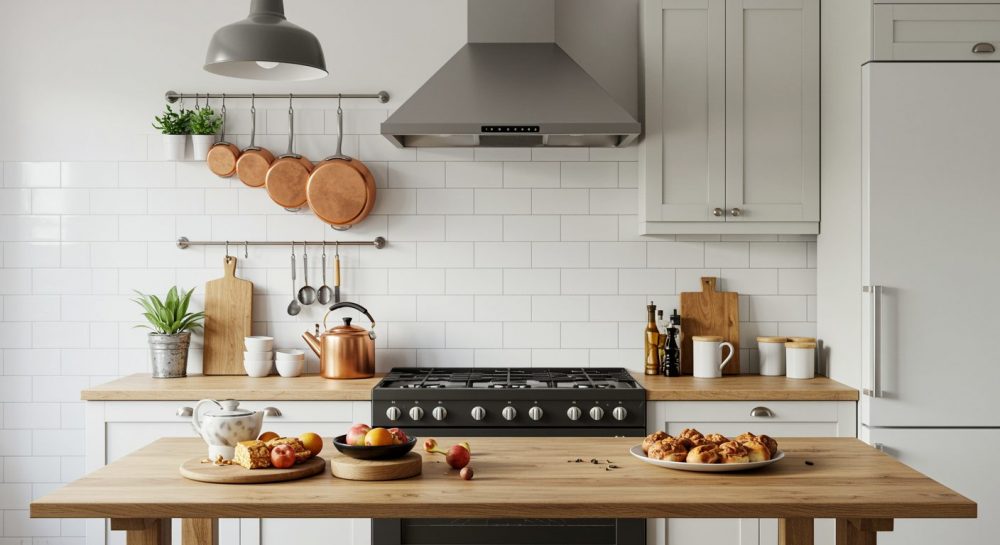
Beyond aesthetics, a well-designed kitchen considers how the space encourages natural movement hence reduces stress; hence, here room layout and movement flow are really crucial. Well-defined paths in ergonomic kitchens let you move without constraint between major areas — the sink, stove, refrigerator, and preparation countertop.
To let one or two people work simultaneously without colliding, counter, island, and appliance spacing should ideally be at least 42 to 48 inches. Good spacing makes cooking and cleaning appear simple, thereby reducing the need for twisting, stretching, or awkward body attitudes that could cause weariness or suffering over time. Simple mobility is facilitated apart from correct cabinet placement.
@ampquartzcabinets Nak buat glass door macamni pun boleh 😍 #AmpQuartz #slidingdoor #aluminium
While frequently used items ought to be easily accessible to avoid too much bending or extending, less-used tools could be kept in higher or lower storage locations. Open-plan layouts using natural traffic patterns, strategically placed islands and peninsulas let several activities — cooking, cleaning, and preparation among others be conducted at once without congestion.
Setting garbage bins, cutting boards, or cooking utensils along natural work flow lines helps a kitchen to move with you rather against you. Arranging your kitchen plan around your body’s function not only improves safety and productivity but also makes cooking a more enjoyable and simple activity, therefore enabling you to focus on the pleasure of meal preparation rather than negotiate impediments.
Kitchen Ergonomics 3: Task Lighting & Visibility
Though sometimes overlooked, visibility and task lighting are fundamental elements of kitchen ergonomics that straight affect productivity and safety. Good lighting ensures that cooking stations, work surfaces, and prep zones are sufficiently lighted so you can carry out tasks without causing eye damage or sitting in awkward posture.
Strong lighting on surfaces where cutting, blending, and plating are done, thus eliminating shadows that would hide your workstation, under-cabinet lights are especially helpful. Offering elegance, pendant lights above islands or breakfast counters give multi-use settings focused lighting and safety. Layers lighting, another ergonomic component, blends task, ambient, and accent lighting to provide you with a balanced environment that enables you to hold good posture while cooking and reduces eye fatigue.
Colour temperature and lighting are also very important: warmer illumination produces a welcoming atmosphere whereas colder, daylight-mimicking light aids vision for more exacting tasks such recipe reading or component inspection. Dimmers and adjustable lighting let you change the intensity to fit task, attitude, or time of day.
Good task lighting assures all surfaces are plainly visible, therefore minimising the cutting injury risk to spills and enhancing comfort. Thoughtful addition of excellent lighting into your kitchen design matches your work surface to how your body naturally moves and sees, therefore improving general cooking and cleaning happiness as well as safety and efficiency.
Kitchen Ergonomics 4: Storage Accessibility
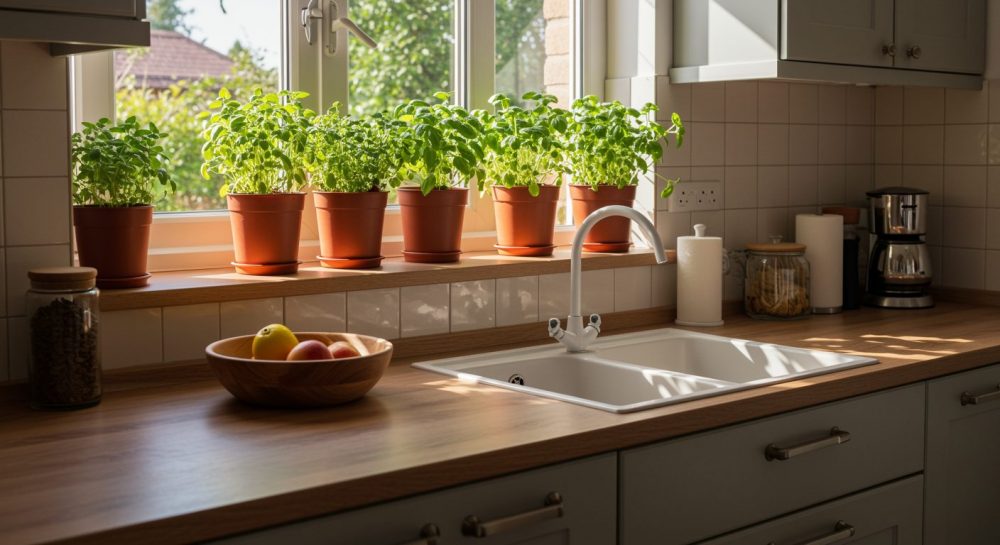 Access to storage is one of the most vital features of ergonomics when designing a kitchen that truly suits your body. Keeping your kitchen basics how and where has a direct impact on comfort, productivity, even safety during regular activities. Ideally, your most often used items — cooking tools, pans, spices should be kept between waist and eye level.
This arrangement helps over time to reduce your back, shoulders, and arms’ strain from repeated bending, stretching, or awkward reaching. Deep drawers with pull-out shelves, lazy Susans, and organisers make access even better as they let you access items at the back of cabinets without distorting your body. Vertical dividers let you stand cutting boards, baking pans, and trays upright therefore making picking easier while preserving the order of your workspace.
@ampquartzcabinets Top 3 kitchen cabinet accessories. Kalau korang nak pasang yang mana dulu? Cuma komen 🥳🥰 #AmpQuartz #kitchencabinet #aksesorikabinet #fyp #johorbahru
♬ A song with a cute and relaxing atmosphere(1556609) – sanusagi
Tiered shelving, transparent containers, and marked bins enable pantry goods since they let you quickly find components without needless movement or danger of tripping other items. Lower shelving prevents lifting above shoulder level for heavier objects such large pots or small tools, therefore reducing injury risk. Even small details such drawer stops limiting full extension or soft-close devices lowering sudden force improve a more comfortable, ergonomic experience.
By arranging storage based on weight, accessibility, and frequency of usage, your kitchen becomes a place that naturally supports your body’s movements and therefore lets you work effectively and safely while maintaining a clean, stress-free setting.
Kitchen Ergonomics 5: Efficient Appliance Placement
One of kitchen ergonomics is good appliance arrangement, which has a straight bearing on comfort and job flow. Proper placement of refrigerators, dishwashers, microwaves, and stoves assures that routine activities may be completed with minimum effort and strain.
Placing an oven at mid-height, for example, prevents continuous bending that could cause backache with regular operation. Similarly, positioning a dishwasher close to the sink allows for simple dish transfer without uncomfortable rotating or stretching. Placed at chest or eye level, microwaves eliminate the need of raising big boxes over or stooping too low, hence increasing safety and ease of use.
Aside from height, lateral position counts: appliances should be positioned to assist the natural movement of food preparation, ideally in the order of prep, cook, then clean. This reduces unwanted movements and repeated movements, therefore avoiding exhaustion or strain over time. Wide, open pathways around appliances allow many people to work simultaneously without collisions, hence maintaining safety as well as efficiency; likewise crucial is clearance space. Furthermore included under ergonomic appliance arrangement is storage integration.
Built-in or pull-out drawers for weighty items close to stoves and microwaves eliminate cumbersome lifting; side-opening or drawer-style dishwashers simplify and safely loading and unloading. Homeowners may design a kitchen that harmonises with the body by purposefully designing the position and accessibility of every appliance, hence reducing physical strain, streamlining workflow, and making daily cooking tasks far more pleasant and comfortable.