- By: Ryo
- Tags: Constant Kitchen Shuffle, kitchen neatness, kitchen organisation plan, kitchen space, kitchen space problems, small kitchen organisation, small kitchen space
- Category: Constant Kitchen Shuffle
- 0 comment
Constant kitchen shuffle occurs when messy counters compel you to repeatedly move items only to locate your needs, therefore disrupting your cooking pace. Every additional item you have on your desk causes friction and slows down meal preparation as well as unneeded stress. Organising and clearing your counters restores efficiency and transforms your kitchen into a smooth, pleasurable workflow.
Constant Kitchen Shuffle 1: Loss of Workspace & Reduced Efficiency
The reduction in workplace brought on by cluttered countertops in every contemporary kitchen is a quiet but major productivity killer. The useful space for meal preparation decreases drastically when appliances, utensils, food containers, and other goods crowd the available surfaces, therefore driving cooks to operate in a confined, inefficient setting.
This reduction in workable space usually causes a continual “shuffle” as objects have to be moved or cleared whenever a fresh chore comes up. The outcome is a hampered workflow whereby basic activities like cutting vegetables, mixing ingredients, or kneading dough call more time and effort to negotiate around problems. Apart from the everyday annoyance, cluttered countertops make it difficult to create clearly defined areas for prep, cooking, and plating — absolutely necessary for a fluid progression of culinary chores.
Cooks could find themselves backpedaling often, juggling many goods, or executing repetitive actions without these zones, therefore adding to both physical strain and mental exhaustion. Additionally slowing decision-making and real-time problem-solving is a crowded workstation as the cook has to find equipment and ingredients buried beneath layers of disorder. This inefficiency can eventually cause irritation, stress, and a reduced love of cooking, hence stifling experiments or more complex meals.
Simply put, cluttered counters directly hurt efficiency, productivity, and the general usefulness of the kitchen, hence changing what should be a smooth, pleasant process into a tedious and draining series of tasks that imped even the most seasoned home cooks.
Constant Kitchen Shuffle 2: Mental Load, Stress & Loss of Enjoyment
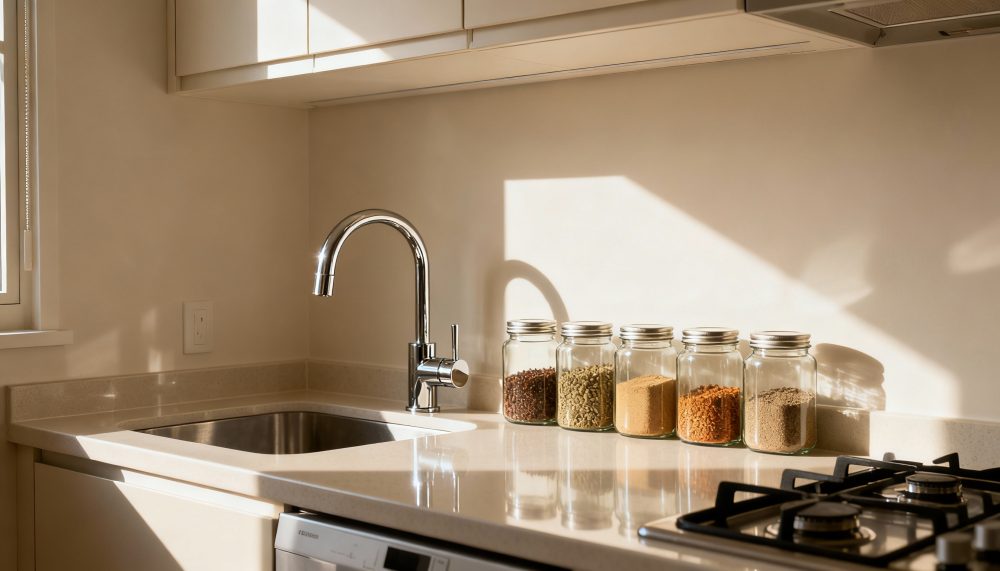 Beyond reducing physical area, a disorganised kitchen countertop directly impacts mental health and overall culinary enjoyment. Appliances, cookware, or other objects crowding every surface cause a kind of mental noise that constantly fights for your attention.
This constant distraction raises cognitive load, making even simple cooking chores seem challenging. Research has shown that visual mayhem can trigger stress responses as the brain even unconsciously views disorganisation as a problem requiring fixing. As a result, food preparation could seem to be more of a task than a pleasurable or creative pastime. Over time, this psychological stress could cause avoidance behaviours where people postpone cooking or select for quick meals instead of putting labor into home-cooked ones.
@ampquartzcabinets Cantikkan laundry area + open shelving macamni? 😍 Idea pinterest ni tau! #AmpQuartz #LaundryArea #OpenShelves #PinterestKitchen
Furthermore impeding order and control feeling in the kitchen are jumbled work surfaces. The work process becomes disjointed and calls more mental effort to recall tool or component storage locations without clearly defined zones for cooking, cleaning, and preparation. This never-ending kitchen shuffle not only lowers production but also lowers the enjoyment derived from finishing meals fast.
Even experienced cooks can find their imagination strangled as tension and distraction limit possibilities for creative food invention or experimentation. Basically, maintaining a tidy countertop is absolutely essential for reducing mental load, relieving stress, and bringing back the joy of cooking by turning the kitchen into a place of productivity and inspiration rather than annoyance.
Constant Kitchen Shuffle 3: Safety, Hygiene & Practical Risks
Cluttered kitchen counters pose major safety, hygiene, and logistical hazards that might impair not just daily cooking but also general home well-being, therefore upsetting workflow. The possibility of accidents rises dramatically when equipment, tools, and other objects crowd surfaces.
Sharp items such knives or kitchen shears may be knocked over; heavy appliances or glass containers could easily fall and harm, wounds, or injury could ensue. Less room to accommodate cooking means increases the probability of spills and crumbs, hence posing slip risks or sticky messes attracting bugs. From a hygiene perspective, hectic counters impede complete cleaning and allow crumbs, moisture, or food particles to gather in discreet crannies.
This environment promotes cross-contamination and bacterial development, therefore endangering food safety and probably leading to sickness. Moreover, a cluttered countertop makes appropriate uncooked and cooked meal separation difficult, so increasing the probability of food preparation contamination. Apart from bodily hazards, mess causes practical inefficiencies: hunting for supplies or equipment buried under mountains slows down cooking and disrupts workflow, sometimes leading in rushed or dangerous handling of hot pots or boiling liquids.
Basic kitchen maintenance suffers as cleaning down counters or sanitising preparation areas gets more demanding, therefore resulting in missed tasks. Ultimately, cluttered surfaces highlight the need of daily arranging and clearly defined workspace areas by not only lowering productivity but also revealing real health, safety, and operational kitchen safety hazards.
Constant Kitchen Shuffle 4: Bad Habit Reinforcement & Organisational Spiral
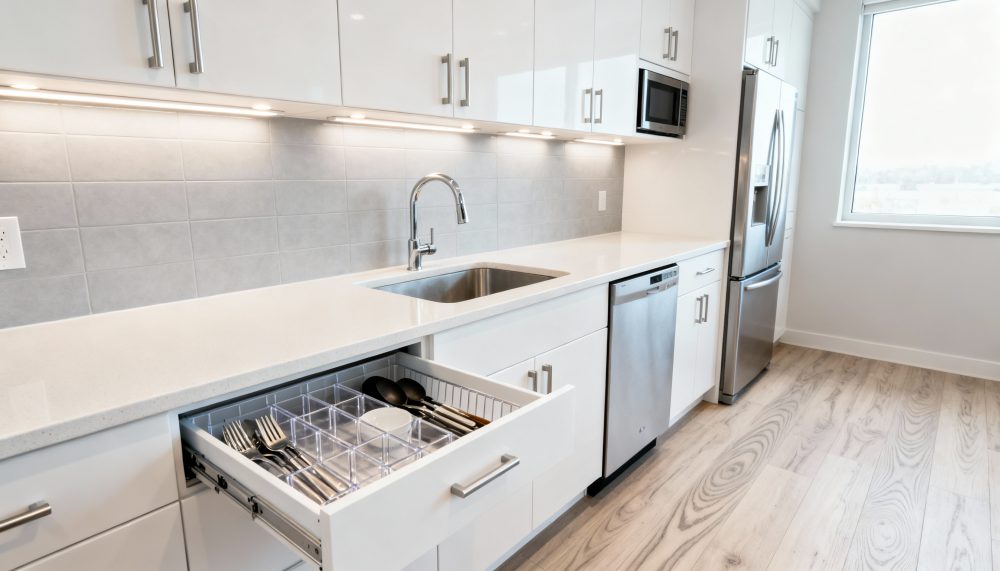 One of the most sly characteristics of cluttered countertops is how they promote poor habits and keep an organisational spiral going gradually degrading kitchen efficiency. Whether it’s a jar of cutlery, a frequently used appliance, or a stray grocery item left out “just for now,” things rarely find their way back to their appointed storage area.
This little, apparently innocent practice soon adds up to make the kitchen a place with items strewn haphazardly, making it challenging to work productively. Gradually, clutter builds a psychological tolerance for chaos; the more comfortable one becomes to visible and actual mess, the less driven they are to keep things under control. Poor use of storage space aggravates this problem.
@ampquartzcabinets Terima kasih kerana memilih AmpQuartz! Orang Johor yang nak buat macamni boleh PM kami sekarang! 🤩🥳 #AmpQuartz #KitchenCabinet #EuropeanSolidPlywood #feedback #fyp
Cabinets that are underused, shelves that are hard to reach, or a lack of vertical storage options mean counters become the default drop-off for goods. The disorder not only builds up but also breaks the flow of work without a defined system where every instrument, utensil, and ingredient has a particular location. The daily shifting of goods to generate short-term prep area becomes a tiresome task slowing down cooking and food preparation.
This clutter and chaos cycle fuels itself, therefore fostering a kitchen atmosphere where inefficiency, tension, and irritation become the standard. Breaking this spiral calls for conscious behaviours, careful storage solutions, and a dedication to returning objects to their appropriate position, therefore changing the kitchen from a disorganised workplace into a sleek, practical setting.
Constant Kitchen Shuffle 5: Lost Potential On What Your Kitchen Could Be
When countertops are messy, the actual potential of a kitchen often goes unfulfilled, therefore reducing not only efficiency but also pleasure and creativity in food preparation. A chaotic workplace lowers surface area for meal preparation, therefore needs constant rearrangement of tools, ingredients, and appliances which disrupts flow and increases the time spent on fundamental tasks.
Apart from the logistical consequences, visual chaos might induce mental exhaustion, hence adding to the stress of cooking more than it is enjoyable. This never-ending disturbance reduces the likelihood for experimentation since the mind is occupied with controlling chaos rather than focusing on recipes, flavours, or presentation. Crowded surfaces make it harder to maintain cleanliness, hence raising the chance of spills, cross-contamination, or accidental injuries so also presenting hygiene and safety risks.
Moreover, over time, erratic surfaces encourage bad habits since left-out items usually remain, therefore perpetuating a cycle of wastefulness. Conversely, a kitchen setup with clear counters exposes its real potential: a lot of prep space helps to speed up and more fluid cooking, therefore supporting a natural workflow from preparation to cooking to plating. Free surfaces turn cooking from a duty into a pleasurable hobby by reducing strain, stimulating creativity, and encouraging close interaction with food.
When the kitchen becomes a practical, beautifully pleasing, and welcoming space, good, imaginative home cooking as well as effective food preparation is supported. Seeing their kitchens as a well-arranged and painstakingly maintained environment rather than a continual source of irritation will enable homeowners to realise their full potential.

