- By: Ryo
- Tags: design tips for kitchens, kitchen design ideas, Kitchen Design Tricks, small kitchen design, small kitchen design ideas, small kitchen tips
- Category: Kitchen Design Tricks
- 0 comment
Kitchen design tricks can help transform your small kitchen into a flawless extension of your house. Glass-front or open cabinets keep the area linked to neighbouring rooms while still creating visual extension. Consistent flooring, coordinated colour schemes, and strategic illumination help to more connect your kitchen with the remainder of your living quarters.
Design Tricks 1: Open-Plan Layouts
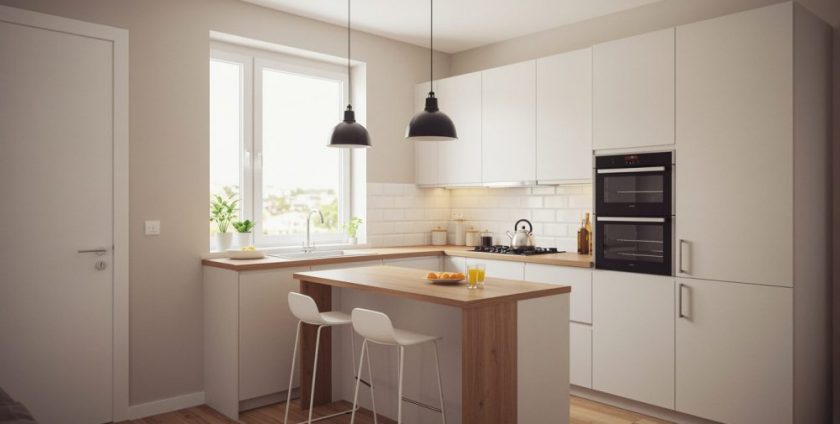
An open-plan arrangement helps a tiny kitchen seem linked to the other house by means of its effectiveness. Homeowners can improve visual space and functionality by deleting walls or partial barriers, therefore allowing the kitchen, dining, and living rooms to flow seamlessly.
This design philosophy encourages social interaction by allowing natural light to flow unencumbered, thereby expanding the kitchen and making it more welcoming. Including features like a kitchen island or breakfast bar can characterise the kitchen space without sealing it off, therefore giving more preparation surface and informal seating while keeping openness.
Open-plan designs also let parents keep an eye on youngsters or host guests while cooking, hence fostering inclusion and connectivity between rooms. Designers often use constant flooring and complementary colour palettes that stretch from the kitchen into surrounding rooms to further develop this relationship and visually unite the areas. The kitchen won’t feel cut off if furniture and cupboards imitate the décor of living and dining rooms, therefore strengthening cohesion.
Open-plan kitchens can make every inch in small houses by fusing beauty with usefulness. Elimination of walls or dividers not only maximises area but also produces a modern, airy environment particularly beneficial in tiny residences where making every room seem large and connected is crucial. In essence, an open-plan design converts a little kitchen from a restricted work environment into a focal point that easily links the heart of the house.
Kitchen Design Tricks 2: Cohesive Colour Schemes
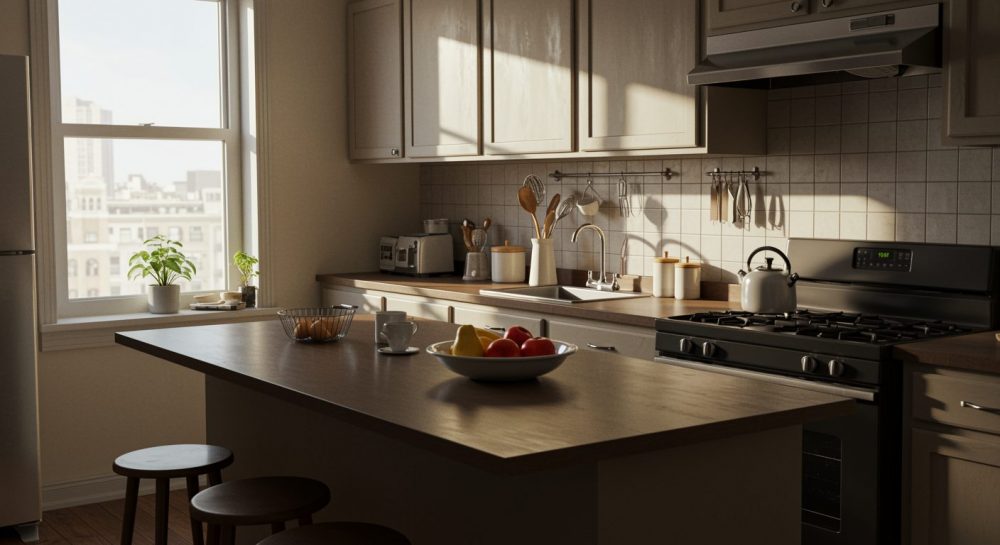 Among the most effective design methods to guarantee a small kitchen flawlessly matches with the rest of your house is one colour scheme. Including the kitchen’s complimentary colours, textures, and accents from nearby living or dining rooms transforms the room into a natural extension rather than a discrete space at once.
Neutral hues — soft whites, warm beiges, and muffled greys benefit little kitchens in particular as they offer a flexible base that matches surrounding areas and airy atmosphere. Using accent colours from living room furniture, carpets, or decorations in the cabinet hardware, backsplash tiles, or countertop decorations will help visual coherence.
@ampquartzcabinets PM kami untuk dapatkan harga kabinet macamni or else korang nak custom kabinet sendiri pun boleh! 🤩 #AmpQuartz #KitchenCabinet #customcabinet #dapurcantik #cabinetmaker #johorbahru #pakejmurah #promopakejkabinet #fyp #fyppppppppppppppppppppppp #fyppage
Knowing the surface’s finish — matte, glossy, or satin helps to improve flow besides colour matching since reflective surfaces can somewhat reflect light and very enlarge the space. Matching colours and little elements like pendant lights or ornamental pieces help the kitchen to its neighbouring rooms. Choosing a monochromatic or analogous colour scheme helps homeowners seeking a modern and airy vibe to lower complexity throughout rooms and create a natural cadence for their home.
A planned colour scheme helps to create a calm and inviting atmosphere as well as improve the perceived size and cohesiveness of the surrounding space, so making sure a tiny kitchen appears a well-connected and intentional component of the home instead of a tucked-away angle.
Kitchen Design Tricks 3: Minimal Barriers
Reducing physical obstacles is among the most efficient techniques to link a tiny kitchen to the remainder of the house. Closed doors, hefty partitions, and walls may help create separation that makes the kitchen look tiny and separated.
Homeowners can establish a smooth visual flow between the kitchen and surrounding living or dining spaces by choosing open-plan layouts or employing partial walls rather of complete enclosures. Another great option are sliding or pocket doors; they let areas be separated as necessary without always obscuring sight lines or natural light. Even the way kitchen islands or counters are set can act as subtle divisions; a low-profile island can define the kitchen space while yet retaining accessibility and openness.
Low obstacles also promote better contact between guests or family members as individuals in the kitchen remain socially and visually linked to those in nearby locations. This strategy helps to create a more useful and inviting house environment as well as improve how space is seen. Open shelving or glass panels rather than solid walls help to further lower visual obstruction while providing storage options.
Reducing obstacles guarantees the kitchen feels like an integrated part of the home rather than a separate, closed-off space in combination with consistent flooring, coordinated colour schemes, and smart lighting. For tiny kitchens, the idea of “less is more” is especially relevant: by removing superfluous barriers, homeowners may create a sense of openness, continuity, and connection that improves both the visual and practical enjoyment of their house.
Kitchen Design Tricks 4: Integrated Furniture and Fixtures
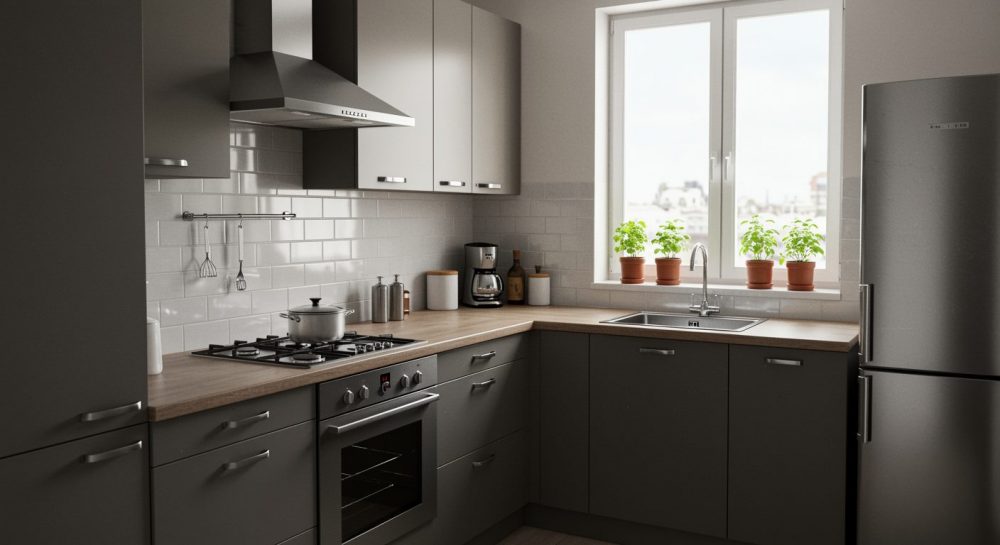 Built-in furniture and accessories allow a small kitchen to best connect with the rest of the house. Choosing items that physically or visually stretch outside the kitchen lets homeowners design a seamless link between spaces. As a work surface, a casual eating area, or even a desk, one could use a kitchen island with a top matching or complementing the dining table.
Built-in seating such as a banquette spreading into the following dining or living area increases unity while also freeing up valuable floor space. Sharing design elements or finishes with furniture in neighbouring spaces helps maintain a consistent appearance and avoids a surprising separation between rooms even in storage systems.
@ampquartzcabinets Dah boleh tukar moveable plug socket ni kat dapur korang tu 🤭 #AmpQuartz #KitchenCabinet #plugsocket #smartkitchen #fyp
Fixtures, hardware, and lighting can also reflect the style or substance of features in neighbouring rooms, hence gently tying the kitchen to the whole home design. By letting the kitchen adapt to social gatherings, family meals, or work-from-home settings without producing isolation, multifunctional or modular furniture helps to create this effect.
The key is to consider how every element connects with its environment outside of the kitchen’s boundaries to provide a visual and practical consistency that will make the entire home appear larger, more open, and smoothly connected. Thorough integration lets even a little kitchen to contribute toward a coherent and large home feeling.
Kitchen Design Tricks 5: Glass and Open Cabinets
Glass-front or open cabinets are among the most efficient ways to connect a tiny kitchen with the other of the house. Unlike conventional solid cabinets, glass and open shelves lower visual weight, hence fostering a feeling of airy that helps to avoid kitchen separation.
Reflecting the colours and decor of the nearby living or dining areas, glass-front cabinets let one see well arranged dishes, glassware, or decorative objects, therefore allowing for a smooth transition across environments. Open shelving one step further with this concept provides a totally clear vision that visually extends the kitchen into the rest of the home.
Showcasing particular objects such coordinated plates, books, or plants gives the rooms around it interest and keeps the space practical. Maintaining balance calls for aligning the cabinetry’s design, finish, and hue with nearby features like wall colours, furnishings, or ornamental decorations. Highlighting items, glass or open cabinets combined with skilful lighting such under-shelf LEDs or accent lights within glass cabinets can also deepen depth and draw the eye upwards and outward.
This approach enhances spatial sense and relationships with other living areas. Finally, installing glass-front or open cabinets in a little kitchen is a clever architectural decision that balances utility, elegance, and spatial flow to make the kitchen feel like a natural, incorporated aspect of the house rather than a separate, closed space.

