- By: Ryo
- Tags: good kitchen planning, home kitchen space, home space plan, kitchen efficiency, kitchen space planning, planning space efficiently, space in kitchens
- Category: Kitchen Space Planning
- 0 comment
Kitchen space planning starts by designing a kitchen that seems as it performs. Logical designs guarantee simple access to devices and storage, correct zoning, and seamless workflows. Every cooking task gets quicker, safer, and more fun when design matches function.
Kitchen Space Planning 1: Traffic Flow & Safety
Important factors in kitchen space design, traffic flow, and safety underline why sense should drive your strategy. An appropriately designed kitchen anticipates how people move across the area, hence lowering congestion and producing a setting that is both safe and effective.
Logical flow guarantees obstacle-free high-traffic locations including entrances, kitchens, and sink rooms, hence avoiding accidents and enabling several users to operate simultaneously without interruption. The arrangement of islands, counters, and equipment should enable smooth mobility as well as clear lines of sight so that no one is caught off-guard by quick movements or heated surfaces.
Safety issues involve arranging electrical appliances, large cooking instruments, and sharp objects away from paths and reach areas where kids or dogs might be. The traditional work triangle including the stove, sink, and refrigerator should also offer adequate room for natural movement without collision or uncomfortable manoeuvres. Logical traffic flow simplifies access to exits and lowers the possibility of burns or spills in prohibited areas besides helping to clarify emergency situations.
This theory encourages a stress-free environment, raises output, and supports small kitchens even when planned component arrangement lowers repeated chores. Showing how a thoughtfully designed kitchen not only improves usability but also safeguards the well-being of all users, putting traffic flow and safety first importance in kitchen layout combines utility with peace of mind.
Kitchen Space Planning 2: Countertop & Prep Space Allocation
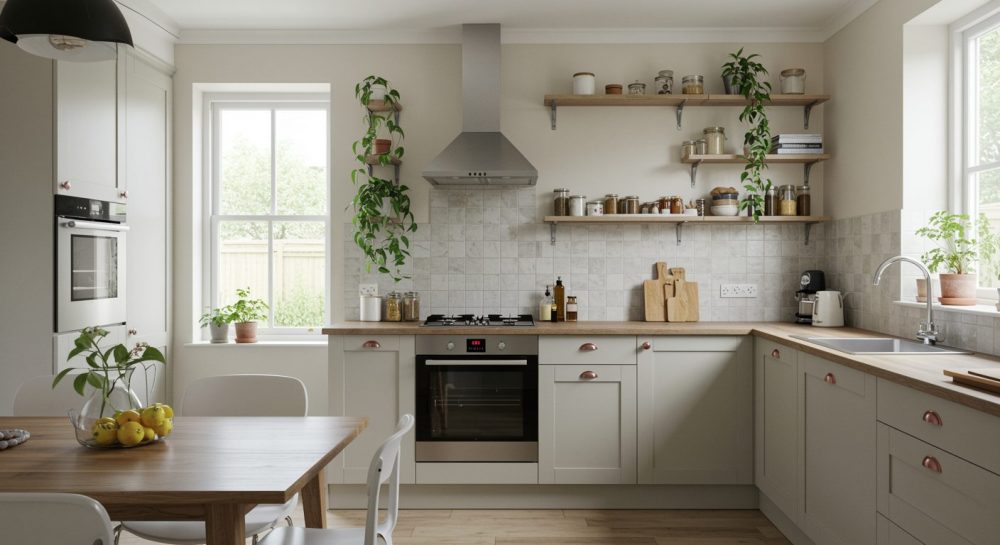 Good workflow depends on countertop and prep space allocation when planning a kitchen; hence, logic is an absolute driving force in design decisions. Support for meal preparation, cooking, and even casual dining counts counter more than just a surface; it forms the core of kitchen utility.
Proper preparation area near the oven, sink, and refrigerator assures that components may be handled easily, hence lowering unnecessary movement and reducing the chance of spills or accidents. Ideally, a countertop should provide landing areas on either side of equipment like the sink and stove so facilitating easy setup of ingredients, cutting boards, and silverware. Thinking about several types of prep spaces for chopping vegetables, serving meals, mixing ingredients also counts as logical spacing so that many activities may be carried out simultaneously without interruption.
@ampquartzcabinets Premiumnya looks macamni kan 😍 #AmpQuartz #kabinetjohor #storage #pov #premium
In small kitchens, foldable surfaces can provide extra prep area without restricting mobility; countertops projecting into islands could also assist. Moreover, material selection has a pragmatic purpose: solid-surface or quartz countertops facilitate unrestricted preparation and reduce maintenance time, hence supporting a clean, functional space.
Going toward counter and preparing area assignment with logic rather than beauty alone transforms the kitchen into a neat, easy environment that minimises stress and maximises efficiency. Every inch of the workspace is intended to be useful; so, cooking is more delightful as well as easier, therefore reinforcing the idea that deliberate planning should always drive kitchen layout.
Kitchen Space Planning 3: Future-Proofing & Adaptability
Modern kitchen design focuses their great significance by emphasising how adaptability and future-proofing let logic direct every choice. Not only a place to prepare food, a kitchen is comfort, convenience, and a running lifetime investment.
Whether that be a growing family, changing food choices, or the adoption of new devices and smart technologies, sound design assures the composition will meet evolving demands over time. Modular cabinets, flexible shelves, and adaptable storage options allow homeowners to modify their kitchen without extensive adjustments, therefore budget-conscious yet adaptable for the room. Taking ergonomics and accessibility into consideration, future-proofing ensures counters, sinks, and equipment are arranged for best user comfort and efficiency over a range of heights or impairments.
Electrical and plumbing systems should be carefully arranged to suit larger models or technical innovations, hence meeting future requirements and avoiding costly modifications. Aesthetic decisions are just as important; neutral tones and traditional finishes refresh a room without drastically altering the kitchen. By balancing comfort, safety, and efficiency, homeowners that highlight flexibility will be able to have a kitchen that grows with their lifestyle rather of vanishing.
An artistically created kitchen basically offers a room that over time is versatile, elegant, and long-lasting by balancing current needs with future possibilities. From a simple food preparation area to a lively, powerful daily life hub, future-proofing — not a passing wish but rather a fundamental concept will revolutionise a kitchen.
Kitchen Space Planning 4: Optimal Storage Solutions
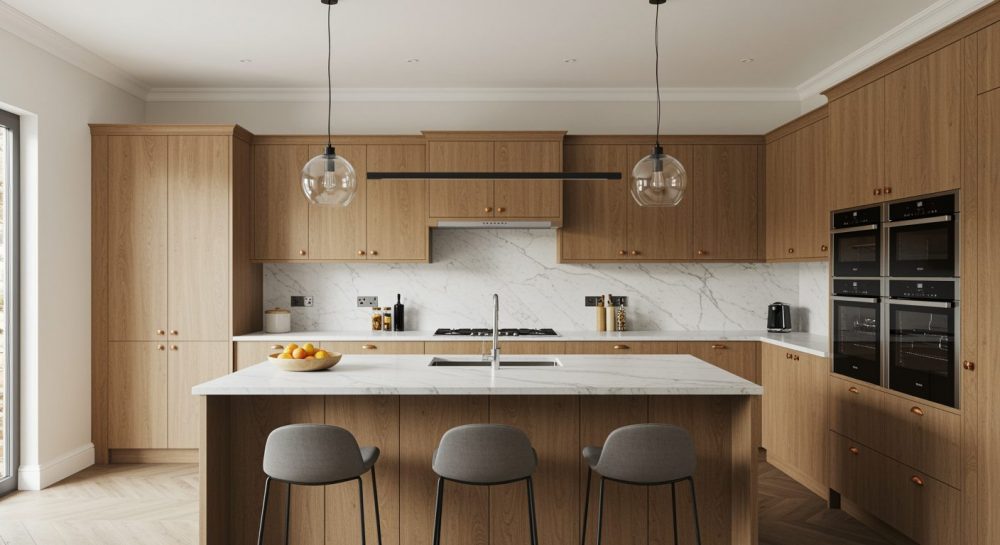 Logical kitchen planning is all about ideal storage solutions that guarantee every item has its place and daily activities go without much effort. Less frequently used items are stowed to minimise disturbance and mess; in a well-organised kitchen often used tools, culinary appliances, and components are quickly accessible.
Tall cupboards or overhead shelves maximise area in compact kitchens without sacrificing accessibility by means of vertical storage. Allowing you to quickly access corners and vast distances, sliding shelves and pull-out drawers in base cabinets turn neglected spaces into useful storage. Corner carousels or lazy Susans improve usability by guaranteeing every inch is both useful and effective.
@ampquartzcabinets Try buat pull out tray macamni, comfirm nampak aesthetic 😍 #AmpQuartz #kabinetjohor #kitchencabinet #storage #fyp
Moreover arranged by use, logical storage such as placing cleaning supplies beside the sink, cooking instruments next to the stove, and prep equipment near countertops. Besides simplifying labor flow, this intended arrangement lowers unneeded movement, hence supporting the ideas of the kitchen work triangle. To fit a range of demands — walk-in or built-in, for both short-term and bulk storage, so pantry spaces should feature clear labelling and flexible shelves.
Customising small appliances, spices, and cookware so boosting visibility and cleanliness adding cabinets and drawers with adjustable dividers lets you tailor. Good storage systems ensure a kitchen that is clean and simple to use by stressing accessibility, visibility, and practical categorisation. Proper storage preparation turns a kitchen into a smooth, effective place where every tool and component is exactly where it ought to be, hence enabling daily cooking and exquisite gourmet meals.
Kitchen Space Planning 5: Zoning for Functionality
Zoning for use guarantees every activity in the kitchen has a clearly defined site, so it is a basic element of kitchen design. Breaking the kitchen into food preparation, cooking, cleaning, and storage zones allows for fast and efficient operations via sensible zoning.
Usually positioned near the sink and cutting surfaces, the prep area should offer lots of counter space and easy access to cutting boards, knives, and frequently used components. Focusing on the stove or oven, the cooking area needs enough room for pots, pans, tools, landing surfaces on both sides to preserve ingredients or final dishes.
By giving easy access to trash bins and cleaning materials, intentional positioning of cleaning stations next the dishwasher and sink minimises clutter and enables post-cooking activities. Storage areas including cupboards, cabinets, and pantries have to be properly arranged so that often used objects are always readily accessible and less used equipment is kept less accessible. Good zoning improves safety as well as increases efficiency by lowering cross-traffic between busy areas.
It accommodates several clients simultaneously, allowing guests or family members to move around without disturbing the efforts of the primary chef. Designers can painstakingly organise the kitchen into functional zones to create a room that seems natural and easy, hence proving that rationality should drive the design for both daily cooking comfort and practicality.

