- By: Ryo
- Tags: countertop design, countertop tips, home design, kitchen design, Match Your Countertops
- Category: Match Your Countertops
- 0 comment
Match your countertops with balance, colour harmony, and material selections. Coordinating undertones ensures a cohesive and visually appealing design whether warm, cool, or neutral. Through adept blending of textures and finishes, you produce a kitchen that is both elegant and useful.
Match Your Countertops 1: Balance Patterns and Textures
One of the most efficient techniques in selecting how to match your countertops to your cabinets and general kitchen design is to balance textures and patterns. The surface area of countertops draws the eye organically, therefore carefully matching them with your cabinets guarantees a unified appearance.
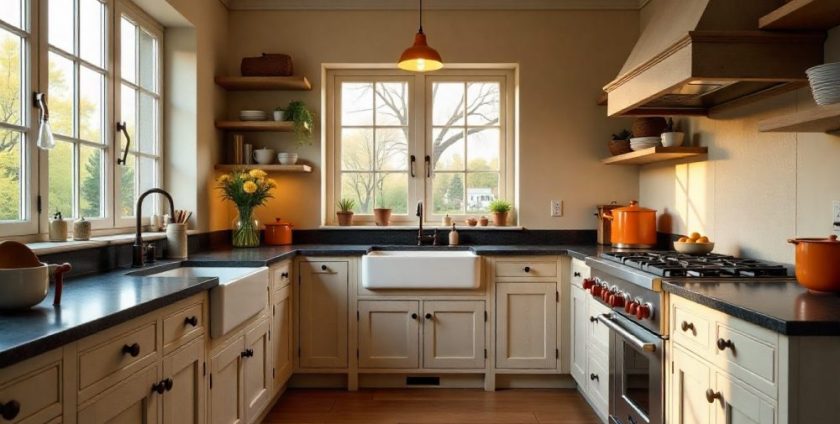
Usually choose a more subdued countertop, like a solid, if your cabinets have prominent patterns, elaborate detailing, or strong hues. quartz, muted granite, or perhaps a smooth composite surface so the two parts do not fight for prominence. Conversely, simple, minimalist, or painted in a solid colour cabinets let you add energy and personality into the room.
Marble has strong veining, granite with complex speckles, or quartz with unusual textures — a more energetic counter top selection. This contrast lets one component be the base while the other gives depth and personality. Creating equilibrium also depends on texture. Glossy cabinets go wonderfully with matte countertops, but polished stone may brighten the warmth of rustic wood finishes. The main aim is to use vibrant textures and patterns on both surfaces so as not to overload the area.
Think of your kitchen design instead as a dialogue between the counters and cabinets—one should lead while the other complements. This equilibrium will help you Not only produce visual harmony but also a classic kitchen aesthetic that seems thoughtful and painstakingly chosen.
Match Your Countertops 2: Reflect Your Kitchen Style
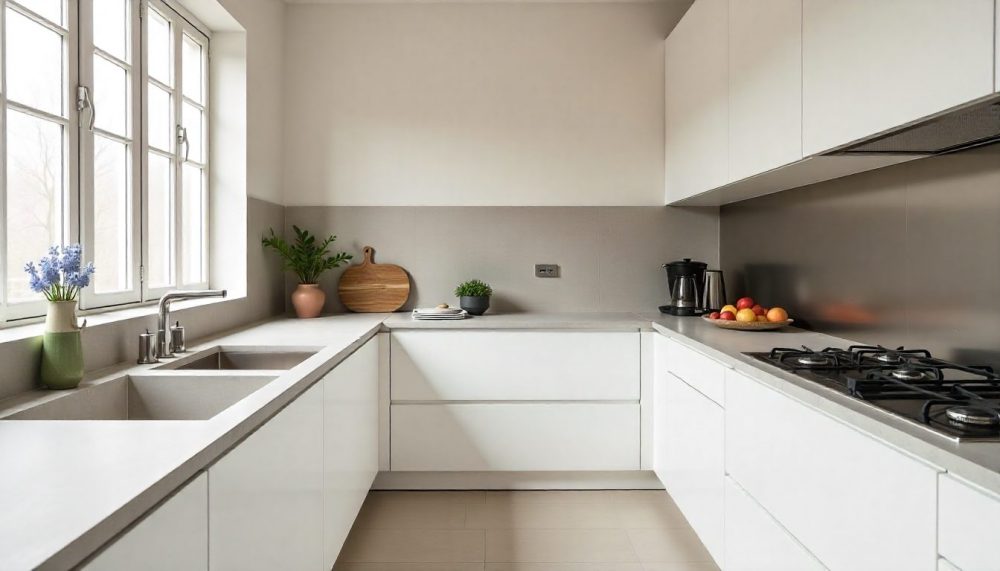 Let your overall kitchen design passion most effectively coordinate your cabinets with your countertops. Each design has its own character; coordinating counter top and cabinets with that style helps one to create a consistent and intentional appearance.
For a contemporary or minimalist kitchen, sharp lines and sleek finishes are absolutely necessary. Flat-panel cabinets in soft hues benefit from solid-coloured quartz, matte black granite, or even polished concrete to emphasise refinement and simplicity. On the other hand, a typical kitchen thrives on warmth and richness; ornate wooden cabinets next to traditional counter surfaces such marbled vein look best. warm-toned granite, or perhaps butcher block for enduring attractiveness.
@ampquartzcabinets Ada yang suka design matte sintered stone macamni? 😍 #AmpQuartz #SinteredStone #KitchenCabinet #JohorBahru #fyp #fyppage
For those after a farmhouse or rustic style, shaker cabinets or weathered wooden finishes complement soapstone, reclaimed wood, or butcher block counters very well. to make a friendly, cozy setting. On the other hand, a luxury or modern kitchen thrives on striking elements and flair — glossy, upscale cabinets matched with dramatic veined marble or quartz counters.
Whatever the design, the counters and cabinets should appear to be speaking rather than arguing. Beginning with your preferred kitchen design allows you to create a room that is true to your life and personality in addition to visually harmonious one. This assures that your kitchen shows a unified design narrative rather than merely seem excellent.
Match Your Countertops 3: Think About Longevity
Lifetime is among the most important elements to take into account while determining how to match your countertops to your cabinets and general kitchen aesthetic. In their design choices, kitchens should strike a balance between classic appeal and current trends in long-run investments.
Selecting neutral and flexible counter materials like marble, quartz, or granite ensures that your kitchen will remain versatile if you want to renovate. Colours or finishes for your cupboard down the line. For example, a light quartz with faint veining would fit well with both white shaker cabinets nowadays and darker modern cabinets years from now. From classical to contemporary design forms, natural stones with subtle patterns blend in to offer continuity and assist integration throughout a wide range of design kinds.
Thinking about longevity also involves contemplating durability: counters resistant to heat, stains, and scratches will keep their appeal over time and hence reduce demand for costly replacement. On the cabinet side, selecting traditional colours such white, grey, or wood tones helps to preserve the overall design adaptable, therefore streamlining the renovation. Look at fresh hardware, backsplashes, or lighting rather than a total refurbishment.
The secret is to avoid over fashionable combinations that could quickly look dated for instance, brilliant cabinetry unless you are ready to change earlier. colours associated with strongly patterned countertops. By focusing on traditional materials, muted colours, and robust finishes, you assure your kitchen not just looks excellent right now but also gracefully adapts to evolving preferences. By means of maximising both, personal preferences and trends raise long-term investment and aesthetic worth.
Match Your Countertops 4: Coordinate Finishes
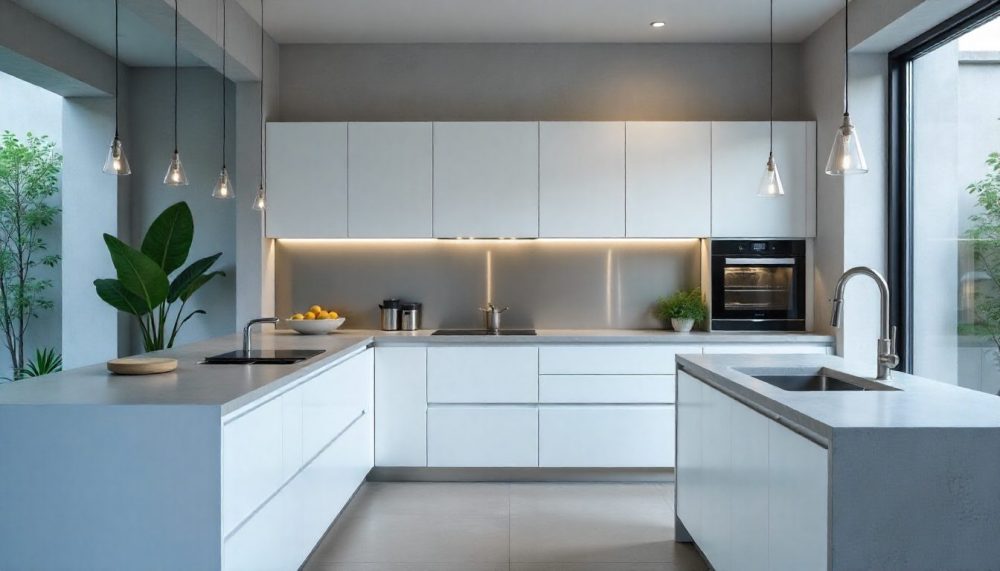 Coordinating finishes between your countertops, cabinetry, and other items in the kitchen is among the most efficient but sometimes ignored methods to produce a consistent design. From the subtle undertones in your countertop material to the hardware and fixtures, finishes help to link everything together.
Choosing a countertop with veining, sprinkles, or delicate colours to match brushed nickel or matte black handles, for example, helps to unify your cabinets. Warm wood cabinets with gold or bronze hardware can be perfectly matched by quartz or granite surfaces with warm beige or golden undertones. It is not just about matching actual hues; rather, it is about making sure the finishes feel harmonic.
@ampquartzcabinets Yang planning nak buat outdoor kitchen boleh try pakai sintered stone ni! 😍 #AmpQuartz #outdoorkitchen #sinteredstone #countertop #fyp
Coordinating finishes also affects your backsplash and lighting; choosing a backsplash tile with specks mirroring your countertop or pendant lights with metallic trims your cabinet handles echo to finish the design. The aim is to steer clear of conflicting finishes that obstruct visual flow; for instance, combining cool-toned grey counters with warm redwood cabinets might feel erratic unless you present a transitional component such a backsplash that combines both hues.
Your kitchen seems deliberately created and welcoming rather than cobbled together when finishes go well together. Whether you want a sleek contemporary style with chrome accents and glossy surfaces or a rustic farmhouse, this method works well across all styles. Vibe with warm metals and natural timbers. Arranging finishes guarantees that your cabinetry and counters complement your kitchen’s overall character.
Match Your Countertops 5: Match Undertones
By concentrating on undertones rather than just surface-level hue, one of the most efficient yet often overlooked means of guaranteeing harmony between your cabinets and counters is accomplished. Counters and cabinets might first seem to go well together, but should their undertones clash, the whole kitchen would seem unconnected.
Warm-toned woods such cherry, oak, or maple naturally complement countertops with warm undertones such creamy quartz, beige granite, or marble with mild golden veining. Cool-toned cabinets provide a more integrated appearance with countertops with grey, blue, or black undertones even if they usually have a white, grey, or naval colour. Such soapstone or quartz with icy veining.
By connecting contrasting hues and enabling you free movement, neutral undertones let you combine warm and chilly components in the same room without visible friction. Because samples of your cabinet finish under both natural and artificial light next to any practical countertop options should be investigated, it is a brilliant trick. With their context, undertones can change.
For instance, a white cabinet with a slight creamy undertone might conflict with a sharp, glacier-white quartz but mesh well with a soft marble with a hint of warmth. Dark espresso cabinets coupled with a granite with more muted grey or blue flecks rather than one with reddish tones can likewise look more balanced. Observing undertones helps you to design a kitchen that appears deliberate, well-balanced, and ageless irrespective of personal taste.

