- By: Ryo
- Tags: countertop tips, home kitchen design, Kitchen Countertop, kitchen design, Open Kitchen Countertop
- Category: Open Kitchen Countertop
- 0 comment
Open kitchen countertop helps your house feel more connected by providing a flawless transition from cooking, dining, and living spaces. These counters inspire interaction while keeping an airy, open atmosphere by mixing style and utility. Great for family life or hosting, they turn your kitchen into a real social centre.
Open Kitchen Countertop 1: Choose the Right Layout for Flow
Selecting the proper design for flow is critical when creating an open kitchen countertop that perfectly joins your area to guarantee both comfort and utility. Whether it’s the dining room, living room, or open plan family space, the layout should let simple movement between the kitchen and the adjacent rooms. Adding an island or a peninsula, for instance, may act as both a visual divider and a unifying component by offering a natural gathering location while preserving sight lines.
To prevent traffic, especially in households where several people cook or hang out at once, it is crucial to maintain passages broad enough usually 1 to 1.2 meters. Furthermore complementing the “kitchen work triangle,” the counter should enable quick access to the stove, sink, and fridge without breaking the flow to the linked room.
Smaller houses can provide a natural transition between areas as well as being more space-efficient than a freestanding island. For bigger plans, a centrally placed island might be the centre point encouraging interaction from all angles. The solution is to go beyond meal planning and take into account how people will interact around the countertop, move, and congregate.
Strategic positioning will help your open kitchen counter create a friendly, connected atmosphere naturally drawing people together as well as improve everyday life by prioritsiing flow from the beginning. It will be a practical focal point fostering discussion while maintaining accessibility to the cooking area.
Open Kitchen Countertop 2: Prioritise a Unified Surface Material
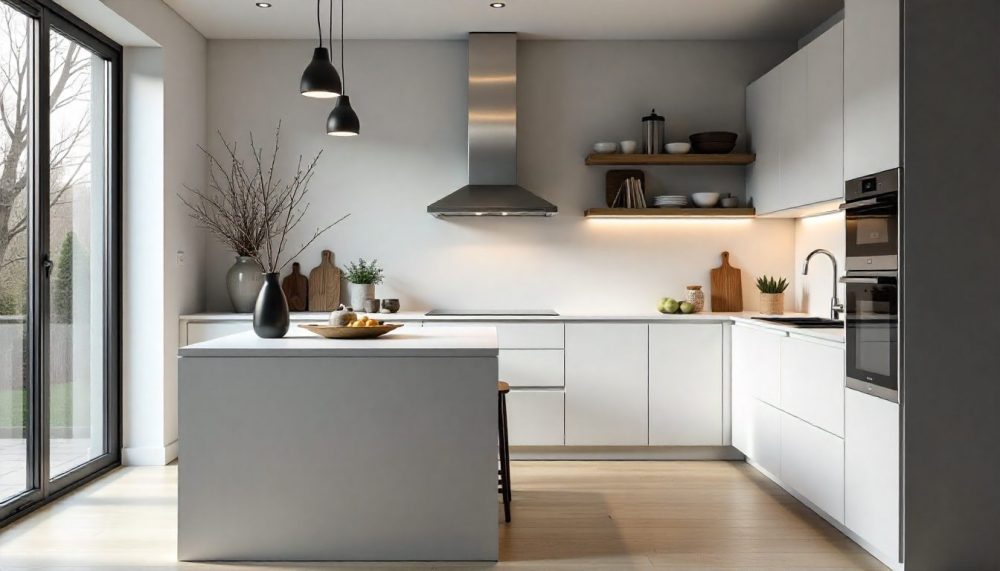 One of the most efficient approaches to create a unified and welcoming appearance when designing an open kitchen countertop that perfectly joins your area is by giving a cohesive surface material priority. Employing the same substance over several rooms — kitchen, dining area, or living room produces a continuous visual flow that naturally attracts the eye and makes the entire space seem bigger and more cohesive.
Extending your kitchen countertop material, such as quartz, granite, or a sturdy composite, into a dining table or breakfast bar, for instance, removes sharp visual breaks and helps to create harmony between practical and social spaces. In houses with open-plan arrangements, this constancy also helps integrate the duties of every area, therefore facilitating more fluid transitions when welcoming guests, serving meals, or just traversing the room.
@ampquartzcabinets Nak buat macamni boleh PM kami sekarang! 🤩 #AmpQuartz #OgosPromo #MerdekaSale #KitchenCabinet #fyp #fyppage
Particularly in high-traffic households, pick materials that are heat, scratch, and stain resistant — choose a surface that mixes beauty with usefulness. While more daring finishes can act as a statement element that nevertheless connects the area, neutral tones or subdued designs work well for timeless appeal. Wood look finishes or butcher block can provide natural texture without upsetting the design continuity if you want a warm, welcoming environment.
A single material may give the impression of a bigger, well-organised area even in small houses. Choosing one surface style helps you to make a practical, multifunctional centre where cooking, dining, and dialogue naturally move across linked areas rather than simply improving looks. This design approach makes your countertop into not only a visual anchor but also a social focal point.
Open Kitchen Countertop 3: Create a Multi-Level Design
One excellent approach to improve connectivity and functionality in an open kitchen is a multilevel countertop. Including surfaces at different elevations helps you to produce clearly demarcated areas for several pastimes while keeping an open, social atmosphere.
For meal preparation, for instance, a smaller countertop area at conventional kitchen height (roughly 90 cm) offers ergonomic comfort for chopping, blending, and cooking. A raised bar area (about 105–110 cm) can alternatively be used as a social perch for visitors to converse while you cook, a coffee place, or a casual dining area — that is, without them obstructing your work. This altitude also conceals any kitchen clutter from the adjacent living or dining area, hence enhancing the general appearance of the area during events.
The multilevel method lets you also play with various materials or finishes such as a robust quartz prep surface combined with a warm wooden bar top to give your design texture and visual interest. For families with youngsters, a somewhat lower secondary level can act as a snack centre or homework workstation, transforming the kitchen into a real multifunctional hub.
Moreover, different heights can make accessibility better for family members with different needs or mobility issues. Carefully designed, a multilevel countertop not only helps cooking efficiency but also deepens the social connection between the kitchen and the rest of the house, transforming the counter into an active focal point where meals, memories, and talks naturally converge.
Open Kitchen Countertop 4: Incorporate Integrated Seating
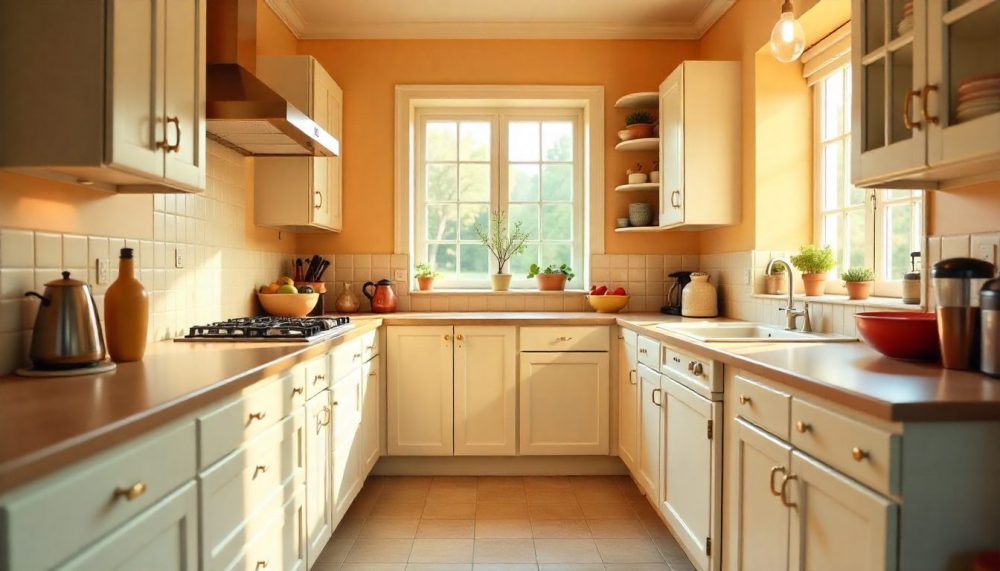 One of the most efficient solutions to link the kitchen to neighbouring areas is including integrated seating into an open kitchen counter top. Combining kitchen, dining, and social areas into one continuous space lets you make the countertop the actual heart of the house.
Offering a relaxed place for fast breakfasts, coffee breaks, or evening talks while meals are prepared, bar stools along a kitchen island or peninsula are a popular choice. To achieve maximum comfort, assign each person at least 60 cm of width and maintain a cozy counter height about 90 cm for regular seating or 105 cm for bar height. Should room permit, think about adding 25–30 cm of countertop overhang to create enough legroom.
@ampquartzcabinets Kabinet 7x8ft boleh pasang lebih dari 9 jenis aksesori dan banyak lagi extra storage yg lain! 🤩 Cepat PM kami untuk dapatka harga promo Ogos ni 🇲🇾 #AmpQuartz #merdeksale #kitchencabinet #promo #fyp
Built in bench seating along one side also provides a warm, space-saving touch and can hold more people. Materials also matter; select a sturdy, easy-to-clean surface able to resist daily use, from food spills to hot coffee mugs.Making the seating area inviting requires lighting, and pendant lights or under counter LEDs can help foster a warm, friendly ambiance without interfering with lines of sight between rooms.
Coordinate seating finishes with adjacent cabinets or furniture for a cohesive appearance. By carefully including seats into your countertop plan, you promote cook-guest interaction, maximise space utilisation, and improve the functionality of your open kitchen. This technique not only enhances daily life but also makes entertaining more fluid, therefore guaranteeing the kitchen seems like a natural extension of the social spaces of the house.
Open Kitchen Countertop 5: Add Subtle Zoning with Design Details
Add delicate zoning with design. Details is a clever approach to plan an open kitchen counter that elegantly links rooms while still providing defined practical boundaries .In open plan designs, the countertop often serves various functions — food preparation, informal dining, entertainment, or even working from home, thus it’s critical to visually direct how the space is utilised without erecting physical boundaries.
One way is to experiment with opposing basic cabinet finishes: for example, apply a warm wood colour to the side toward the living or dining area and a smooth neutral on the kitchen-facing side. Without disrupting flow, this clarifies the “public” and “culinary” spheres. Countertop edge profiles might also serve as understated dividers; a waterfall edge flowing into the living room area gives a furniture-like character, whereas a simplified edge on the kitchen side stresses functionality.
Another great technique is pairing tile in the kitchen area with timber or vinyl in the living space to produce a natural change without walls. Even light can be used as zoning; pendant lights placed over the dining side and task lights above the prep side very clearly signal purpose while still allowing for an open view.
These little but deliberate features let every zone develop its own character, but the design as a whole feels unified. The key is discipline; too many conflicting components may divide the area. Using just one or two zoning strategies guarantees that your open kitchen counter stays a unifying element even while still assisting the many uses it is meant to provide.

