- By: Ryo
- Tags: kitchen aesthetics, kitchen appearance, kitchen outlook, small kitchen design, Small Kitchen Guide, small kitchen space, small kitchen tips
- Category: Small Kitchen Guide
- 0 comment
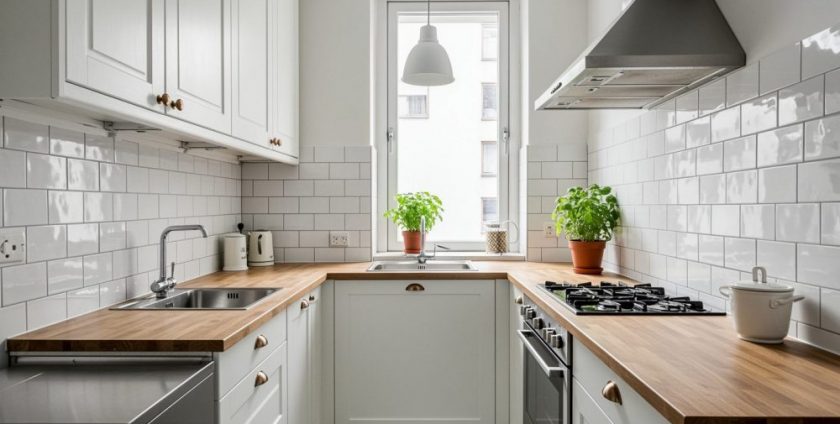
Small kitchen guide reveals how careful preparation may turn even the smallest area into a sleek, effective kitchen. You guarantee every cabinet, counter, and appliance really serves everyday tasks by giving workflow priority above wish list items. The result is a kitchen that naturally fits your lifestyle, works more intelligently, and feels larger.
Small Kitchen Guide 1: Prioritise Function Over Frills
Putting function first in a small kitchen fosters a room that really enables daily usefulness and cooking efficiency. Unlike larger kitchens where process and decorative aspects might coexist, a little kitchen demands every element to satisfy a practical necessity.
Countertops, for instance, should be used mostly for food preparation rather than for decorative displays, therefore guaranteeing there is plenty of room for cutting, mixing, and plating. Similarly, storage choices have to maximise accessibility and organisation; pull-out cabinets, vertical racks, and partitioned drawers make utensils, cookware, and pantry items quickly accessible thereby decreasing needless movement. Appliances should be picked with prudence for both size and utility; compact or multi- functional units save space yet maintain full functionality, therefore resisting the temptation of bigger, more visually appealing models that overpower the space.
Though even illumination has a functional goal — focused task lighting above workstations promotes safety and productivity as it also helps. Ornamental elements should never take accessibility, movement, or work flow; modest accents like a tiny plant or a single work of art can provide warmth without upsetting functional use, though not completely deleted. Strong and easy-to-clean flooring, surfaces, and materials will save maintenance time and stop interruptions to work flow.
By intentionally reducing non-essential components and focusing on those that enhance daily activities, a small kitchen turns from a hectic, untidy space into a streamlined, highly functional one where cooking becomes easier, quicker, and more enjoyable. Ensuring first priority given to workflow above wish list objectives, function-driven design results in a kitchen as hard as you do.
Small Kitchen Guide 2: Ease of Maintenance
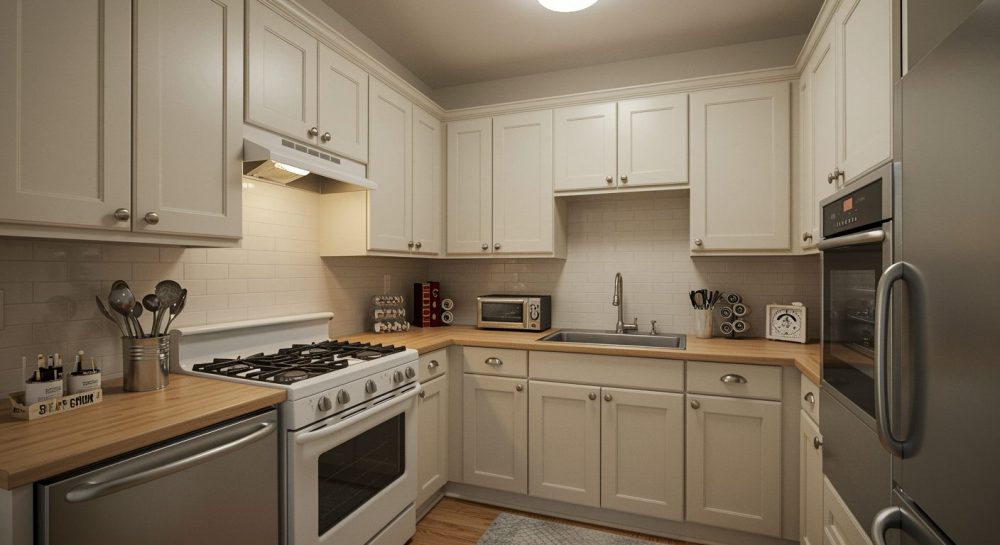 In tiny kitchens where limited space emphasises the effects of wear, spills, and dirt, a basic design element — easy maintenance is especially crucial. Selecting stain-resistant, sturdy, and simple-to-clean materials will greatly increase daily production, hence freeing homeowners to concentrate on cooking instead of constant upkeep.
Exquisite surfaces insensitive to scratches, stains, and water damage include quartz, strong surfaces, or treated laminates; hence, quick and easy clean-off follows preparation is attainable. With great durability, excellent flooring should incorporate low-maintenance materials like ceramic tiles, vinyl, or engineered wood—which can handle spills and heavy foot traffic without much effort.
@ampquartzcabinets Korang yang nak buat nacamni boleh pm kami 🥳😍 #AmpQuartz #6GAluminium #KitchenCabinet #fyp
Hardware and cabinets have also a major impact: pull-out shelves, soft-close drawers, and modular storage alternatives minimise the need to reach uncomfortably into corners, therefore preventing dust and grime buildup; finishes that fight smears, fingerprints, and humidity lower on cleaning schedules. Less patterns with fewer seams, mouldings, or complex features help to cut down on dust collection sites, therefore accelerating and more effective cleaning.
By eliminating distractions from spilt or crowded areas, adding a top-quality faucet, splash guards, and simple-to-clean sink surfaces helps to simplify workplace. First and foremost, giving simplicity of maintenance top priority in a small kitchen fosters a realistic, practical setting whereby every job flows smoothly so enabling the area to be kept efficient, clean, and inviting for usage without homeowners exerting time or effort.
Small Kitchen Guide 3: Multi-Functional Surfaces
Multi-functional surfaces serve as a fundamental design element for workflow over wish list in small kitchens as they transform limited space into highly useful and flexible rooms. Every counter or tabletop ought to have several purposes, ranging from cooking and food preparation to eating, school projects, or even a temporary workspace for house tasks.
Open floor space can be preserved and prep areas enlarged as required by foldable or sliding surfaces; this keeps the kitchen from seeming cramped. Built-in storage islands or mobile carts can serve both extra workstation and a storage hub, so keeping cutlery, cutting boards, and little appliances within arm’s reach while still maintaining a tidy and effective workflow.
Still using utmost utility without producing mess, even modest surfaces like windowsills or ledges can serve as herb gardens, spice areas, or resting sites for supplies during cooking. Choosing heat-resistant, strong, and easy-to-clean materials assures that these surfaces remain practical for all everyday activities, hence reducing maintenance and downtime. Judiciously using multi-functional surfaces allows tiny kitchens to look larger, more neat, and extremely effective hence enabling the user to complete tasks with the least effort and least movement.
The goal is to create a coordinated, flexible environment wherein every surface helps cooking, cleaning, and storage concurrently. Multi-functional surfaces mostly close the distance between need and luxury, hence valuing workflow and utility over superfluous decorations or unused items, hence making the little kitchen a paradigm of effective, conscious design.
Small Kitchen Guide 4: Clear Zones and Minimal Distractions
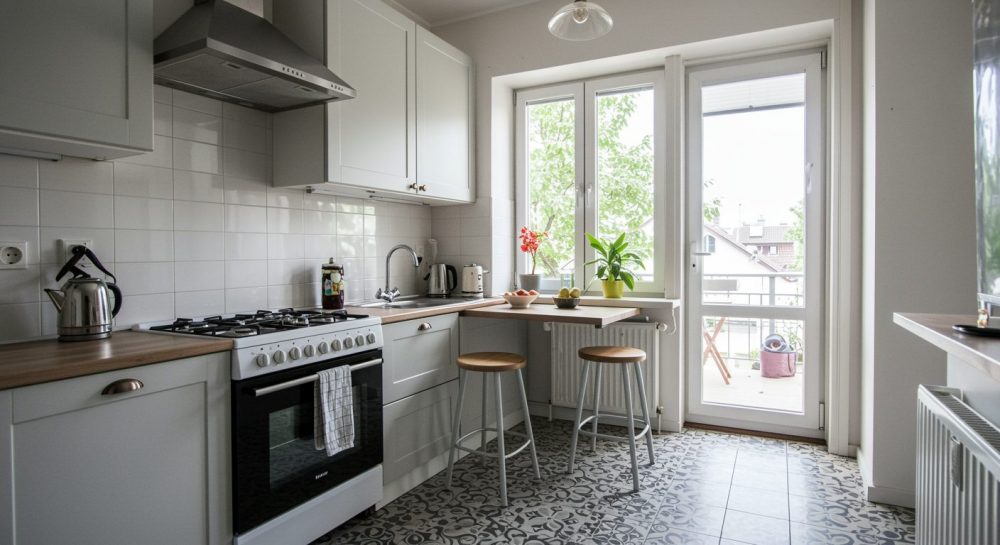 Maintaining an effective work flow and avoiding the room getting cluttered or unruly depends on creating distinct areas and minimising disturbances in a small kitchen. First comes creating separate zones for preparation, cleaning, storage, and cooking.
Establishing specific areas for each activity streamlines dinner preparation, for instance, by reducing unnecessary motion and helps to quickly locate tools and components. Keeping cutting boards, bowls, and knives near the counter prep area, for example, enables continuous cooking. Equally important is reducing visible and physical mess. Little kitchens appear intimidating fast when equipment, tools, or decorations crowd the counters.
@ampquartzcabinets Nak dapur cantik boleh try tips ni! 🥰 #AmpQuartz #KitchenCabinet #LEDLighting #fyp
Giving functional requirements first priority and keeping anything else out of sight helps to establish a more quiet, orderly environment. Simplified surfaces make a space appear bigger in addition to improving efficiency, hence simplifying travel. Even small distractions like overly vivid patterns, too much decoration, or conflicting colours may be distracting in a little kitchen. Subtle tones and straightforward finishes help your eye rest and let you focus on events.
Every kitchen feature should be used practically or functionally rather than merely for looks. A small kitchen turns into one where every motion appears purposeful, housework is swiftly completed, and cooking becomes a more pleasant, stress-free activity by combining specified areas with little visual interference.
Small Kitchen Guide 5: Smart Storage Solutions
Smart storage solutions help one to keep efficiency in a little kitchen without sacrificing usefulness. One must advance instead of as decorations by utilising every square inch of space thoroughly. Lower racks and pull-out drawers keep necessities readily available; tall cupboards reaching the ceiling provide less-frequently used things; vertical storage is especially practical.
Corner cabinets can become practical storage from unused space via revolving carousels or pull-out mechanisms. Drawer organisers, dividers, and stackable containers guarantee everything has a defined spot, hence reducing time spent looking for tools and so simplifying access to crockery, utensils, and pantry products still more.
Under-cabinet spice or cup racks, magnetic strips for knives, and hooks for pans optimise wall and countertop space while yet offering rapid visibility and accessibility for commonly used items. Built-in storage in multi-functional furniture fold-out tables or islands gives versatility without clutter. By even using the space under the sink, sliding bins or pull-out trays will assist you to change unused corners into useful storage rooms.
Intentionality is essential; every storage choice should help rather than only fill gaps a smooth workflow supporting cooking, cleaning, and preparation activities. By giving clever, sensible storage top precedence over decorative or unnecessary features, a little kitchen can seem tidy, spacious, and very functional, therefore showing that wise design supersedes wish list driven decisions in the maximising of both comfort and efficiency.

