- By: Ryo
- Tags: kitchen decor and design, kitchen planning, The Balanced Kitchen
- Category: The Balanced Kitchen
- 0 comment
The balanced kitchen allows home owners to create a space that is truly efficient and functional within their home space. There are many ways for home owners to create a balanced kitchen in their home space. Continue reading to learn more.
The Balanced Kitchen 1: Optimise Layout For Efficiency
Creating a balanced kitchen requires especially in a small space where every inch counts one of the most important actions: perfect the arrangement for efficiency. A proper design reduces trash, maximises function, and guarantees a smooth workflow — all of which greatly simplify and make cooking and cleaning more pleasurable.
Following one of the fundamental ideas is the work triangle, which examines the connection between the three primary work zones: the stove, sink, and refrigerator. Arranging these three components close to one other but not overcrowd minimises pointless movement, hence saving energy and time. Popular efficient designs for little kitchens include the galley kitchen, which uses two parallel walls to make a small and accessible workplace; the L-shaped kitchen, which fits neatly into a corner and leaves room for movement; and the single-wall kitchen, which lines up all appliances and cabinets along one wall, perfect for very tight spaces.
Although every design has benefits, the aim is still to offer a logical flow whereby cooking activities go smoothly from preparation to cooking to cleaning.Designing the kitchen so there is adequate countertop space next to appliances, particularly around the stove and sink, also improves usefulness. Avoid blocking pathways or making the space feel constrained by guaranteeing sufficient clearance between counters and appliances, usually at least 36 inches, therefore movement is easy.
Finally, including multi-functional features like an island serves as cooking surface and storage or a fold-down dining table can increase productivity without compromising balance. Carefully arranging your kitchen turns a small space into a very functional and balanced cooking environment.
The Balanced Kitchen 2: Keep Countertops Clear
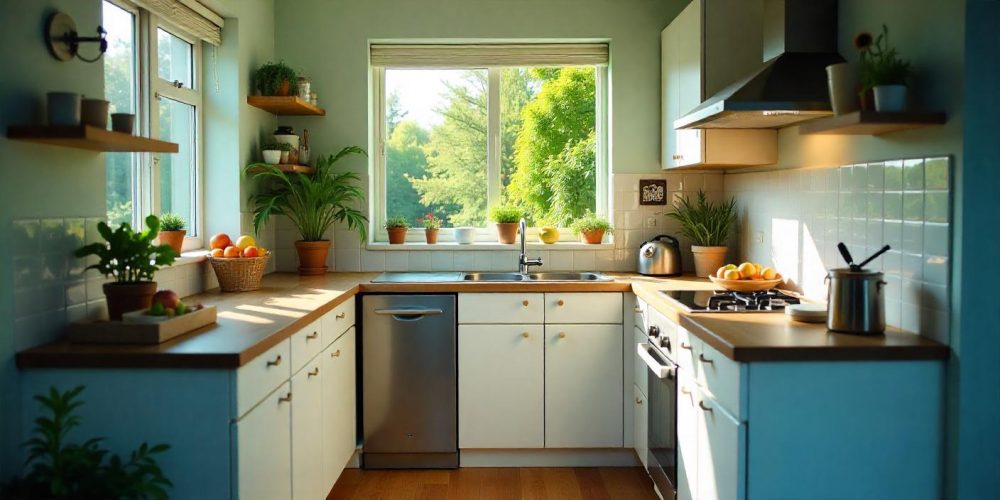 One of the most crucial approaches to make a well balanced kitchen, especially in a small area where every inch counts, is maintaining clean countertops. Cluttered counters can quickly make a small kitchen seem small, disorganised, and less practical. Storing as many things out of sight as one can will help one to keep a tidy and productive workplace.
One great approach is to maximise cabinet area by investing in intelligent storage options including deep drawers, pull-out shelves, and vertical dividers. Appliances that aren’t used everyday, such as blenders, toasters, or coffee makers, should be kept inside cabinets or pantries rather than left out on the counter. For often used appliances, choose small, multifunctional designs that take up less room.
@ampquartzcabinets Battery phone asyik drop je, kan senang pasang track socket macamni 😂 #AmpQuartz #KitchenCabinet #accessories #tracksocket #moveable #fyp #fyppage #fyppppppppppppppppppppppp
Furthermore extending usable work surfaces when necessary and readily stored away afterwards are built-in features such cutting boards sliding over the sink or stove. Maintaining reachable instruments and pots but not on the surface opens counter space with wall mounted racks, magnetic knife strips, or hanging hooks. Clear countertops also improve the general appearance of the kitchen, making the space open and welcoming.
Regular housekeeping methods help to manage clutter by stopping unnecessary decorative objects on countertops.The ideal between functionality and aesthetics is essential in a little kitchen; a tidy countertop is fundamental to that balance. Maintaining tidy counters improves not only the kitchen’s usability but also produces a light, orderly setting in which cooking and socialising becomes more pleasurable.
The Balanced Kitchen 3: Choose Slim And Compact Appliances
In tiny spaces where every inch counts, choosing slim and compact equipment is absolutely essential if one wants to create a balanced kitchen. Large appliances can overwhelm the little room in a tiny kitchen rapidly, which can give the space a tight appearance and make it less practical.
Choosing narrow appliances or multifunctional ones helps to optimise available space without sacrificing performance. A thin refrigerator with a smaller breadth or a tall, slender dishwasher, for instance, fits perfectly into small spaces, free to move and store goods. Small appliances like single or dual induction cooktops offer flexibility in kitchen design without sacrificing cooking capacity unlike full size ranges.
Moreover, several modern appliances combine several purposes into one unit — microwave ovens that also grill or bake, washer-dryer combinations, or refrigerator-freezers, therefore saving valuable space by obviating the need for different machines. This multiple functions improves the practicality of kitchens while keeping a minimalist appearance. Choosing appliances with a basic style and clean lines also helps to create a streamlined look and visually diminish weight. Integrated or built-in appliances also fit in with cabinets to produce a coordinated and roomy effect, therefore helping to achieve a balanced kitchen design.
Finally, compact appliances can help kitchen efficiency and consume less energy, so supporting objectives of sustainable living. Slim and little appliances are really necessary for striking a balance between functionality and design in small kitchens, thereby guaranteeing the room remains functional, aesthetically open, and welcoming even if space restrictions are present.
The Balanced Kitchen 4: Use Continuous Flooring And Backdrops
 Creating a well-balanced kitchen, especially in cramped quarters where every inch counts, using continuous flooring and backdrops is a subtle but strong approach. Visual continuity is really important when planning a small kitchen since it gives the space a more open and unified appearance.
Choosing the same flooring material throughout the kitchen and adjacent rooms helps to avoid jarring visual interruptions that can divide the area. This flawless flow draws the eye naturally from one location to another, giving an illusion of immensity and lowering claustrophobia. For example, large-format tiles or continuous hardwood or laminate planks across the kitchen and into next rooms can optically enlarge the kitchen, so giving it integrated rather than boxed-in appearance.
@ampquartzcabinets Tak ternilai harga kabinet ni berbanding pengorbanan mak selama ni 🥺🥰 #AmpQuartz #JohorBahru #KitchenCabinet #RayaHaji #HariIbu #fyp #fyppppppppppppppppppppppp #fypage
Avoiding design interruptions helps to highlight this effect by means of a continuous backsplash or wall treatment. A single, consistent backsplash material whether it’s a solid colour tile, a slab of quartz, or a minimalist glass panel creates a smooth backdrop that complements cabinets and countertops rather than several textures or patterns that split the space. This consistency reduces visual clutter, so making the kitchen seem more tranquil and less hectic. The outcome is an even style that promotes calm and order, essential components for effective tiny kitchens.
Moreover, continuous flooring and backsplashes make upkeep easier since fewer transitions reduce the possibility for dirt to gather and cut down on the corners needing care. Mixing design with efficiency, this tangible advantage helps to meet the general objective of a balanced kitchen. Basically, accepting continuous surfaces is a smart design choice that maximises both space and practicality, hence making small kitchens appear bigger, brighter, and quite harmonious.
The Balanced Kitchen 5: Maximise Storage With Smart Solutions
Creating a balanced kitchen, especially in little areas where every inch counts, depends on maximising storage with smart solutions. Effective storage preserves the kitchen tidy, clutter-free, and very practical without sacrificing design.
Installing high cabinets that stretch up to the ceiling can help you to utilise vertical space well and hence boost your storage capacity. These free accessible shelves for daily necessities by giving rarely used items more space. Including pullout shelves and drawers inside cabinets increases access and simplifies efficient item organising, therefore lowering unused area. Lazy Susans or rotating shelves in corner cabinets turn inaccessible spaces into useful storage. Hanging pots, pans, knives, and utensils with hooks, racks, and magnetic strips enhances decor as well as frees storage and cabinet space.
Drawer organisers allow everything to have its spot and be simple to find as they help keep silverware, utensils, and little gadgets neatly organised. Multifunctional furniture — kitchen islands or carts with integrated storage compartments is another clever solution. These components function as extra storage for pantry items or cookware in addition to giving more workspace.
Choosing slim, stackable bins and clear storage inside cabinets and pantries helps to maximise space and makes ingredients visible and easily available. By integrating these clever storage techniques, a little kitchen can seem large, well balanced, and well organised, hence improving efficiency and pleasure in both cooking and daily activities.

