- By: Ryo
- Tags: cleaning small kitchens, neat small kitchens, small kitchen cleaning, small kitchen neatness, small kitchen tips, tidy small kitchen, Tiny Kitchen Sparkle
- Category: Tiny Kitchen Sparkle
- 0 comment
Tiny kitchen sparkle starts with wise decluttering techniques that turn even the tiniest area into a usable, welcoming centre. Only needed appliances and vertical storage turn every inch of counter area into workable space. Your little kitchen feels airy and always clean thanks to deft arranging and a minimalist attitude.
Tiny Kitchen Sparkle 1: Prioritise Necessities
Counter space is valuable in a small kitchen; therefore, first priority should be given to needs to create a clean, organised setting. Keeping only daily-used goods within easy reach, this philosophy calls for storing or discarding anything with a seasonal use.
Frequency of use should guide evaluations of appliances, cutlery, and cookware; for example, a coffee machine or a knife block can be essential while a bread maker or large blender could be stowed away in a cabinet. Deliberately limiting what fills the counter immediately makes the kitchen feel more spacious and practical, therefore enabling better meal preparation and cooking flow.
Encouraging conscious consumption resisting the need to keep every gadget or tool “just in case” — this approach also helps to avoid visual clutter in a little area. Arranging critical items together in a set region improves efficiency because everything required for a job is accessible and non-essential things remain neatly kept ready to be accessed when needed. To match particular cooking demands, seasonal or specialist equipment may be turned in and out of storage; this preserves both organisation and convenience.
Prioritising also applies to ornamental objects: even beautiful pieces should have multiple function, such a chic container for regularly used ingredients, hence guaranteeing the counter stays both functional and visually appealing. This emphasis on basics creates the basis for a small kitchen’s brilliance, turning a confined area into a sleek, functional, and friendly cooking area.
Tiny Kitchen Sparkle 2: Use Vertical Space
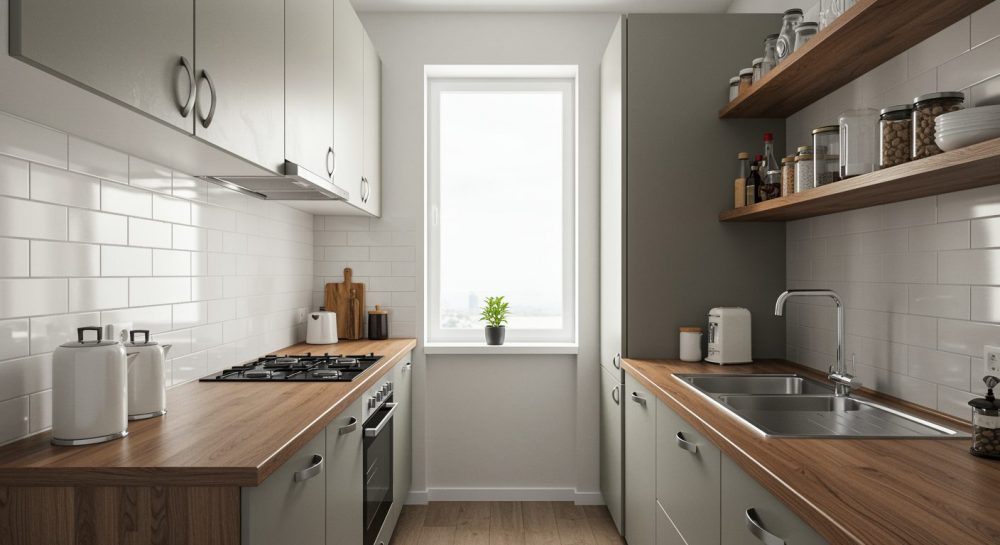 Effective use of vertical space is among the most transformational methods for maximising counter space in a little kitchen. Horizontal surfaces are restricted in little kitchens, hence upward shifting of storage and arrangement can quickly open while retaining essentials close at hand.
Installing wall-mounted shelves or floating racks lets you store regularly used items like spices, jars, and tiny kitchen appliances without cluttering the counter space. For knives or metallic tools, magnetic strips on cabinet edges or walls help to keep them accessible yet off the work surface. Adding both visual interest and adaptability, pegboards let hooks hang pots, pans, or cups and change quickly as your needs evolve.
@ampquartzcabinets Kenapa pilih warna lain? Dah pasang jadi lain?! 😩 Kalau nak tahu kenapa tengok video ni sampai habis 🥳 #AmpQuartz #cabinet #laminatecolour #fyp
The area above cabinets can even house less often used objects or decorative baskets, therefore helping to minimise counter clutter. Vertical solutions promote an ordered, zoned approach in addition to offering storage solutions. You keep everything visible at a glance while preserving a clean and practical workspace by assigning particular walls for preparation tools, others for culinary basics, and still others for cleanup materials.
Integrating vertical storage with transparent containers, hooks, and risers inside cabinets boosts efficiency even more by establishing a perfect process whereby every item has a place. Basically, welcoming vertical space lets a small kitchen perform like a bigger one, so maximising usability without compromising style. Counters are open, preparation is easier, and trash has nowhere to pile up in a gleaming, well arranged kitchen.
Tiny Kitchen Sparkle 3: Create Zones
Arranging components in a small kitchen changes everything about maximising counter area and maintaining a tidy, clutter-free environment. Zoning fundamentally organises the kitchen into work zones by guaranteeing that only the equipment needed for each activity such prepping, cooking, cleaning, and storage—is stored in a specific place.
The cooking section has regularly utilised spices, pots, and pans; the prep area might have cutting boards, knives, and mixing bowls. Arranging ingredients and equipment by application lowers your requirement for movement, hence lowering counter clutter and simplifying the cooking process. Zoning helps one detect foreign objects on the counters; anything outside a particular area can either be kept away or thrown away.
Vertical thinking and the use of walls, cabinets, doors in every space are needed to keep little kitchens tidy. Small modifications like a magnetic knife strip adjacent the prep table or a floating shelf above the stove for dishes can significantly reduce clutter. Furthermore, clearly demarcated components assist the kitchen to appear bigger and more hospitable even if it is not very big by offering visual order.
Regular habits have to be created to protect these regions: every item should be returned to its designated location after washing or cooking to prevent counter creep. Creating zones turns a little kitchen into a very effective, well-ordered space where every inch of countertop is useful and aesthetically appealing, so letting you cook, clean, and entertain without becoming overwhelmed.
Tiny Kitchen Sparkle 4: Regular Reset And Declutter Habit
 Preserving a bright, uncluttered small kitchen starts more from developing a steady habit of decluttering and resetting than from occasional thorough cleans. The core of the usual reset is assigning a little but deliberately set aside time — weekly or monthly to check the counter and storage spaces, therefore guaranteeing every item has a specific purpose and position.
Utensils, devices, and pantry goods are assessed as part of this routine: anything hardly used or superfluous is either kept elsewhere, given away, or thrown away. This practice stops the slow build of “counter creep,” whereby even a few wrongly placed objects may soon engulf limited surfaces. Treating decluttering as a regular habit rather than a one-time project will help kitchen users keep visual and functional cleanliness, therefore streamlining food preparation and cooking.
@ampquartzcabinets Korang yang nak buat nacamni boleh pm kami 🥳😍 #AmpQuartz #6GAluminium #KitchenCabinet #fyp
It also promotes mindfulness in everyday cooking practices; for instance, things are put back in their appropriate regions following each cooking session, and countertops are wiped clean, therefore reinforcing the reset cycle. Decluttering from a demanding task into an effortless habit turns on little rituals such as rearranging a drawer once a week or wiping one counter section every evening.
This discipline helps one to be calm, maximises available counter space, and guarantees that the kitchen stays a functional, welcoming area in spite of its small dimensions. Regular resets are fundamentally the basis for a highly functional, stress-free kitchen where every inch matters; they are not only about order.
Tiny Kitchen Sparkle 5: Strategic Appliance Placement
Usually desired, how you store your gear in a tiny kitchen will either construct or damage your counter surface. Strategic placement of appliances is a deliberate means to maximise efficiency and minimise clutter, not only for looks. Begin by determining which seasonally or sporadically used equipment you employ daily.
Counter space should still be for items like coffee makers, toasters, or electrical kettles that are part of your everyday life, but everything else — blenders, food processors, air fryers, or slow cookers should find a home in cabinets, pantry shelves, or an appliance garage. Keeping equipment accessible but out of sight helps you to keep a clean and open counter thanks to the idea of an appliance garage, a cabinet with a roll-up door.
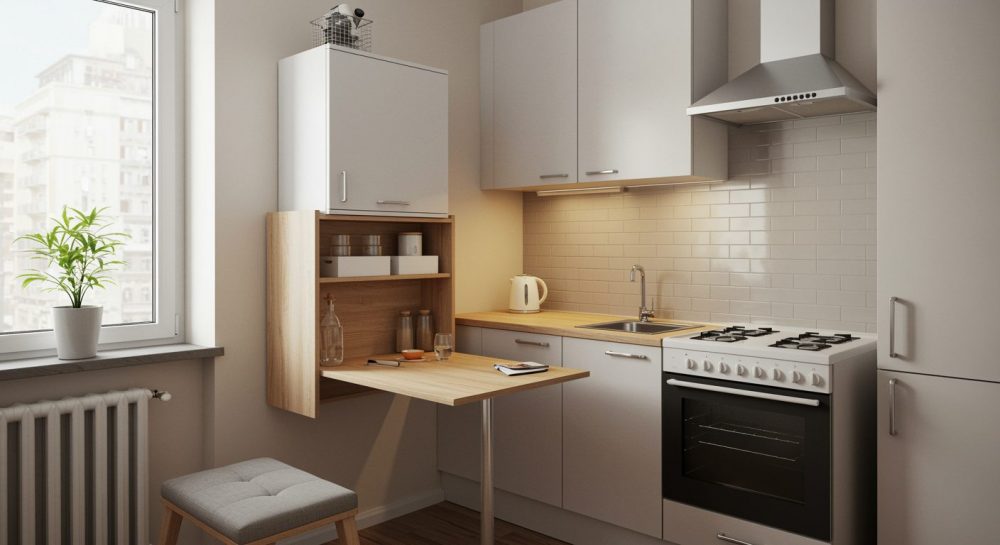
Modular or vertical storage is yet another choice; wall-mounted shelves or cubbies could store equipment, therefore releasing horizontal space. Mobile solutions offer adaptable surfaces clear from permanent clutter as needed for example, a fold-away counter or a cart on wheels. Classifying appliances by kitchen areas — prep, cooking, and cleanup helps to prevent scattering and keep the workflow continuous.
Deliberately arranging each appliance where it benefits but not taking up too much counter space helps you to not only create a more functional kitchen but also convey order and openness. Proper appliance placement turns a small, untidy kitchen into a sleek, effective office where every inch counts.

