- By: Ryo
- Tags: home kitchen, home kitchen planning, kitchen appearance, kitchen choice, kitchen set up, material for kitchens, The Universal Kitchen
- Category: Universal Kitchen
- 0 comment
The universal kitchen is founded on the idea that everyone from young children to elderly adults should move around the area with assurance and ease. It combines intelligent layout, ergonomic design, and simple features to reduce effort and increase enjoyment. This kitchen, which centres safety, accessibility, and inclusion, helps every phase of life without sacrificing flair.
The Universal Kitchen 1: Ergonomic Layout
Ensuring every user of any age or ability can negotiate and operate safely and comfortably, an ergonomic plan is the foundation of a universal kitchen. Counter and work surface elevations are meticulously considered in the creation of such a space with zones suited for kids, adults, and elderly people.
Adjustable or tiered counters let parents cook meals while kids play safely, and seated-friendly surfaces enable seniors or those with mobility issues. Storage is very important in ergonomics since pull-out drawers, deep drawers rather of base cabinets, and rotating lazy Susans lessen the need for bending, stretching, or strained movement, hence making regularly used items easy access.
With ovens, microwaves, and dishwashers set at mid-level heights to reduce uncomfortable lifting, the location of appliances also follows ergonomic guidelines. With broad aisles meant to fit wheelchairs, strollers, or several users operating at once, traffic flow in the kitchen is carefully planned to avoid bottlenecks. An ergonomic design turns the kitchen from a possible dangerous area into an inclusive environment where every family member can participate confidently and independently by combining careful height considerations, simple to access storage, and intuitive workflow.
Even modest design decisions such handles easy to grip and knobs requiring little force help to create a safer, more effective area. Ultimately, giving ergonomics top importance helps to create a truly universal area by promoting learning, pleasure across generations, and accessibility in addition to boosting safety.
The Universal Kitchen 2: Easy-to-Clean Surfaces
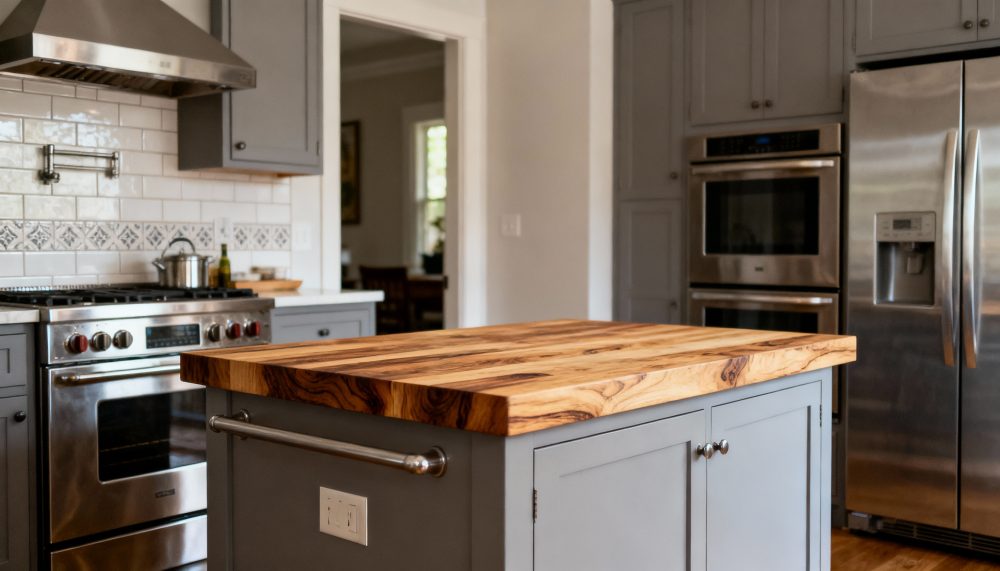 Designing a universal kitchen appropriate for all ages calls for simple-to-clean surfaces in both usefulness and safety. If not properly cleaned, spills, crumbs, and dirt in busy kitchens could result in fall hazards or cleanliness problems.
Selecting solid, non-porous, smooth materials such quartz, solid-surface countertops, stainless steel, or treated laminate guarantees quick, efficient cleaning with practically little effort. Reduced physical effort of cleaning or bending lets seniors or those with poor mobility safely negotiate the kitchen alone with low-maintenance surfaces.
@ampquartzcabinets Dah boleh tukar moveable plug socket ni kat dapur korang tu 🤭 #AmpQuartz #KitchenCabinet #plugsocket #smartkitchen #fyp
Built-in backsplash materials running smoothly from the counter reduce clutter and simplify maintenance; cabinets with pull-out drawers may be simply cleaned; and basic-to-clean surfaces also improve long-term durability, therefore preventing water, heat, or daily wear damage. Families with kids have to keep their homes neat; thus, surfaces that withstand multiple cleaning and stains obviously are extremely important.
Apart from functionality, these surfaces help in producing a visually coherent kitchen that appears welcoming and ordered, hence fostering self-assurance and comfort for people of all ages. Choosing basic-to-clean materials in a typical kitchen guarantees not only a safer environment but also encourages everyone in the family to participate, so creating a room in which social contact, cooking, and education may grow free of needless obstacles.
The Universal Kitchen 3: Rounded Edges and Soft Corners
Among the most practical yet occasionally overlooked features of a global kitchen is rounding the edges and soft corners. Sharp edges on counters, cabinets, and tables can especially pose serious safety dangers in a room made for people of all ages, especially for kids and senior persons.
For children who are by nature curious and prone to accidental bumps as well as for elders, whose balance and responses might not be as reliable, soft surfaces are really useful. Rounded corners make the kitchen appear friendlier and more welcoming by providing a visual sense of openness and movement in addition to limiting the scope of possible injuries.
To reconcile safety and aesthetics, designers occasionally add gentle curves to breakfast counters, kitchen islands, even cupboard fronts. Beyond the physical security they offer, soft corners create a more inclusive setting where all family members from toddlers to grandmothers might move freely and engage without risk of harm. Often-touched surfaces like kitchen countertops and drawer pulls benefit from this degree of accuracy since rounded forms aid in preventing accidental scratches or bruising.
When used with other universal design elements like non-slip flooring and reachable storage, rounded edges help to achieve a kitchen that is both useful and safe. Not only a place to cook, the kitchen should be a welcoming, safe environment for everyone regardless of age or mobility thanks in large part to the addition of round edges, a subtle yet powerful strategy.
The Universal Kitchen 4: Open and Spacious Flow
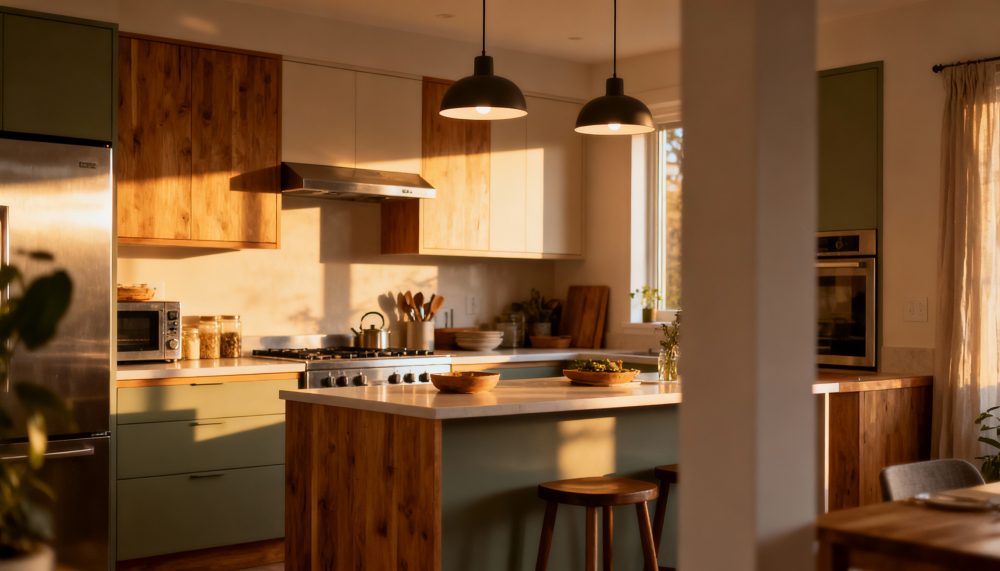 Universal design’s foundation is creating a kitchen with an open and large flow that guarantees accessibility, comfort, and safety for every one of every age. A well-designed layout gives broad pathways top priority so that people may move easily whether they are walking, using a mobility device, or supervising children.
Clear, unobstructed areas between equipment including the sink, stove, and refrigerator lower the possibility of mishaps and increase the effectiveness of multitasker. Islands and countertops are carefully spaced and include rounded borders to minimise injury while still keeping functionality. Open designs enable for a range of activities — cooking and cleaning as well as socialising and learning, encouraging participation from children and older family members alike.
@ampquartzcabinets Yang rasa penat nak kena lap dapur tu boleh guna tips ni 🤩 #AmpQuartz #KitchenCabinets #easycleaning #tipsdapur #fyp
Beyond just width, the flow entails visual consistency and logical progression across spaces, therefore enabling consumers to naturally navigate the area without needless twisting or stretching. Lighting and view lines boost this transparency even further, guaranteeing that every angle is clear and safe to go around especially important for those with visual impairments. A large kitchen keeps both order and access by reducing clutter and incorporating clever storage solutions, therefore less demanding and more pleasurable daily activities become.
In the end, an open and flowing kitchen combines inclusivity with usefulness to provide an environment where everyone from toddlers wanting to assist stir a pot to seniors preserving their independence may move confidently, safely, and comfortably, turning the kitchen into a really inviting and flexible heart of the house.
The Universal Kitchen 5: Inclusive Seating
Inclusive seating ensures that every one of all ages and skills may easily cook, eat, and socialise, hence it is critical for a worldwide kitchen. Designing seats that fit many heights, body types, and degrees of mobility allows children, adults, and seniors to independently and securely participate.
Kids can more easily access kitchen islands and counters thanks to adjustable-height stools or chairs, therefore fostering learning and active participation in food preparation. Supportive seating with non-slip foundations, backrests, and armrests helps elderly users or those with limited mobility to minimise fatigue and lower fall risk. Incorporating seats with underneath storage helps two goals: it enables quick seating while still providing accessibility for crucial kitchen supplies.
Open-legged seating choices at dining tables and islands encourage inclusion as wheelchairs can easily access and engage. Furthermore, precise spacing of seats guarantees that everyone’s movement simplicity is preserved and helps to avoid busy or dangerous zones. Durable, simple-to-clean materials increase user worth; soft cushions or ergonomic forms improve long-term comfort. I
nclusive seating transforms the kitchen into a major centre for family and community interaction as well as a place to produce meals, not just a place for aesthetic design, helps to maintain a warm, cohesive atmosphere. It allows children to participate safely, supports adults in everyday cooking tasks, and comforts and access for seniors, hence turning the kitchen not just into a venue to produce meals but also into a key centre for family contact and neighbourhood activities.

